Septic tank pumping companies · Wise County
Listings last refreshed October 16, 2026
Best Septic Tank Pumping in Newark [2026 Update]
1 septic tank pumping company in Newark, ranked by Pump Score using Google reviews and profile data.
✓ How we rankFree directory, no pay-to-rank
Septic tank pumping in Newark, TX is one of those routine services that gets pushed to the bottom of the list until a drain backs up or a patch of lawn turns soggy. This page covers what the work involves, how to tell when your tank is due, what the job typically costs in guide ranges, and how to reach the company that serves Newark directly. Pumping is simple in concept, but timing and daily household habits decide whether you pay for a planned visit or an urgent one.
Top Rated Septic Tank Pumping Companies in Newark Compared
Compare the top picks side by side. Full write-ups follow below.
| # | Septic Company | Best for | Score | Rating | Verified |
|---|---|---|---|---|---|
| #1 | Delta Wastewater | Checking services and hours online before you call | 2.4 | — | — |
Newark Septic Tank Pumping Reviews and Ratings
1. Delta Wastewater
Best for: Checking services and hours online before you call
152, Co Rd 4871No reviews yet
Score breakdown and details
- Location
- Newark · 152, Co Rd 4871, Newark, TX 76071
- Track record
- New or lightly reviewed
- Rating
- No Google reviews yet
- Profile
- Unclaimed listing (Google data)
- Today
- See hours on profile
Strengths
- Direct phone number published, no lead form in the way
- Has its own website with more detail on services
- Opening hours published
Watch Out For
No Google reviews yet. Ask for references or recent customers you can speak to.
Our take: Our top pick in this area. A Pump Score of 2.4/10 reflects the best combination of rating, review depth and profile completeness here.
Hiring Local Septic Tank Pumping in Newark
Newark sits in Wise County in North Texas, where clay soils are common and homes are often spread out. Many properties in rural parts of the county rely on their own on-site system instead of a city sewer line, so the septic tank is usually the first stage of wastewater treatment on the property. That also means you cannot count on a crew arriving within hours when something goes wrong.
Read the sections in order if septic care is new to you. If you already know your tank is due, jump to the pricing and booking sections for the guide ranges and what to ask before the visit.
Septic Tank Pumping in Newark, TX Explained for First Time Owners
A septic tank is a buried, watertight container that holds wastewater long enough for solids to settle to the bottom and grease to float to the top. The clearer liquid in the middle moves out to the drain field, where the surrounding soil finishes the treatment. Over time the solids layer grows. Pumping removes the sludge and scum so the tank can keep separating waste and solids do not travel into the drain field and clog it.
Pumping is maintenance, not a repair. A technician opens the access lid, measures the sludge and scum layers, removes the contents with a vacuum truck, and checks the baffles and outlet before closing the tank. Many homeowners discover the lid is buried under turf or soil, so they schedule a locate and uncover visit before pumping day. Knowing where the lid sits before the crew arrives keeps the appointment short and the bill predictable.
Warning Signs Your Newark Tank Is Due for Pumping
A single slow drain is often just a clog. Several symptoms showing up together usually point to a full tank or a stressed drain field. Watch for these patterns:
- Drains run slowly in several fixtures at the same time
- Gurgling pipes, or a toilet that bubbles after a flush
- Sewage odor near the tank, over the drain field, or inside the house
- Lush, unusually green grass or soggy ground above the drain field
- Wastewater backing up into a tub or shower
- Solids showing up in the toilet bowl
What Happens on a Pumping Day, Step by Step
Most visits follow the same sequence. The steps below describe the general process so you know what to expect and what to ask.
- Find the access lidThe crew needs to reach the lid. If it is buried, locating and uncovering the lid may be a separate charge, so ask about it when you book.
- Open and inspectOnce the lid is open, the technician checks the liquid level and the thickness of the sludge and scum layers.
- Pump the tankThe contents are removed by vacuum truck, and the tank is emptied as completely as the equipment allows.
- Check and closeBaffles and the outlet are checked for damage or blockage. The lid goes back on securely. If the lid sits deep underground, ask whether a riser is worth adding, since that work is priced separately.
Conventional Tank or Aerobic System: What Changes the Plan
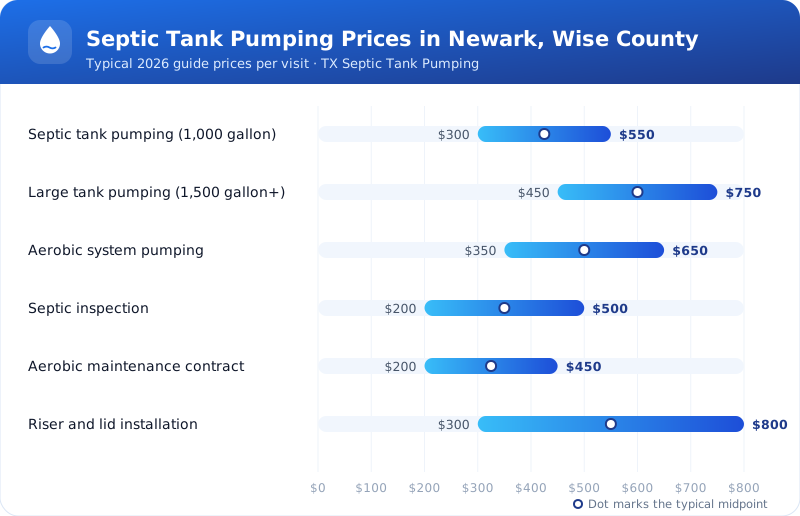
A conventional septic tank works without power. Wastewater separates by gravity, and the drain field does the rest. Maintenance for this type centers on pumping and keeping solids out of the system. Pumping for a conventional system is usually the main recurring cost, and the guide range is $300 to $550 for a 1,000 gallon tank.
An aerobic treatment unit adds air to speed up breakdown of waste and usually includes an electric pump and controls. These systems need regular service. The guide range for aerobic system pumping is $350 to $650, and a yearly maintenance contract typically runs $200 to $450. Effluent pumps can also fail, with replacement in the guide range of $800 to $1,800. If your property has an aerobic unit, ask whether service visits and pumping are bundled before you sign anything.
Texas Rules and Permits for Septic Systems in Newark
The Texas Commission on Environmental Quality, known as TCEQ, regulates on-site sewage facilities across the state. Local authorities, including county offices, may also set requirements for permits, inspections, and installations. Confirm with Wise County before starting a new system, adding a bedroom, or making a major repair.
This page does not list county permit fees or local ordinances. Those can change and are handled by the local office. Your pumping company may be able to explain what paperwork applies to your property, but the final answer comes from the county and TCEQ rules that apply to your system.
What Not to Flush, Pour, or Wash Down a Newark Septic Line
Most septic problems start with materials that should never have gone into the system. Keep these out of the toilets and drains:
- Wipes, including those labeled flushable
- Cooking oil, grease, and fat
- Feminine hygiene products and diapers
- Large amounts of coffee grounds and food scraps
- Paint, solvents, motor oil, or pesticides
- Harsh chemical drain cleaners used on a regular schedule
Booking Pumping With Delta Wastewater in Newark
Delta Wastewater is the Newark listing in this directory. Its entry shows a Newark ZIP of 76071, a street address of 152, Co Rd 4871, and a phone number of (817) 381-5493. A website is listed as well. Our data shows a 5 star Google rating from 40 reviews for the business. Use those details as a starting point, then confirm the points below during your call.
- Know where the lid isBefore you call, locate the access lid if you can. A buried lid can add the uncovering charge from the price guide.
- Call during open hoursPhone calls fit the listed Monday through Friday schedule at (817) 381-5493. Plan a weekday slot instead of waiting for a weekend.
- Give your tank sizeA 1,000 gallon tank and a 1,500 gallon or larger tank fall into different guide ranges, so state the size if you know it.
- Ask for a written priceGuide ranges are not quotes. Ask for the company's own price for your visit before the crew arrives.
Household Habits That Stretch the Time Between Pumpings
Good habits can push back the next pumping date and protect the drain field. Water use is the biggest lever you control. Running several large loads of laundry in one day sends a surge of water into the tank faster than the soil can absorb it. Spreading laundry across the week gives the system time to settle, and fixing running toilets and dripping faucets keeps extra water out of the tank.
Keep vehicles, heavy equipment, and large trees away from the tank and the drain field. Grass and shallow-rooted plants are usually the best cover, since deep roots can reach pipes. Record the date of each pumping, and note any warning signs between visits. That record makes the next appointment easier to schedule and gives the technician useful history.