Septic tank pumping companies · Wichita County
Listings last refreshed October 16, 2026
Best Septic Tank Pumping in Iowa Park: Trusted Local Experts
1 septic tank pumping company in Iowa Park, ranked by Pump Score using Google reviews and profile data.
✓ How we rankFree directory, no pay-to-rank
Septic tank pumping Iowa Park TX starts with knowing when your tank is due, what the job usually costs and who in town can do it. This guide covers all three for homes in the 76367 ZIP code and the surrounding part of Wichita County. Most of what follows applies to any conventional septic system in North Texas, and the local details are noted where they matter.
Top Rated Septic Tank Pumping Companies in Iowa Park Compared
Compare the top picks side by side. Full write-ups follow below.
| # | Septic Company | Best for | Score | Rating | Verified |
|---|---|---|---|---|---|
| #1 | Monty's Plumbing & Septic Tank | An established local septic company with plenty of reviews | 5.0 | 52 reviews | — |
Iowa Park Septic Tank Pumping Reviews and Ratings
1. Monty's Plumbing & Septic Tank
Best for: An established local septic company with plenty of reviews
1401 N Victoria Ave R52 reviews
Score breakdown and details
- Location
- Iowa Park · 1401 N Victoria Ave R, Iowa Park, TX 76367
- Track record
- Established, healthy review volume
- Rating
- 52 Google reviews
- Profile
- Unclaimed listing (Google data)
- Today
- Hours not published
Strengths
- 52 Google reviews, a well established track record
- Direct phone number published, no lead form in the way
Watch Out For
Opening hours are not published. Call to check availability before you plan around a date.
Our take: Our top pick in this area. A Pump Score of 5/10 reflects the best combination of rating, review depth and profile completeness here.
Hiring Local Septic Tank Pumping in Iowa Park
Iowa Park is a small city, and our directory currently lists one septic pumping company in town, Monty's Plumbing & Septic Tank. That is a different situation from a city with dozens of options, so the usual advice to compare several bids works differently here. You still want to know the going rate, what the pumper should check and how to prepare your yard before the truck arrives. The sections below walk through those steps in order.
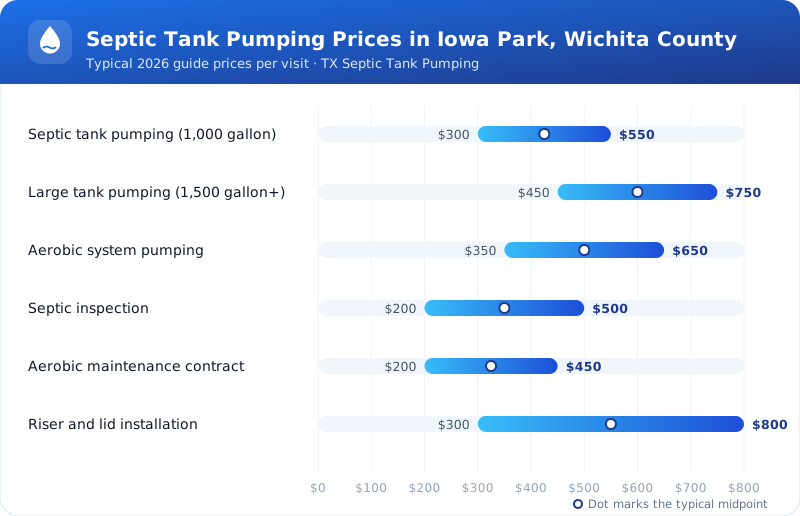
Prices in this guide are general ranges for Texas, not quotes. Your actual bill depends on tank size, how deep the lid sits, whether the system is conventional or aerobic, and whether the call falls on a weekend or after hours. Use the numbers to judge an estimate, then ask the company to explain anything that falls outside the range.
Who Pumps Septic Tanks in Iowa Park Today
Our directory lists one septic pumping company for Iowa Park, Monty's Plumbing & Septic Tank, at 1401 N Victoria Ave R in ZIP code 76367. The phone number is (940) 592-4928. The listing shows 52 Google reviews, and the search data we pulled shows a 4.5 Google rating on that count.
Some search results for the same business show 1010 N Bell Rd, so confirm the address before you send anyone to the office or mail a payment. Ask the office directly what it handles for residential septic tanks, since directory details and search snippets can fall out of date. A short call tells you more than any listing can.
How Often Iowa Park Homes Should Pump Their Tanks
Most conventional septic tanks need pumping every 3 to 5 years. The right interval depends on tank size, household size, water use and how much solid waste goes into the system. A 1,000 gallon tank serving a family of four will usually need attention on a shorter cycle than a larger tank serving two people, and a home that runs a garbage disposal often adds material faster than most homeowners expect.
- Pump a typical household tank every 3 to 5 years.
- Check sooner if the home has more than four people or uses a garbage disposal often.
- Plan for service sooner after a long stretch of heavy water use, such as guests or laundry from several loads a day.
- Aerobic systems need service under a maintenance contract, plus pumping as the pumper recommends.
- Ask the pumper to measure sludge and scum levels at each visit and write the numbers down for your records.
Warning Signs Your Tank Is Full Before the Backup
A full tank rarely announces itself in one dramatic way. Solids build up, then move toward the drain field, and the first symptoms often show up inside the house. Watch for the following signs and treat any one of them as a reason to schedule an inspection.
- Slow drains in several sinks, tubs or showers at the same time
- Gurgling pipes after flushing or running water
- Toilets that drain slowly or take more than one flush
- A sewage smell in the yard or near the tank lid
- Soggy ground or unusually green, lush patches over the drain field
- Water backing up into tubs, showers or floor drains
Preparing the Lid and Access Before the Truck Arrives
Many pumping delays come from the lid. A buried tank cover can be hidden under soil, gravel or a patio, and the crew needs clear access to open it. A little preparation can save time and avoid a locating charge.
- Find the lidCheck your closing papers or the original site plan. If you cannot find the tank, a locating service can uncover the lid for a guide price of $50 to $200.
- Clear the pathRemove shrubs, toys, planters and vehicles from the area around the lid so the crew can reach it with a hose and equipment.
- Protect the drain fieldKeep cars, trucks and heavy equipment off the drain field, since weight can crush the pipes and soil that make the system work.
- Describe recent problemsTell the company about recent backups, new fixtures or long stretches of heavy use. Those details help the technician judge how full the tank is.
- Ask about a riserIf the lid sits deep under the soil, ask about a riser and lid installation. Guide prices run $300 to $800, and a riser can make future visits faster and cheaper.
What Happens During a Pump Out in North Texas
A standard visit follows a fairly predictable order. The crew opens the lid, checks the liquid level, measures the scum and sludge layers, and pumps the tank. They should also look at the baffles and outlet, and clean any effluent filter if one is installed. Ask for a short written note of what they found, since that record helps when you plan the next visit.
The Texas Commission on Environmental Quality regulates on-site sewage facilities across the state, so pumping work sits within state oversight. Any pumper should be able to explain where the waste goes after it leaves your tank and how the system is handled from start to finish.
Conventional Tanks
A conventional tank separates solids from liquids and sends the clearer water to the drain field. The pumper removes the accumulated sludge and scum, which is why the 3 to 5 year schedule matters. Guide prices for a 1,000 gallon tank run $300 to $550.
Aerobic Systems
Aerobic systems use air and a mechanical process to treat waste, so they need periodic service under a maintenance contract. Pumping an aerobic unit runs $350 to $650 in guide terms, and a yearly maintenance contract often costs $200 to $450. Ask whether the contract includes inspection of the pump, alarm and air components.
Ridex and Other Additives Are Not a Substitute for Pumping
People in Iowa Park often ask whether Ridex or a similar product can replace pumping. Most septic professionals say no. Additives may be marketed to break down solids, but they do not remove the sludge already in the tank, and they cannot repair a drain field that is saturated or clogged.
Pumping is the step that physically removes material from the tank. Ask any company that sells additives to explain what the product does and what it does not do, and keep pumping on schedule regardless of what the bottle says.
Items That Should Never Go Down an Iowa Park Septic System
Most septic failures start with the things homeowners flush or pour down the drain without thinking. Solids that do not break down quickly fill the tank faster, and some liquids kill the bacteria that help break waste down.
- Cooking grease and oil, which harden and clog the outlet
- Wipes labeled flushable, which usually do not break down in the tank
- Feminine hygiene products, diapers and paper towels
- Coffee grounds and food scraps in large amounts
- Paint, solvents, motor oil and pesticides
- Chemical drain cleaners that can harm the bacteria in the tank
- Medications, which should go to a pharmacy take-back program instead