Septic tank pumping companies · Walker County
Listings last refreshed October 16, 2026
Best Septic Tank Pumping in New Waverly [Reviewed & Ranked]
1 septic tank pumping company in New Waverly, ranked by Pump Score using Google reviews and profile data.
✓ How we rankFree directory, no pay-to-rank
Septic tank pumping in New Waverly, TX is a planned maintenance job for most homeowners, not an emergency. Most household tanks should be pumped every three to five years, and the best time to schedule the visit is before a slow drain or a soggy patch over the drain field forces the issue. New Waverly sits in Walker County, and the local listings currently show one company offering septic pumping, so the decision is simpler here than in a large metro area. This page explains how to tell when your tank is due, what a pumping visit involves, what the work usually costs, and what to ask before you book.
Top Rated Septic Tank Pumping Companies in New Waverly Compared
Compare the top picks side by side. Full write-ups follow below.
| # | Septic Company | Best for | Score | Rating | Verified |
|---|---|---|---|---|---|
| #1 | Wilkinson Septic Services | Homeowners who want a septic company with a long track record | 8.8 | 322 reviews | — |
New Waverly Septic Tank Pumping Reviews and Ratings
1. Wilkinson Septic Services
Best for: Homeowners who want a septic company with a long track record
1007 TX-150322 reviews
Score breakdown and details
- Location
- New Waverly · 1007 TX-150, New Waverly, TX 77358
- Track record
- Established, very high review volume
- Rating
- 322 Google reviews
- Profile
- Unclaimed listing (Google data)
- Today
- See hours on profile
Strengths
- 322 Google reviews, a well established track record
- Direct phone number published, no lead form in the way
- Has its own website with more detail on services
- Opening hours published
Watch Out For
The Google profile is not owner verified. Double check the address and phone when you call.
Our take: Our top pick in this area. A Pump Score of 8.8/10 reflects the best combination of rating, review depth and profile completeness here.
Hiring Local Septic Tank Pumping in New Waverly
A pumping visit removes the sludge that settles at the bottom of the tank and the scum that floats at the top. A good crew also checks the baffles, the outlet and, where one exists, the effluent filter, since those parts keep solids from reaching the drain field. Aerobic systems work differently. They use a motor and air to treat waste, so they need ongoing service and a maintenance schedule in addition to periodic pumping. Texas regulates on-site sewage facilities through the Texas Commission on Environmental Quality, which sets the baseline rules that installers and service providers follow.
Use the sections below as a checklist before you call. Read the warning signs, compare the guide prices, look at the single local listing, and then ask the questions in the checklist so you know exactly what you are paying for when the crew arrives.
How to Tell When Your New Waverly Tank Is Due
The calendar is only a starting point. The right interval depends on tank size, how many people live in the home, how much water runs through the house each day, and whether the kitchen has a garbage disposal. A household of five filling a 1,000 gallon tank will reach the pumping point much sooner than a couple in the same tank. Keep a record of each visit so you can see how quickly the tank fills over time.
Do not wait for a backup to tell you the tank is full. These signs usually show up before a serious failure:
- Drains run slowly across several fixtures at the same time
- A sewage smell near the tank, the drain field or inside the house
- Gurgling pipes or toilets that bubble when water runs somewhere else
- Wet or unusually green grass over the drain field, even during dry weather
- Solids visible through the access riser or the outlet baffle
- Water backing up into tubs or floor drains
What Happens During a Pumping Visit
A standard visit is short, but each step matters because it tells you the condition of the system. Ask the crew to show you what they find, especially the sludge level, since that number is the best evidence for your next pumping date.
- Locate the tankThe crew finds the tank and its access lid using property records, a site map or probing. If the lid is buried under soil or grass, uncovering it is a separate charge, with a guide range of $50 to $200.
- Open and measureThe lid comes off so the technician can see the liquid level, the sludge layer and the scum layer. This check shows whether the tank is due now or can wait a little longer.
- Pump out the wasteThe contents are pumped into a truck and taken to an approved disposal site. The tank is emptied so the next cycle starts clean, and the sludge does not carry over into the drain field.
- Inspect the partsThe technician checks the inlet and outlet baffles, the effluent filter if one is installed, and any visible cracks or root intrusion. Problems found here are easier and cheaper to fix when they are caught early.
- Close and documentThe lid goes back in place and the visit is recorded. Ask for a written note of the sludge level, the parts checked and any recommended repairs, so you have a dated record for your next visit or for a home sale.
Conventional Tanks Versus Aerobic Systems: Guide Costs
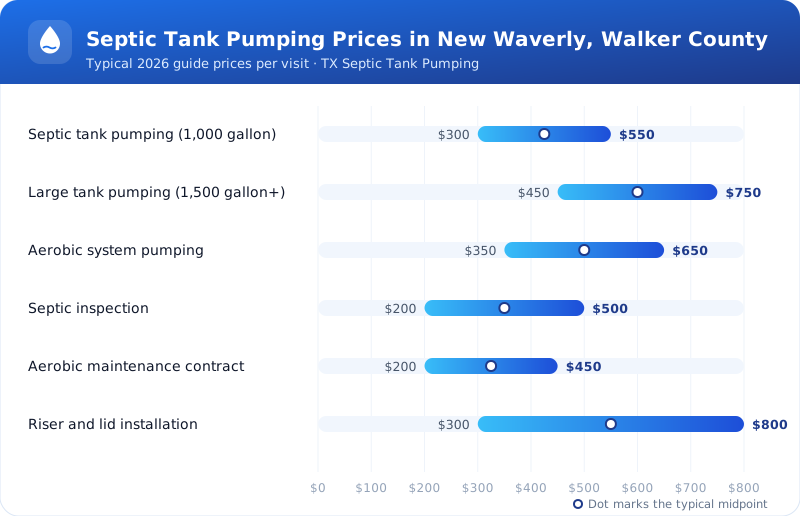
Cost depends mostly on the type of system and the size of the tank. A conventional tank is a holding and settling chamber, so pumping is the main recurring job. An aerobic unit adds mechanical parts, so it needs a maintenance contract on top of pumping. The table below lists the guide ranges for each service in Texas for 2026. These are guide prices, not quotes.
| Service | Guide Price Range (USD) | What It Covers |
|---|---|---|
| Pumping, 1,000 gallon tank | $300 to $550 | Most common residential size |
| Pumping, 1,500 gallon or larger | $450 to $750 | Larger homes and heavier use |
| Aerobic system pumping | $350 to $650 | Pumping only, separate from upkeep |
| Aerobic maintenance contract, yearly | $200 to $450 | Scheduled servicing of the unit |
| Septic inspection | $200 to $500 | Condition check, often before a sale |
| Effluent or pump replacement | $800 to $1,800 | Only when a part has failed |
Texas Septic Rules and Installing a New Tank in Walker County
Texas regulates on-site sewage facilities, and the Texas Commission on Environmental Quality sets the statewide baseline. Installation and major changes generally require a permit before work starts, and the design depends on the lot, the soil and the number of bedrooms the system must serve. Ask the installer which permit applies to your property and whether any local requirements go beyond the state rules. This page does not list permit fees, because those can change and vary by jurisdiction.
Who Regulates Septic Systems in Texas
State rules come from the TCEQ, and local authorities may add steps for permits, inspections and record keeping. Before you sign any contract, confirm who issues the permit for your address so that you do not miss a required inspection.
How a New Tank Gets Installed
Installation usually starts with a site evaluation to read the soil and the water table. Next comes the permit, then excavation, tank placement, and the connection to the house and to the drain field. Final steps include inspection and backfill. Shortcuts at any stage can cause problems that show up years later, so the paperwork matters as much as the digging.
The Cheapest Septic Option Is Usually the One You Already Have
A new aerobic system installed falls in a guide range of $8,000 to $18,000, which is far above the cost of a routine pumping. Conventional systems are generally less expensive to install than aerobic systems, but the real figure depends on site conditions, and this page does not list a guide range for conventional installs. For most owners, keeping a working tank on a steady pumping schedule costs far less than replacing it early. The cheapest septic system is almost always the one that is already in the ground and working.
Alternatives to a Septic System for New Waverly Properties
The main alternative to an on-site septic system is a connection to a public sewer line, where one reaches your property. Whether a sewer line is available depends on the specific street and the utility that serves it, so check with the provider instead of assuming. Connection costs and any required approvals vary, and they are outside what this page can estimate.
Where no sewer line is nearby, the realistic choice is between a conventional tank and an aerobic unit, and the site evaluation usually decides which one works. Low water fixtures and composting toilets can reduce the load on a system, but some of them may need approval under state rules before they can replace standard plumbing. Treat them as a way to ease pressure on an existing system, not as a simple swap.
Reading the Single Local Septic Listing in New Waverly
The directory lists one business in New Waverly, Wilkinson Septic Services, with a street address at 1007 TX-150 and a phone number of (936) 672-2713. Its listing has a website, shows 322 Google reviews with a 5 rating, and states that the company is open every day of the week and 24 hours. The business description says it provides pumping and cleaning for both aerobic and conventional systems in residential and commercial properties.
Because there is only one local listing, the review count reflects a single company's reputation and not a comparison between several firms. If you want a comparison, use the towns listed below and ask each company the same questions before you decide.
Questions to Ask Before Booking Septic Pumping in New Waverly
A short call can prevent surprises on the invoice. Write down the answers so you can compare them with the guide prices above.
- Is the price for a 1,000 gallon pumping or for a larger tank, and what is the total?
- Does the quote include locating and uncovering a buried lid, and what does that cost?
- Is a weekend or after hours callout billed extra, and how much is the surcharge?
- Do you service aerobic systems, and do you offer a maintenance contract for them?
- Will you record the sludge level and give me a written note of what you found?
- Will you check the baffles, outlet and effluent filter during the visit?
Protecting the Drain Field Between Pumpings
Pumping only removes solids from the tank. The drain field does the final treatment of wastewater as it soaks into the soil, and it can fail if it is overloaded or compacted. Spread laundry across the week instead of running several loads in one day. Keep vehicles, heavy equipment and new construction off the field, and keep tree roots away from the lines.
What goes down the drain matters too. Wipes, grease, coffee grounds, cooking oil and harsh chemicals can clog the tank or push solids into the field faster than the system can handle. Drain field repair is one of the costlier septic jobs, with a guide range of $2,000 to $10,000, so routine care is the cheaper path. A pumping visit is also a good moment to ask the crew how the field looks and whether you should watch for specific problems.