Septic tank pumping companies · Parker County
Listings last refreshed October 16, 2026
Best Septic Tank Pumping in Sanctuary: Top Rated & Trusted
1 septic tank pumping company in Sanctuary, ranked by Pump Score using Google reviews and profile data.
✓ How we rankFree directory, no pay-to-rank
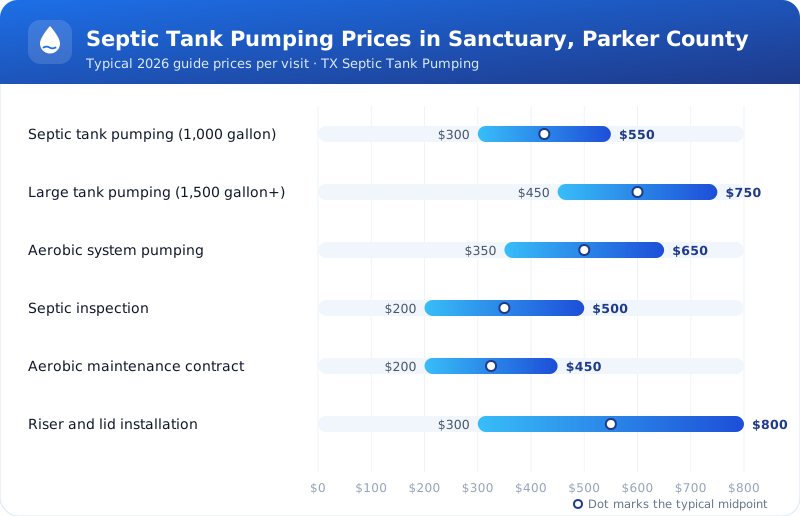
Septic tank pumping Sanctuary TX customers have a small field to choose from right now. Our directory ranks one company for the town, B & B Septic Pumping, listed under ZIP code 76082. That makes the choice simpler than in larger Texas towns, but it also means you should understand what a pump out involves before you book. This page covers how often a typical tank needs service, what guide prices look like, which warning signs to watch for, and which habits shorten the time between pumpings.
Top Rated Septic Tank Pumping Companies in Sanctuary Compared
Compare the top picks side by side. Full write-ups follow below.
| # | Septic Company | Best for | Score | Rating | Verified |
|---|---|---|---|---|---|
| #1 | B & B Septic Pumping | A local septic company you can call direct | 1.1 | 2 reviews | — |
Sanctuary Septic Tank Pumping Reviews and Ratings
1. B & B Septic Pumping
Best for: A local septic company you can call direct
Sanctuary2 reviews
Score breakdown and details
- Location
- Sanctuary · Sanctuary, TX 76082
- Track record
- New or lightly reviewed
- Rating
- 2 Google reviews
- Profile
- Unclaimed listing (Google data)
- Today
- Hours not published
Watch Out For
Only 2 reviews so far, so the rating could still move. Worth asking about experience.
Our take: Our top pick in this area. A Pump Score of 1.1/10 reflects the best combination of rating, review depth and profile completeness here.
Hiring Local Septic Tank Pumping in Sanctuary
Homes in and around Sanctuary often rely on an on-site sewage facility because municipal sewer lines do not reach every rural lot. In that setup, the septic tank is the part of the system you never see. Solids settle to the bottom, scum floats to the top, and the liquid in between flows out to the drain field. When solids build up, they can reach the outlet and move into the field, where the damage is expensive to repair. Regular pumping is one of the most practical ways to protect that investment.
Texas regulates on-site sewage facilities through the Texas Commission on Environmental Quality, but the day to day care of a tank falls to the homeowner. Knowing the signs of a full tank and the materials that cause harm will help you call for service at the right time.
Who Handles Septic Tank Pumping in Sanctuary Today
Our ranking for Sanctuary currently includes one company: B & B Septic Pumping, listed in Sanctuary under ZIP 76082. The listing shows two Google reviews, so it has a small public track record compared with busier markets. Read those reviews for specifics about scheduling, communication and how the crew left the yard, then call to confirm the company still services your address.
Because only one ranked option shows up, it helps to compare the basic terms in writing before you agree to anything. Ask for the price of a pump out at your tank size, whether a fee applies if the lid has to be dug out, and how the company handles weekend or after hours calls. The guide prices later on this page will give you a sense of what a fair number looks like for your situation.
How Often a 1,000 Gallon Tank Near Sanctuary Should Be Pumped
The common guidance is to pump a typical household septic tank every 3 to 5 years. A 1,000 gallon tank serving a family of four often lands near the middle of that range, but the real interval depends on how the house uses water and what goes down the drain.
- Household size: more people means more wastewater and faster solids buildup.
- Garbage disposal use: ground food adds solids the tank has to hold.
- Water use: laundry run all in one day or long showers push liquid through the tank faster.
- Tank age and condition: older tanks with worn baffles or weak outlets may need attention sooner.
- Aerobic systems: these units have their own service schedule and usually need a maintenance contract on top of pumping.
Warning Signs Your Tank Is Full Before the Scheduled Pump Out
Do not wait for a backup to act. These signs usually mean the tank is near capacity or the drain field is struggling to take in liquid. Check the house and the yard each season, and write down anything that repeats.
- Drains run slowly in several fixtures at the same time.
- Toilets gurgle when water runs somewhere else in the house.
- A sewage odor appears around the tank lid or over the drain field.
- Patches of unusually green, lush grass sit over the drain field while the lawn elsewhere looks dry.
- Soggy ground or standing water over the drain field stays there after dry weather.
- Sewage backs up into the lowest drain in the house.
Why a 20 Year Gap Without Pumping Usually Ends Badly
A tank can keep working for many years without service, but going 20 years without pumping is a gamble. Solids keep accumulating until they reach the outlet, and from there they can wash into the drain field. Once the field clogs or fails, the repair can cost far more than several routine pump outs combined.
Most septic guidance treats the 3 to 5 year interval as a baseline. A tank that has gone much longer should be inspected before anyone assumes it is fine. A septic inspection, which the guide prices place at $200 to $500, can show how much sludge has built up and whether the tank and outlet are in working order.
Ridex and Other Septic Additives: What They Can and Cannot Do
Ridex and similar products are sold as tank treatments that claim to break down waste or keep the system running clean. Opinions on additives vary, and the general septic guidance is that they do not replace pumping. A product cannot physically move the sludge layer out of the tank, and it does not repair a clogged drain field or a cracked outlet pipe.
If you are thinking about adding a product, read the label, ask your pumper what they have seen in your type of system, and keep the regular service schedule either way. Pumping and inspection remain the reliable tools for knowing what is happening inside the tank.
Showers, Laundry and Water Use When the Tank Is Full
A full tank changes how much water the system can handle in a day. The steps below cover what to do depending on what you are seeing.
- Stop Water Use If Sewage Is Backing UpIf sewage is already rising in a drain, stop running water in the house, including showers, toilets and washers, until a pumper has checked the system.
- Spread Out the Daily LoadIf the tank is only near full and nothing is backing up, a shower is usually fine. Space showers and laundry across the week rather than running several in one hour.
- Fix Leaks and Running ToiletsA constant trickle adds water to the tank every day, and a running toilet can add hundreds of gallons a week without anyone noticing.
- Book the Pump Out EarlyCall for service as soon as you notice slow drains or odors, and tell the company what you have seen so the crew knows what to check.
What Damages a Septic System Most
The worst thing for a septic tank is usually the material that should never have entered it. The table below lists the most common habits that cause trouble, along with the reason each one matters.
| Habit or Object | Why It Hurts |
|---|---|
| Flushed wipes, paper towels or feminine products | These do not break down and can clog the outlet and pump |
| Cooking grease or oil poured down the drain | It hardens and adds to solids in the tank and the lines |
| Heavy amounts of chemical drain cleaner or bleach | It can disrupt the bacteria that break down waste |
| Heavy vehicles or equipment on the drain field | It compacts soil and can crush pipes |
| Tree roots near tank or drain lines | Roots can enter and block pipes |
| Garbage disposal used every day | It adds solids faster than the tank can comfortably hold |
Booking a Pump Out With B & B Septic Pumping in Sanctuary
B & B Septic Pumping is the ranked company for Sanctuary in our directory. Use these steps to prepare for a visit, whichever company you choose.
- Confirm the Service AreaCall before scheduling and confirm that B & B serves your Sanctuary address under ZIP 76082.
- Locate Your Tank LidFind the access lid ahead of time. If it is buried, locating and uncovering it is a separate charge, listed in the guide prices at $50 to $200.
- Clear the Access PathMove vehicles, pets, lawn furniture and stored items away from the lid and the path the truck will use.
- Ask for the Total in WritingRequest the full price for your tank size, including any travel or weekend callout fee, before the crew arrives.
- Keep the Service RecordSave the receipt, note the date, and set a reminder for the next check in three to five years.
Questions to Ask Before You Hire Any Septic Pumper
These questions work for B & B or for any company you consider in Parker County or nearby towns. Clear answers make it easier to compare prices and service.
- Are you licensed to perform septic work in Texas, and what is your license number?
- Do you service my tank size and system type, including aerobic units?
- What is the total price for a 1,000 gallon pump out, and which extra charges could apply?
- How soon can you come, and do you offer emergency or weekend service?
- Will you show me the condition of the tank and note any problems in writing?
- Do you provide a written record of the service for my files?