Septic tank pumping companies · Grimes County
Listings last refreshed October 16, 2026
3 Best Septic Tank Pumping Companies in Plantersville
3 septic tank pumping companies in Plantersville, ranked by Pump Score using Google reviews and profile data.
✓ How we rankFree directory, no pay-to-rank
Most people searching for septic tank pumping in Plantersville TX are dealing with one of three things: a slow drain, a sewage smell near the yard, or an old service record that has them wondering when the tank was last emptied. Plantersville is a small community in Grimes County, and this directory lists three septic businesses serving it, with 168 Google reviews between them. This page explains when pumping is due, what a visit involves, and what the usual costs look like before you pick up the phone.
Top Rated Septic Tank Pumping Companies in Plantersville Compared
Compare the top picks side by side. Full write-ups follow below.
| # | Septic Company | Best for | Score | Rating | Verified |
|---|---|---|---|---|---|
| #1 | Coast to Coast Water Well and Septic Repair | An established local septic company with plenty of reviews | 7.8 | 118 reviews | — |
| #2 | Coast to Coast Septic Pumping, LLC | Checking services and hours online before you call | 6.0 | 30 reviews | — |
| #3 | Coast to Coast Septic Maintenance, LLC | Checking services and hours online before you call | 5.5 | 20 reviews | — |
Plantersville Septic Tank Pumping Reviews and Ratings
1. Coast to Coast Water Well and Septic Repair
Best for: An established local septic company with plenty of reviews
7063 Clark Rd Suite A118 reviews
Score breakdown and details
- Location
- Plantersville · 7063 Clark Rd Suite A, Plantersville, TX 77363
- Track record
- Established, healthy review volume
- Rating
- 118 Google reviews
- Profile
- Unclaimed listing (Google data)
- Today
- See hours on profile
Strengths
- 118 Google reviews, a well established track record
- Direct phone number published, no lead form in the way
- Has its own website with more detail on services
- Opening hours published
Watch Out For
The Google profile is not owner verified. Double check the address and phone when you call.
Our take: Our top pick in this area. A Pump Score of 7.8/10 reflects the best combination of rating, review depth and profile completeness here.
2. Coast to Coast Septic Pumping, LLC
Best for: Checking services and hours online before you call
7063 Clark Rd30 reviews
Score breakdown and details
- Location
- Plantersville · 7063 Clark Rd, Plantersville, TX 77363
- Track record
- Growing review base
- Rating
- 30 Google reviews
- Profile
- Unclaimed listing (Google data)
- Today
- See hours on profile
Strengths
- 30 Google reviews, a well established track record
- Direct phone number published, no lead form in the way
- Has its own website with more detail on services
- Opening hours published
Watch Out For
The Google profile is not owner verified. Double check the address and phone when you call.
Our take: A strong shortlist option with a Pump Score of 6/10. Compare availability and price against the septic companies above.
3. Coast to Coast Septic Maintenance, LLC
Best for: Checking services and hours online before you call
7063 Clark Rd Suite C20 reviews
Score breakdown and details
- Location
- Plantersville · 7063 Clark Rd Suite C, Plantersville, TX 77363
- Track record
- Growing review base
- Rating
- 20 Google reviews
- Profile
- Unclaimed listing (Google data)
- Today
- See hours on profile
Strengths
- 20 Google reviews, a well established track record
- Direct phone number published, no lead form in the way
- Has its own website with more detail on services
- Opening hours published
Watch Out For
The Google profile is not owner verified. Double check the address and phone when you call.
Our take: A strong shortlist option with a Pump Score of 5.5/10. Compare availability and price against the septic companies above.
Hiring Local Septic Tank Pumping in Plantersville
Pumping removes the sludge that settles at the bottom of a septic tank and the scum that floats at the top. It clears space in the tank so solids are less likely to leave the tank and clog the drain field, which is the buried area that releases treated liquid into the soil. Pumping does not repair a failing drain field, and it does not replace routine checks. Most households pump every three to five years, but household size, tank size, and how much water goes down the drain all shift that timeline. The sections below walk through those factors so you can decide without guessing.
Plantersville Septic Pumping Options at a Glance
The companies below are the ones this directory ranks for Plantersville, ordered by Pump Score. Each one has a website listed in the directory, and each one is registered at the same Clark Road address. The ranking reflects the directory's own scoring, so read the listing details and reviews before you decide.
Review counts give a rough sense of how many customers have left feedback, but they do not tell you how a specific job went. Use the listings to check phone numbers, opening days, and whether a company is handling the type of system you have. If you have an aerobic unit instead of a standard tank, ask that question first, because the service needs differ.
Signs a Plantersville Tank Is Due for Pumping
A tank rarely fails all at once. The warning signs usually build over weeks or months. If you notice more than one of the following, schedule an inspection and pumping rather than waiting for a backup.
- Drains in the house run slowly, including sinks, tubs, and toilets
- Gurgling sounds from plumbing after water is used
- Sewage odor around the tank lid, the drain field, or inside the home
- Water pooling or soggy ground over the drain field, especially after rain
- Unusually green or fast-growing grass in a strip above the drain field
- Sewage backing up into a toilet or shower drain
- No record of pumping in the last three to five years, or a record you cannot find
How Often Pumping Fits a Typical Household
The common guideline is to pump a septic tank every three to five years. That range is a starting point, not a rule. A household with several people, a garbage disposal, or frequent laundry loads sends more solids into the tank than a couple living alone, so the tank fills faster. A smaller tank also reaches its limit sooner than a larger one.
Many homeowners find it helpful to write down the date of each pumping and the tank size. Those notes make it easier to plan the next visit and to tell a service company what has been done. If you bought a home and have no records, a pumping and inspection is a reasonable first step, because it shows how much sludge and scum are in the tank today.
Adjusting the Interval for Heavy Use
If guests stay often, if the home has a large family, or if the tank has never been checked, shortening the interval is a sensible move. Waiting the full five years on a heavily used system is the most common way homeowners end up with an emergency call.
What Happens During a Pumping Visit
A standard visit is short, but it involves more than running a hose into the tank. Here is the general sequence most septic technicians follow.
- Locate and uncover the tank lidThe technician finds the access points. Many older tanks are buried, so this step can take extra time. Uncovering the lid is often a separate charge.
- Check the levels inside the tankThe technician measures the sludge at the bottom and the scum at the top to judge how full the tank is.
- Pump out the contentsThe tank is emptied with a pump truck, and the waste is hauled away for proper disposal.
- Inspect the tank and its partsThe technician looks at the baffles, the inlet and outlet, and the effluent filter if one is present. Damage or clogging at this stage is often flagged for repair.
- Review the findings with youA good visit ends with a clear note on the tank condition, the pump date, and any recommended repairs or follow-up.
Can You Install Your Own Septic System in Texas?
Searchers often ask whether a homeowner can install a septic system personally. The Texas Commission on Environmental Quality, or TCEQ, regulates on-site sewage facilities across the state, and installation involves design, permitting, and inspection steps that homeowners should not assume they can skip. Installation is generally handled by licensed professionals.
Before any excavation, contact TCEQ and your county's permitting office to learn what applies to your property. A pumping company can tell you whether your existing system needs repair or replacement, but the final approval and installation rules come from the state and local authorities.
What Damages a Septic Tank Most
If you ask what the worst thing for a septic tank is, the answer is usually not one dramatic mistake. It is a set of everyday habits that push solids and chemicals into the system faster than it can handle. The most common problems include the following.
- Flushing wipes, feminine products, paper towels, or other items that do not break down
- Pouring grease, cooking oil, or fats down the kitchen sink
- Using harsh chemical drain cleaners or pouring solvents, paint, or motor oil into drains
- Running a garbage disposal often, which adds solids to the tank
- Driving, parking, or building on top of the drain field
- Planting trees or large shrubs near the tank or drain field, where roots can invade pipes
- Doing many loads of laundry or running long showers in a short period, which floods the system
Aerobic Systems Compared With Standard Septic Tanks
Some Plantersville homes use an aerobic treatment unit rather than a conventional tank. Aerobic systems add air to treat wastewater more actively, and they usually need routine maintenance by a qualified service provider. The table below compares the two in general terms.
| Feature | Standard septic tank | Aerobic treatment system |
|---|---|---|
| How it treats waste | Separates solids and lets liquid flow to a drain field | Uses air to treat wastewater before it reaches the disposal area |
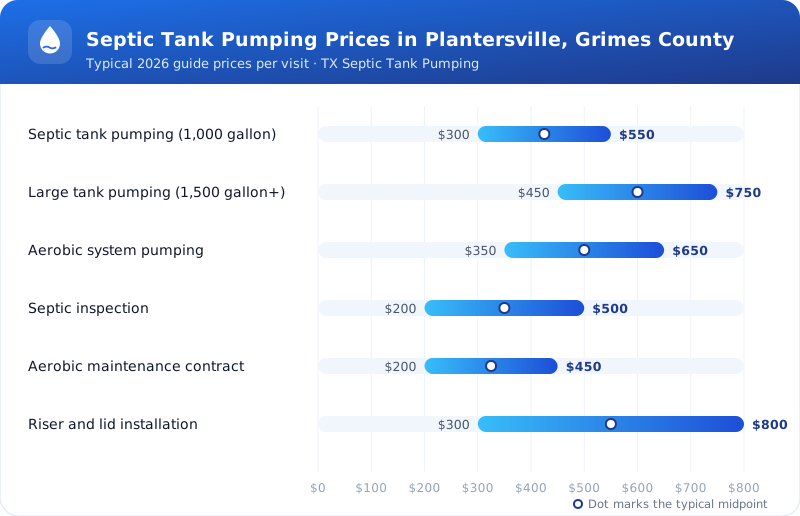
| Typical pumping guide price | $300 to $550 for a 1,000 gallon tank | $350 to $650 for aerobic system pumping |
| Ongoing service | Pumping and inspection on a schedule, often every three to five years | Maintenance visits, often covered by a yearly contract at $200 to $450 |
| Warning signs to watch | Slow drains, odor, soggy ground over the drain field | Alarm lights or sounds, odor, or a change in how the system sounds during operation |