Septic tank pumping companies · Grayson County
Listings last refreshed October 16, 2026
2 Best Septic Tank Pumping Companies in Denison
2 septic tank pumping companies in Denison, ranked by Pump Score using Google reviews and profile data.
✓ How we rankFree directory, no pay-to-rank
Septic tank pumping denison tx searches usually come from one of two situations. Either a tank is overdue for service, or a drain has backed up and needs attention today. Denison sits in Grayson County in North Texas, and this directory currently lists two companies in town with a combined total of six Google reviews. That is a small pool, so it pays to read each listing closely before you make a call.
Top Rated Septic Tank Pumping Companies in Denison Compared
Compare the top picks side by side. Full write-ups follow below.
| # | Septic Company | Best for | Score | Rating | Verified |
|---|---|---|---|---|---|
| #1 | 5 Star Portable Toilets | Saturday appointments | 4.2 | 5 reviews | — |
| #2 | Denison Paw Paw Sewage Disposal | A local septic company you can call direct | 1.5 | 1 reviews | — |
Denison Septic Tank Pumping Reviews and Ratings
1. 5 Star Portable Toilets
Best for: Saturday appointments
2348 US-695 reviews
Score breakdown and details
- Location
- Denison · 2348 US-69, Denison, TX 75021
- Track record
- New or lightly reviewed
- Rating
- 5 Google reviews
- Profile
- Unclaimed listing (Google data)
- Today
- See hours on profile
Strengths
- Direct phone number published, no lead form in the way
- Has its own website with more detail on services
- Opening hours published
- Open on Saturdays
Watch Out For
Only 5 reviews so far, so the rating could still move. Worth asking about experience.
Our take: Our top pick in this area. A Pump Score of 4.2/10 reflects the best combination of rating, review depth and profile completeness here.
2. Denison Paw Paw Sewage Disposal
Best for: A local septic company you can call direct
1500 E Sears St1 reviews
Score breakdown and details
- Location
- Denison · 1500 E Sears St, Denison, TX 75020
- Track record
- New or lightly reviewed
- Rating
- 1 Google reviews
- Profile
- Unclaimed listing (Google data)
- Today
- Hours not published
Strengths
- Direct phone number published, no lead form in the way
Watch Out For
Only 1 reviews so far, so the rating could still move. Worth asking about experience.
Our take: A strong shortlist option with a Pump Score of 1.5/10. Compare availability and price against the septic companies above.
Hiring Local Septic Tank Pumping in Denison
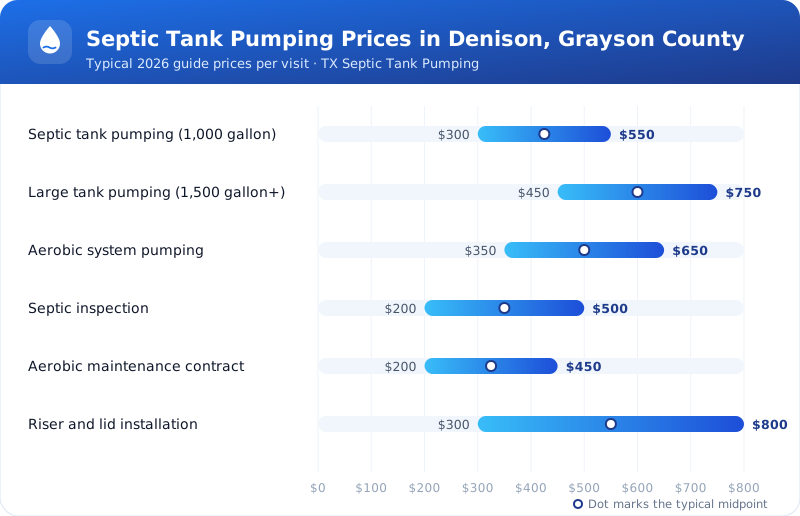
This page covers the local listings, how often a household tank should be pumped, the warning signs that point to a problem, and what common jobs cost in the guide ranges for Texas. Prices here are general guide ranges, not quotes. The actual cost depends on tank size, access, lid depth, and the condition of the system.
The Texas Commission on Environmental Quality (TCEQ) regulates on-site sewage facilities across the state, and local rules can add requirements on top of state standards. Use this page as a starting point for questions to ask a company, not as the final word on what your property needs.
Denison Septic Pumping Companies in This Directory
The two companies below are the only Denison listings in our directory right now. Each entry shows only what we have on record, so you can check the details before reaching out and confirm the services you need.
- 5 Star Portable Toilets, 2348 US-69, Denison, ZIP 75021. Five Google reviews. Listed as open Monday through Saturday. The listing includes a website. The name points toward portable toilet work, so confirm by phone that the company handles septic tank pumping before you book.
- Denison Paw Paw Sewage Disposal, 1500 E Sears St, Denison, ZIP 75020. One Google review. Listed by phone at (903) 464-4488. Our entry does not show business days, so ask about hours and service area before you schedule.
How Often a Denison Household Tank Should Be Pumped
Most households pump a septic tank every three to five years. That range is a general guideline, and your own schedule may be shorter or longer. Tank size, the number of people in the home, how much water the household uses, and whether a garbage disposal is used all change how quickly solids build up. A family of four using a 1,000 gallon tank will fill it faster than a couple in a small home with the same tank.
Keep a simple record of each pump out, including the date, the company, and any notes about tank condition. That record makes it easier to set the next service date, and it helps a future buyer or inspector see how the system has been maintained. If you cannot find past records for a home you are buying, plan a pump out and inspection soon after closing.
Warning Signs Your Tank Needs Service Now
Some problems show up inside the house first, and others appear in the yard. Treat repeated symptoms as a signal to call a pumper before a small issue turns into a backup.
- Slow drains in several fixtures at once, not just one sink
- Gurgling sounds in pipes after water is used
- Sewage odor around the tank lid, in the yard, or inside the house
- Toilets or showers that back up, especially after heavy water use
- Soggy ground, unusually green grass, or standing water over the drain field
- Water or sludge visible near the tank access lid
What Happens During a Standard Pump Out
A standard pump out is simple in concept, but a careful crew does more than remove liquid. Knowing the sequence helps you ask the right questions when you book and when the work is done.
- Locate and uncover the lidThe tank is found, often with a probe, and the access lid is uncovered. In the guide ranges, locating and uncovering the lid is a separate charge of $50 to $200, which matters if the tank is buried deep.
- Pump the tankScum and sludge are removed from the tank, and the company should tell you what was pumped out and whether the level looked normal.
- Inspect the tankThe baffles and outlet tees are checked for damage, and the tank walls are looked at for cracks or leaks. Damaged baffles can let solids reach the drain field.
- Keep a written recordAsk for a written note of the service date, the tank condition, and any repairs recommended. Store it with your home papers for the next service.
Aerobic Systems Need More Than a Pump Out
An aerobic treatment unit uses air and a mechanical process to treat wastewater, and it works differently from a conventional tank and drain field. Aerobic systems need regular maintenance, and most owners set up a maintenance contract with a licensed provider. That contract usually covers inspection, service visits, and checks on the spray or drip components.
Pumping is only one part of aerobic care. Effluent filters need cleaning, and a failing pump or control panel can stop the system from treating wastewater properly. If an aerobic unit is not serviced on schedule, it can fail in ways that a conventional tank will not show as quickly, so ask any company how it tracks service dates for aerobic customers.
Septic Additives and What They Cannot Do
Many homeowners ask whether a bottled additive such as Ridex can replace pumping. The general view among septic professionals is that additives do not take the place of a pump out. Solids still build up, and a product cannot remove a full tank or fix a failing drain field. Read any product label, follow your system's maintenance guidance, and ask your pumper before adding anything to the tank.
What Not to Flush or Pour Down a Septic System
Most septic problems start with what goes down the drain. These items can clog the tank outlet, overload the drain field, or kill the bacteria that break down waste.
- Wipes, including those labeled flushable
- Feminine hygiene products and diapers
- Cooking grease, oil, and fat poured down the sink
- Paint, solvents, pesticides, and motor oil
- Coffee grounds and large amounts of food scraps
- Harsh chemical drain cleaners used on a regular basis