Septic tank pumping companies · Grayson County
Listings last refreshed October 16, 2026
Best Septic Tank Pumping in Bells, Ranked by Real Reviews
1 septic tank pumping company in Bells, ranked by Pump Score using Google reviews and profile data.
✓ How we rankFree directory, no pay-to-rank
Septic tank pumping in Bells, TX is a routine service that most households schedule every three to five years, but the search usually starts with the same few questions: who is nearby, what it should cost, and how soon the tank needs attention. This page answers those questions for Bells and the surrounding part of Grayson County, using the local listings and guide prices we track.
Top Rated Septic Tank Pumping Companies in Bells Compared
Compare the top picks side by side. Full write-ups follow below.
| # | Septic Company | Best for | Score | Rating | Verified |
|---|---|---|---|---|---|
| #1 | Larry Burden Pumping Services | A local septic company you can call direct | 3.7 | 7 reviews | — |
Bells Septic Tank Pumping Reviews and Ratings
1. Larry Burden Pumping Services
Best for: A local septic company you can call direct
1153 Whiting Rd7 reviews
Score breakdown and details
- Location
- Bells · 1153 Whiting Rd, Bells, TX 75414
- Track record
- New or lightly reviewed
- Rating
- 7 Google reviews
- Profile
- Unclaimed listing (Google data)
- Today
- See hours on profile
Strengths
- Direct phone number published, no lead form in the way
- Opening hours published
Watch Out For
Only 7 reviews so far, so the rating could still move. Worth asking about experience.
Our take: Our top pick in this area. A Pump Score of 3.7/10 reflects the best combination of rating, review depth and profile completeness here.
Hiring Local Septic Tank Pumping in Bells
Bells is a small town, and that shapes the search. Our directory lists one septic pumping business in Bells itself, Larry Burden Pumping Services, so a homeowner in town cannot compare a long list of local names the way someone in a larger city can. The practical work is checking that one listing carefully, deciding whether to call a pumper from a nearby town, and knowing enough about your own system to ask good questions when the truck arrives.
The rest of this page covers how often to pump, the warning signs that a tank is full, what a typical visit involves, the habits that damage a system between pumpings, and what to expect on cost. Use it as a checklist before you call, and as a reference when the next pumping date comes around.
Who Pumps Septic Tanks in Bells Right Now
Our Bells listing is Larry Burden Pumping Services at 1153 Whiting Rd, ZIP 75414, reachable at (903) 465-6969. The listing shows the business open Monday through Friday. It has 7 Google reviews and a Google rating of 3.9, which is a small sample, so read the reviews yourself before you decide.
Because there is only one entry, treat it as a starting point rather than a final answer. Call, describe your tank and the number of people in your home, and ask for the next available weekday visit. If the schedule does not work, or if you have a problem that cannot wait for a weekday, you will need to look at pumpers based in nearby towns.
Nearby towns in our data include Denison at about 10 miles, Sherman at about 11 miles, Bonham at about 14 miles, Westminster at about 18 miles, Anna at about 21 miles and Collinsville at about 28 miles. Those are the places to check if the local schedule is full or if you want to compare a second company before you commit.
Confirm the Listing Before You Call
Search results for this business show two different street addresses. Our listing gives 1153 Whiting Rd, while a separate search result for Burden's Pumping Service gives 1399 Whiting Rd, both in Bells. Confirm the address and phone number before you drive anywhere, and ask the office which address they use for service calls. Listings can be out of date, so the hours and details you hear on the phone are the ones to trust.
- Confirm the street address and phone number before you visit or send a payment.
- Ask whether the office is open on the day you want, since the listing shows weekdays.
- Ask whether weekend or emergency visits are available and what extra charge applies.
- Ask whether the tank is a standard tank or an aerobic unit, because the price and the upkeep differ.
- Ask whether a riser is installed or whether the crew will need to locate and uncover the lid.
- Ask for a written price for your tank before the work starts.
How Often a Bells Home Should Pump Its Tank
The general guideline for a conventional septic tank is pumping every three to five years. Household size, daily water use, the presence of a garbage disposal and the size of the tank all change the timing. A household of four with a garbage disposal and a lot of laundry may need pumping sooner than a single occupant who uses little water. Keep a record of each visit so you can see how your own system behaves over time.
Conventional Tanks
A standard tank is often pumped on a three to five year cycle. Write down the date, the volume pumped and any notes from the technician. That record makes the next interval easier to set, and it helps the next pumper understand what has been done.
Aerobic Systems
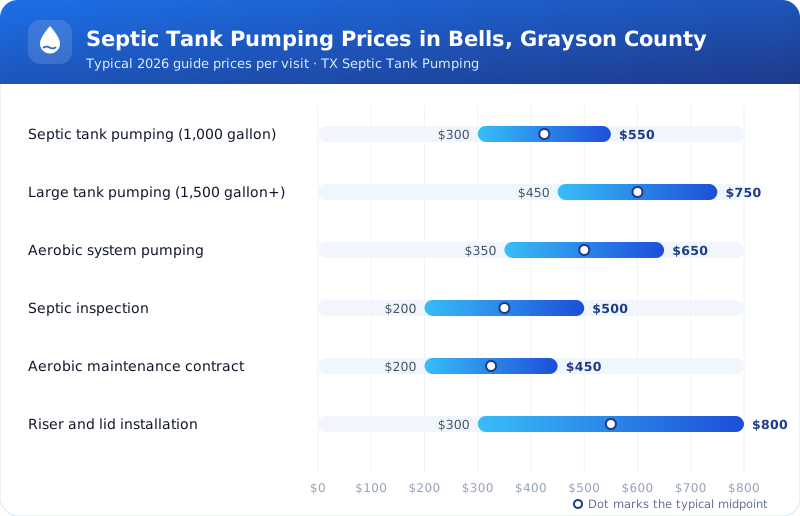
Aerobic treatment units are different. They have moving parts and a treatment process that has to keep running, so they usually need a yearly maintenance contract in addition to periodic pumping. Expect pumping on an aerobic unit to cost more than pumping a standard tank, using the guide ranges later on this page.
Warning Signs the Tank Is Already Full
A full tank usually shows itself before anything fails outright. Watch for the signs below, especially if more than one appears at the same time. Any of them is a reason to schedule service soon rather than waiting for the next scheduled date.
- Drains in several fixtures run slowly, not just one sink.
- Toilets or drains gurgle when water is used elsewhere in the house.
- Sewage odor appears near the tank lid or over the drain field.
- The grass over the drain field is unusually soggy or greener than the lawn around it.
- Wastewater backs up into a tub, shower or toilet.
What a Typical Pumping Visit Involves
A pumping visit is simple in outline, but it helps to know the sequence so you can ask the right questions as it happens. The steps below describe the general process for a standard tank.
- Locate the lidThe technician finds the tank access point. If the lid is buried, the crew may need to uncover it, which is a separate charge in the guide range.
- Inspect the tankThe crew checks the layers of scum and sludge and looks at the baffles and outlet to see whether they are intact.
- Pump the contentsA vacuum truck removes the liquid and solids from the tank.
- Check the outlet and filterMany systems have an effluent filter that should be cleaned during service, so ask whether one is present and whether it was cleaned.
- Get a record of the visitAsk for a written note on the tank condition and the recommended date for the next pumping.
Habits That Damage a Septic System Between Pumpings
Pumping clears out what has built up, but daily habits decide how fast the tank fills and how well the drain field keeps working. Some soils in Texas drain slowly, which makes overloading a drain field more risky. The items in the table are the most common causes of trouble.
| Item or habit | Why it matters |
|---|---|
| Wipes, feminine products and diapers | They do not break down and can clog the outlet and pump. |
| Grease and cooking oil | They harden in pipes and can coat the drain field. |
| Chemical drain cleaners | They can harm the bacteria that treat wastewater in the tank. |
| Driving or parking on the drain field | Weight can compact soil and crush pipes. |
| Roots from nearby trees | They can enter and block lines. |
| Heavy water use in a short period | It floods the drain field before the soil can absorb the water. |
Questions to Ask Before Booking a Pumper in Bells
A short phone call can save a lot of confusion on the day of the visit. Use the list below to confirm the basics before anyone arrives at your property.
- Is my tank size known, and does the price change for a 1,500 gallon tank or larger?
- Is my system an aerobic unit that needs a separate maintenance contract?
- Is there a riser, or will the lid need to be located and uncovered?
- Does the quote include locating the lid, or is that a separate charge?
- Is there a weekend or emergency charge, and how much is it?
- Will I receive a written record of the tank condition after the visit?