Septic tank pumping companies · Galveston County
Listings last refreshed October 16, 2026
2 Best Septic Tank Pumping Companies in Texas City
2 septic tank pumping companies in Texas City, ranked by Pump Score using Google reviews and profile data.
✓ How we rankFree directory, no pay-to-rank
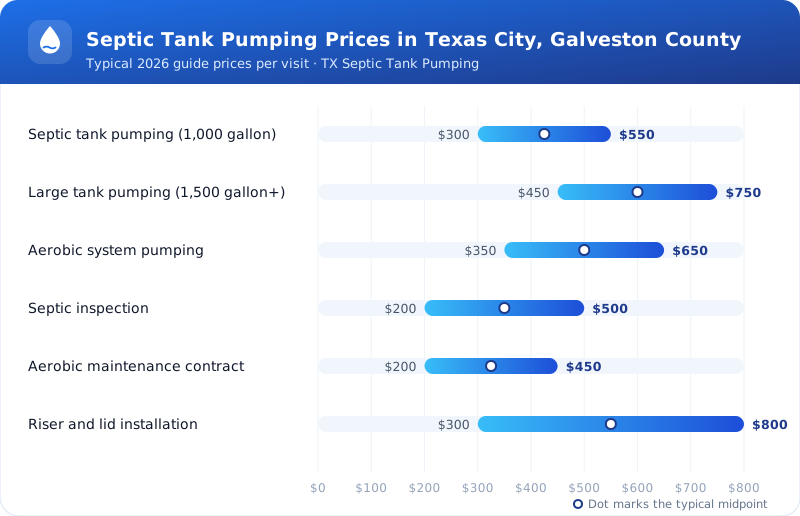
Most people who search for septic tank pumping texas city tx are not comparing brand names. They want to know who can come out, what the work should cost, and how soon the tank needs attention. This page answers those questions for Texas City using the listings in our directory, general septic knowledge, and guide prices for work across Texas.
Top Rated Septic Tank Pumping Companies in Texas City Compared
Compare the top picks side by side. Full write-ups follow below.
| # | Septic Company | Best for | Score | Rating | Verified |
|---|---|---|---|---|---|
| #1 | WasteWater Specialties LLC - Texas City | Checking services and hours online before you call | 3.8 | 3 reviews | — |
| #2 | Wallace R. Knox Wastewater Treatment Plant | A local septic company you can call direct | 2.2 | 8 reviews | — |
Texas City Septic Tank Pumping Reviews and Ratings
1. WasteWater Specialties LLC - Texas City
Best for: Checking services and hours online before you call
3412 3rd Ave S3 reviews
Score breakdown and details
- Location
- Texas City · 3412 3rd Ave S, Texas City, TX 77590
- Track record
- New or lightly reviewed
- Rating
- 3 Google reviews
- Profile
- Unclaimed listing (Google data)
- Today
- See hours on profile
Strengths
- Direct phone number published, no lead form in the way
- Has its own website with more detail on services
- Opening hours published
Watch Out For
Only 3 reviews so far, so the rating could still move. Worth asking about experience.
Our take: Our top pick in this area. A Pump Score of 3.8/10 reflects the best combination of rating, review depth and profile completeness here.
2. Wallace R. Knox Wastewater Treatment Plant
Best for: A local septic company you can call direct
3901 Bay St Ext8 reviews
Score breakdown and details
- Location
- Texas City · 3901 Bay St Ext, Texas City, TX 77590
- Track record
- New or lightly reviewed
- Rating
- 8 Google reviews
- Profile
- Unclaimed listing (Google data)
- Today
- Hours not published
Watch Out For
Only 8 reviews so far, so the rating could still move. Worth asking about experience.
Our take: A strong shortlist option with a Pump Score of 2.2/10. Compare availability and price against the septic companies above.
Hiring Local Septic Tank Pumping in Texas City
Texas City has a small directory footprint. Our data shows two companies, both with ZIP code 77590, and eleven Google reviews between them. That is a thin field, so this page spends as much time on what to check before you book as it does on the names themselves.
Pumping is only one part of keeping a septic system working. The tank, the drain field, and any aerobic unit each need different care, and a company that pumps tanks may not be the right fit for every system. Read on for pumping schedules, warning signs, and realistic cost ranges before you pick up the phone.
The Two Texas City Companies Listed Right Now
Our Texas City entries are short, and the search results for this phrase show few local companies, so read each listing closely before you call. Both entries use ZIP code 77590 and appear on this page in Pump Score order.
- Wallace R. Knox Wastewater Treatment Plant, 3901 Bay St Ext, with 8 Google reviews. The name reads like a treatment plant rather than a septic pumping business, so ask directly what residential service it provides before you plan around it.
- WasteWater Specialties LLC, listed as the Texas City location at 3412 3rd Ave S, phone (888) 436-6805, with 3 Google reviews. This listing has a website and shows hours Monday through Friday.
What a Texas City Pumping Visit Involves
A standard visit is short, but each step affects the final result. Knowing the sequence helps you judge whether the crew is working carefully or rushing to finish.
- Locate and uncover the lidMany tanks are buried deeper than homeowners expect, and the crew may need to dig to reach the access lid. Locating and uncovering is often billed separately, with a guide range of $50 to $200.
- Measure the scum and sludge layersThe technician checks how much floating scum and settled sludge the tank holds. These measurements show whether the tank is near its limit and how urgent the pumping is.
- Pump the tank and remove solidsThe truck removes liquids and solids from the tank. A thorough pump leaves the tank clear enough that the next inspection can see the inlet and outlet baffles.
- Check the baffles, outlet, and filterBaffles keep solids from moving into the drain field. Many systems also have an effluent filter that should be cleaned or inspected during service.
- Record the work and set the next dateAsk for a written note of the tank size, the condition found, and the date due for the next pumping. Keep that record with your home papers, since a buyer or inspector may ask for it later.
How Often Texas City Households Should Pump
The usual rule for a conventional tank is pumping every 3 to 5 years. That range is a starting point, not a promise. Household size, water use, and what goes down the drain all change how fast solids build up.
Aerobic systems follow a different pattern. They use air and mechanical parts to treat wastewater, so they need routine service under a maintenance plan along with occasional pumping. Use the table below to see which schedule usually applies.
| System type | Typical interval | What changes the timing |
|---|---|---|
| Conventional tank, average household | Every 3 to 5 years | Tank size, number of residents, and water use |
| Tank with a garbage disposal | Often sooner than 3 years | Extra food solids entering the tank |
| Aerobic treatment unit | Routine service under a maintenance contract, with pumping as needed | Air system, moving parts, and manufacturer guidance |
Can a Septic Tank Go 20 Years Without Pumping?
Some tanks do run for long stretches without pumping, and homeowners sometimes assume that means the tank is fine. In most cases it is not recommended. Solids keep accumulating in the tank, which reduces the space available for treatment. Over time, material can move past the baffles and reach the drain field.
The damage often stays hidden until the system starts to fail. Slow drains, backups, or soggy patches in the yard can show up late, after the problem has spread. A drain field repair carries a guide range of $2,000 to $10,000, which is far more than a routine pumping. Waiting 20 years is a gamble that rarely pays off.
Why Long Gaps Cause Trouble
Solids are the main issue. When the tank fills with sludge, less liquid has time to settle and clear before it leaves the tank. That leftover material can clog the soil under your drain field, and clogged soil is slow and expensive to fix.
Can You Install Your Own Septic System in Texas?
Texas regulates on-site sewage facilities through the Texas Commission on Environmental Quality, usually called TCEQ. Owner installation is not something to start on instinct. Rules, permits, and inspections depend on the type of system and the local authority involved, so confirm the requirements with TCEQ and your local permitting office before any digging begins.
Installing a septic tank involves a site evaluation, system design, permitting, excavation, setting the tank, connecting the pipes, backfilling, and inspection. Each step can affect whether the system works for decades or fails early. Many owners hire a licensed installer for that reason, and a pumping company in Texas City may or may not do installation work, so ask before assuming.
Questions to Ask Before Booking a Texas City Crew
A short phone call can save a wasted trip. Use these questions with either Texas City listing, or with any company you find through a map search.
- Do you serve ZIP code 77590, and will you visit my address in Texas City?
- Is locating and uncovering the lid included, or is it billed separately?
- What tank size do you expect, and will the quote change if the tank is larger?
- Do you inspect the baffles and effluent filter during every pumping?
- Do you service aerobic systems, and do you offer a maintenance contract?
- What hours do you keep, and is a weekend callout billed at a higher rate?
- Can you give me a written quote before work starts?
Warning Signs That Mean Call Before the Next Scheduled Pumping
Some problems do not wait for the next scheduled pumping. These signs point to a system that needs prompt attention, whether or not the tank is due.
- Drains that run slowly across several fixtures at once, not just one sink.
- Gurgling pipes or water backing up into a tub or shower after you flush.
- A sewage smell near the tank, the drain field, or inside the home.
- Wet or unusually green patches over the drain field, especially in dry weather.
- A high water alarm or a warning light on an aerobic unit.
- Sewage backing up into the home, which needs immediate attention and a call the same day.
Nearby Towns and Distances From Texas City
Texas City sits in a part of Galveston County where nearby towns are close enough that service areas can overlap. Our directory lists six nearby towns at the distances below. If local choices are limited, a company's schedule and service area often matter more than the mileage alone.
Some search results for this phrase also point to companies in Belton, Allen, and Denton. Those businesses are not in Texas City and are not covered on this page.
| Nearby town | Listed miles from Texas City |
|---|---|
| La Marque | 4 |
| Santa Fe | 9 |
| Kemah | 11 |
| Galveston | 12 |
| Alvin | 20 |
| La Porte | 22 |
What Stays Out of the Tank
Most septic trouble between pumpings starts with what goes down the drain. Keeping the wrong materials out of the system protects the tank, the baffles, and the drain field, and it can stretch the time between visits.
- Cooking grease, oil, and fats, which harden in the tank and the pipes.
- Wipes, diapers, paper towels, and feminine products, even when labeled flushable.
- Coffee grounds, eggshells, and other food scraps, which add solids quickly.
- Chemical drain cleaners and harsh solvents, which can disturb the bacteria that break down waste.
- Paint, pesticides, motor oil, and medications, which should go to a proper disposal site.
- Heavy loads of laundry in a single day, which push more water into the tank than it can settle.