Septic tank pumping companies · Galveston County
Listings last refreshed October 16, 2026
Best Septic Tank Pumping in La Marque [2026 Update]
1 septic tank pumping company in La Marque, ranked by Pump Score using Google reviews and profile data.
✓ How we rankFree directory, no pay-to-rank
Septic tank pumping in La Marque, TX is a routine job that most homeowners only think about once something goes wrong. A septic system is a buried, sealed tank that holds household wastewater long enough for solids to settle and scum to float, then sends the clearer liquid out to a drain field. Pumping removes the sludge and scum that build up over time, because the tank cannot hold them indefinitely.
Top Rated Septic Tank Pumping Companies in La Marque Compared
Compare the top picks side by side. Full write-ups follow below.
| # | Septic Company | Best for | Score | Rating | Verified |
|---|---|---|---|---|---|
| #1 | Ironclad Environmental Solutions | Weekend bookings, open Saturday and Sunday | 2.7 | 2 reviews | — |
La Marque Septic Tank Pumping Reviews and Ratings
1. Ironclad Environmental Solutions
Best for: Weekend bookings, open Saturday and Sunday
252 Texas City Wye2 reviews
Score breakdown and details
- Location
- La Marque · 252 Texas City Wye, La Marque, TX 77568
- Track record
- New or lightly reviewed
- Rating
- 2 Google reviews
- Profile
- Unclaimed listing (Google data)
- Today
- See hours on profile
Strengths
- Has its own website with more detail on services
- Opening hours published
- Open on Saturdays
Watch Out For
Only 2 reviews so far, so the rating could still move. Worth asking about experience.
Our take: Our top pick in this area. A Pump Score of 2.7/10 reflects the best combination of rating, review depth and profile completeness here.
Hiring Local Septic Tank Pumping in La Marque
La Marque sits on the mainland side of Galveston County, and the local choices are narrower than in a large metro area. This page covers what homeowners in and around ZIP 77568 usually need to know: how often a typical tank needs pumping, what a visit involves, what drives the final bill, the warning signs that a tank is full, and what should never go down the drain. It also explains what to ask before booking, since a short phone call can prevent a second trip.
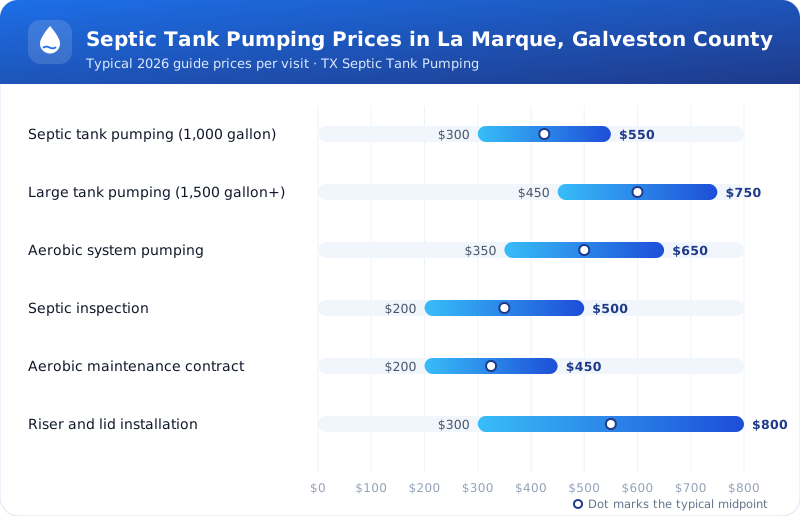
Treat the listings in the middle of this page as a starting point, not a verdict. They reflect only the businesses in our data, and the prices are guide ranges for Texas in 2026, not quotes from any company.
Who Pumps Septic Tanks in La Marque and Where They Work
Our data lists one septic business with a street address in ZIP 77568. That company is Ironclad Environmental Solutions, located at 252 Texas City Wye. Its listing includes a website and shows it as open seven days a week and around the clock. Only two Google reviews appear on its profile, so there is little public feedback to read before you call.
That thin review history changes how you should shop. With so few local reviews, your own questions on the phone carry more weight than usual. Ask about the tank size the quote is based on, whether lid location is included, and where the pumped waste is taken. If the answers are vague, that tells you something.
Many La Marque households will also look at companies in nearby towns, especially for weekday scheduling or specialty work such as aerobic systems. Check any company's service area directly, because a listing that appears in a search does not guarantee that it will drive to your address.
How Often a Septic Tank Near La Marque Needs Pumping
The common guideline is to pump a household septic tank every three to five years. That range is a starting point only. A 1,000 gallon tank serving a busy household fills faster than a larger tank serving two people, and the factors below shift the timing in one direction or the other.
Ask for a sludge and scum measurement at inspection rather than relying on the calendar alone. Many pumpers can check the level once the lid is open, and a measured result is a better guide than a date chosen months in advance.
| Household factor | Effect on the pumping interval |
|---|---|
| More people living in the home | Solids and wastewater build up faster, so the interval gets shorter |
| Garbage disposal used every day | Adds food solids, which move the pumping date closer |
| Several large laundry loads each week | Pushes large water volumes through the tank and can carry solids toward the drain field |
| Larger tank for the household size | Provides more storage, so the interval can stretch |
| Low-flow fixtures and fixed leaks | Slows the rate of fill, which lengthens the interval |
What a Pumping Visit Involves, Step by Step
A standard visit is short, but each step matters. A careful pumper will explain what is happening and point out anything that needs attention, such as a cracked lid, a damaged baffle or a clogged outlet. Here is the usual sequence for a residential tank.
- Locate the tank and access pointsThe pumper finds the tank and its lids. Buried lids may need to be uncovered, which can add a separate charge.
- Open the lids and check the risersRisers make future service easier. A pumper will note whether they are sealed and whether the lids are secure.
- Pump out the scum and sludgeThe truck removes the contents of the tank, and the pumper confirms the tank has been emptied as far as practical.
- Inspect the baffles and outletBaffles keep scum and solids from leaving the tank. A broken baffle can send solids toward the drain field.
- Check the effluent filter if one is installedA clogged filter should be cleaned, since it protects the drain field from solids that escape the tank.
- Record the visit and explain next stepsA good record shows the date, the condition of the tank and any repairs suggested. Keep it with your home papers.
Signs Your Tank Is Full and What Happens to the Toilet
When a tank is full, wastewater has nowhere to go. Toilets flush slowly, sinks drain sluggishly and the tank cannot release liquid to the drain field as it should. Sewage can back up into the lowest drains in the house first, often a ground-floor shower or a tub.
Watch for these warning signs and call a pumper if you see more than one of them:
- Toilets flush slowly or gurgle after use
- Sewage odor near the tank, the drains or the yard
- Water backing up into a shower or tub
- Soggy or unusually green ground over the drain field
- An alarm or warning light on an aerobic system
What Not to Put in a Septic Tank
The worst things to put in a septic tank are the materials that do not break down and the chemicals that kill the bacteria working inside it. Many of these items are common in everyday homes, so it helps to keep a short list where the whole household can see it.
- Wipes, including those labeled flushable
- Cooking grease, oil and fat poured down the drain
- Chemical drain cleaners and heavy use of harsh cleaners
- Paint, solvents, motor oil and pesticides
- Coffee grounds and fibrous produce waste
- Feminine hygiene products and diapers
- Cat litter and medications
Conventional Tanks Compared With Aerobic Systems
Many homes in the area have a conventional tank, but some have an aerobic treatment unit. The two work differently, and that affects how each one is maintained and what it costs to service.
| Feature | Conventional tank | Aerobic system |
|---|---|---|
| How it treats waste | Settles solids and sends liquid to the drain field | Adds air to speed breakdown of waste before it leaves the unit |
| Pumping | Pumped on a set interval based on use | Solids still need removal, and the unit needs regular service |
| Maintenance | Few moving parts | Usually needs a maintenance contract, often a guide range of $200 to $450 a year |
| Guide cost for pumping | $300 to $550 for a 1,000 gallon tank | $350 to $650 for aerobic system pumping |
Laundry, Water Use and Daily Habits on a Septic System
Homeowners often ask how many loads of laundry a day a septic system can handle. There is no single safe number that applies to every home, because tank size, soil and the number of people in the house all matter. The more useful rule is to spread laundry across the week rather than running several large loads back to back. A large burst of water can push solids toward the drain field before they have settled.
Daily habits matter just as much. Fix leaks promptly, since a running toilet adds water constantly. Use water-saving fixtures where you can, and avoid running the dishwasher and washing machine at the same time. These steps do not replace pumping, but they slow the rate of fill and help the tank last longer between visits.
Checking a Septic Pumper Before You Book
A few questions on the phone can prevent surprises at the door. Write down the answers so you can compare them with the invoice later.
- Is the quoted price based on tank size, and what is the price for my tank?
- Does the price include uncovering a buried lid?
- Are weekend or after-hours visits billed at a higher rate?
- Where is the pumped waste taken, and who handles it?
- Will I receive a written record of the visit and any repairs suggested?
- Do you inspect the baffles and effluent filter as part of pumping?