Septic tank pumping companies · Galveston County
Listings last refreshed October 16, 2026
Best Septic Tank Pumping in Galveston: Trusted & Reviewed
1 septic tank pumping company in Galveston, ranked by Pump Score using Google reviews and profile data.
✓ How we rankFree directory, no pay-to-rank
Septic tank pumping in Galveston, TX is one of those jobs most homeowners put off until a toilet gurgles or a drain backs up. Pumping removes the scum and sludge that collect in the tank, so wastewater can flow out to the drain field the way it was designed to. This guide covers what a pumping visit involves, how often to schedule one, what the work typically costs at guide prices, and how to decide whether the provider listed here fits your property.
Top Rated Septic Tank Pumping Companies in Galveston Compared
Compare the top picks side by side. Full write-ups follow below.
| # | Septic Company | Best for | Score | Rating | Verified |
|---|---|---|---|---|---|
| #1 | Kleen Tank of Galveston | Weekend bookings, open Saturday and Sunday | 2.7 | 2 reviews | — |
Galveston Septic Tank Pumping Reviews and Ratings
1. Kleen Tank of Galveston
Best for: Weekend bookings, open Saturday and Sunday
7200 Termini-San Luis Pass Rd2 reviews
Score breakdown and details
- Location
- Galveston · 7200 Termini-San Luis Pass Rd, Galveston, TX 77554
- Track record
- New or lightly reviewed
- Rating
- 2 Google reviews
- Profile
- Unclaimed listing (Google data)
- Today
- See hours on profile
Strengths
- Direct phone number published, no lead form in the way
- Opening hours published
- Open on Saturdays
Watch Out For
Only 2 reviews so far, so the rating could still move. Worth asking about experience.
Our take: Our top pick in this area. A Pump Score of 2.7/10 reflects the best combination of rating, review depth and profile completeness here.
Hiring Local Septic Tank Pumping in Galveston
Our Galveston directory currently lists one septic pumping company with two Google reviews. That makes the ranking straightforward, but it also means you should do some checking before you book. Use the sections below to prepare your questions, and ask any provider to confirm pricing, scheduling and how they handle your specific system type.
Galveston homes often sit on low, flat land with a high water table, and that shapes how tanks and drain fields perform. We cover what that means for timing near the end of the page.
Who Is Pumping Septic Tanks in Galveston Right Now
Our Galveston listing currently includes Kleen Tank of Galveston, based at 7200 Termini-San Luis Pass Rd in ZIP 77554. The business lists the phone number (815) 508-3878 and shows as open every day of the week, from Monday through Sunday. In our data it has two Google reviews, so there is not yet a large body of public feedback to compare.
Map results for Galveston may also show other septic names, including Tideland Grease Trap & Septic Service and League City Septic. Those companies are not part of the ranked list on this page. If you are weighing more than one option, call each one, confirm the tank size and system type, and ask for a written price before scheduling.
What a Galveston Septic Pumping Visit Involves
A standard pumping visit is simpler than many people expect, but each step affects the price and the outcome. Here is the typical sequence.
- Find and uncover the lidThe crew locates the access lids and digs down to them if they are buried. Uncovering a buried lid is billed separately, so ask about it when you call.
- Check the tank conditionTechnicians look at the scum and sludge layers and check whether the baffles and inlet and outlet tees are intact.
- Pump out the contentsA vacuum truck removes the liquids and solids, which are then hauled to an approved disposal site.
- Inspect the outlet and filterWhere an effluent filter is installed, it should be cleaned or checked so solids do not carry into the drain field.
- Record what was foundA good provider notes the date, tank size, sludge depth and any repair needs, giving you a record for your next service.
Warning Signs Your Galveston Tank Is Overdue
Waiting for a crisis is the most expensive way to handle a full tank. The signs below usually appear gradually, so catching one early gives you more options.
| Sign | What It Usually Means | What to Do |
|---|---|---|
| Slow drains throughout the house | Solids may be filling the tank or blocking the outlet | Schedule pumping and an inspection |
| Gurgling toilets or sinks | Air is trapped by a blocked line or a full tank | Reduce water use and call a provider |
| Sewage odor in the yard or home | The tank is overfull or a lid is cracked | Call promptly and do not wait |
| Soggy or unusually green patch over the drain field | Effluent may be reaching the surface | Limit water use and request an inspection |
| Sewage backing up into drains | The tank or drain field may be failing | Ask about an emergency callout |
How Often Galveston Homes Should Pump Out Their Tanks
Most conventional septic tanks need pumping every 3 to 5 years. That range is a general guideline, not a fixed schedule. Household size, daily water use, garbage disposal use and tank size all change how quickly solids build up. A 1,000 gallon tank serving a family of four will fill faster than the same tank serving two people who rarely run the dishwasher.
Keep a simple record of each pumping date. If you buy or sell a home, that record shows when the tank was last serviced and helps answer questions a buyer or inspector may ask.
Conventional Tanks
Start with the 3 to 5 year schedule, then adjust based on what the technician finds. If the sludge layer is thick at the first visit, shorten the interval for the next one.
Aerobic Systems
Aerobic units use a treatment process that needs regular service, and many owners sign a yearly maintenance contract. Solids still need removal from the tank, so ask the provider how often the tank itself should be pumped in addition to contract visits.
Conventional Tanks Compared With Aerobic Systems in Galveston
Know which type of system you have before calling. The technician will ask, and the answer changes the scope of work and the price.
| Feature | Conventional Tank | Aerobic System |
|---|---|---|
| How it handles wastewater | Settles solids and relies on the drain field | Adds oxygen to break down waste before disposal |
| Typical pumping interval | Every 3 to 5 years as a guideline | Solids removal as needed, plus regular service |
| Yearly service | Usually not required | Often handled through a maintenance contract |
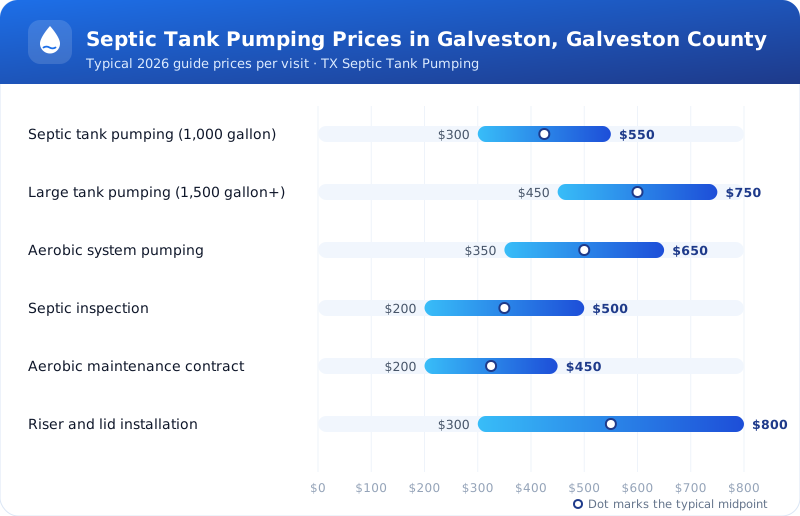
| Guide price for pumping | $300 to $550 for 1,000 gallons | $350 to $650 |
| Guide price for yearly service | Not applicable | $200 to $450 for a maintenance contract |
What Not to Flush or Pour Into a Galveston Septic System
Most septic failures start with something that should never have entered the system. These items cause the most damage.
- Wipes, including products labeled flushable
- Feminine hygiene products, diapers and paper towels
- Cooking grease, oil and fat poured down the sink
- Large amounts of coffee grounds, eggshells or food scraps from the disposal
- Chemical drain cleaners, paint, solvents and pesticides
- Excess bleach or harsh cleaners used in large volumes
- Heavy vehicles or equipment driven or parked over the tank or drain field
How to Prepare Before a Galveston Pumping Appointment
Preparation shortens the visit and helps the provider price it correctly.
- Locate the tankFind the tank and any lids. If you cannot find them, tell the provider so the crew can plan for locating equipment.
- Gather your recordsLook for the last pumping date, any installation plan or permit papers, and any aerobic maintenance contract.
- Clear accessMove vehicles, fencing, stored items and landscaping that block the lids, and keep pets inside.
- Note your water habitsWrite down how many people live in the home and whether you use a garbage disposal so the provider can recommend a sensible interval.
- Ask for a written priceRequest an estimate that lists tank size, any excavation charge, and any emergency or weekend fee before the crew arrives.
Texas Septic Rules and Galveston County Resources
The Texas Commission on Environmental Quality, known as TCEQ, regulates on-site sewage facilities across the state, which includes most household septic systems. Its rules set general standards for how systems are installed, operated and maintained.
The Galveston County Health District publishes a homeowner septic tank system guide that explains basic system parts and maintenance. Reading it before your visit gives you clear terms to use with your provider.
This page does not list local permit fees or county inspection requirements. Confirm current rules with the county or TCEQ before any installation or major repair.