Septic tank pumping companies · Ellis County
Listings last refreshed October 16, 2026
Best Septic Tank Pumping in Maypearl: Trusted Local Experts
1 septic tank pumping company in Maypearl, ranked by Pump Score using Google reviews and profile data.
✓ How we rankFree directory, no pay-to-rank
Anyone searching for septic tank pumping Maypearl TX is usually facing one of two moments: a pump-out that is due on the calendar, or a slow drain and a soft spot in the yard that needs an answer today. This page is built for both. Maypearl is a small town in Ellis County, and our directory currently lists one local provider based in town, Circle J5 Aerobic Services, with three Google reviews on file.
Top Rated Septic Tank Pumping Companies in Maypearl Compared
Compare the top picks side by side. Full write-ups follow below.
| # | Septic Company | Best for | Score | Rating | Verified |
|---|---|---|---|---|---|
| #1 | Circle J5 Aerobic Services | A local septic company you can call direct | 2.2 | 3 reviews | — |
Maypearl Septic Tank Pumping Reviews and Ratings
1. Circle J5 Aerobic Services
Best for: A local septic company you can call direct
912 W First St3 reviews
Score breakdown and details
- Location
- Maypearl · 912 W First St, Maypearl, TX 76064
- Track record
- New or lightly reviewed
- Rating
- 3 Google reviews
- Profile
- Unclaimed listing (Google data)
- Today
- Hours not published
Strengths
- Direct phone number published, no lead form in the way
Watch Out For
Only 3 reviews so far, so the rating could still move. Worth asking about experience.
Our take: Our top pick in this area. A Pump Score of 2.2/10 reflects the best combination of rating, review depth and profile completeness here.
Hiring Local Septic Tank Pumping in Maypearl
Because the local field is so thin, the most useful question is less about who ranks first and more about what you need to know before you pick up the phone. Septic systems in Texas are regulated by the Texas Commission on Environmental Quality, but day to day the homeowner carries the practical responsibility. Pumping removes the solids that build up in the tank over time. The drain field, risers, effluent filters and any aerobic unit each need their own attention, and a good visit covers more than the tank alone.
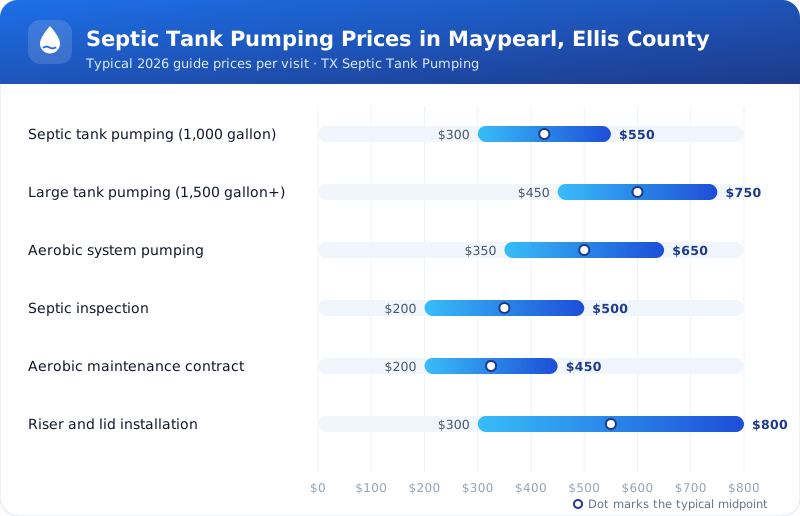
The sections below explain how often to pump, how to tell when a tank is full, what goes down the drain and what does not, how to prepare for a crew visit on a rural lot, and what the work typically costs. The guide prices are ranges, not quotes, so use them to plan rather than to commit.
Who Pumps Septic Tanks in Maypearl Today
Our directory lists one septic provider based in Maypearl: Circle J5 Aerobic Services at 912 W First St, Maypearl, TX 76064, phone (972) 435-3377. The business has three Google reviews on file. That is a thin record, so treat the listing as a starting point and not a final verdict on the service.
The public description for the business covers septic tank pumping, cleaning and maintenance. Some directory entries for this company show a different street address, including a rural Barton Road address in the same ZIP code. Before you book, confirm where the crew is based, whether they serve your road, and whether they handle the type of tank you have. A short phone call answers all three questions faster than any listing can.
How Often a Maypearl Septic Tank Needs Pumping
Pumping schedules depend on tank size, how many people live in the home, and what goes down the drain. A common rule of thumb is every three to five years for a 1,000 gallon tank serving a household of typical size. Homes with more occupants, heavy garbage disposal use or frequent laundry tend to fill a tank faster, so the interval can be shorter.
Rather than relying on the calendar alone, use the tank itself as your guide. A crew can measure the scum and sludge layers during the visit and tell you how much room is left, which is often more useful than a fixed date.
- Check your tank records or the last service invoice before scheduling anything.
- Ask the crew to measure the scum and sludge layers during the visit and note the results.
- Pump sooner if you notice gurgling drains, slow toilets or sewage odors near the tank.
- Keep aerobic system maintenance current, since those units run on a different rhythm than a conventional tank.
Pumping, Inspection, or Aerobic Service: Which One Fits
Homeowners often use the word pumping for everything, but the services differ. Choosing the right one saves a second trip and makes sure the problem actually gets looked at.
If you have a conventional tank on a regular schedule, straight pumping is usually the job. If you have an aerobic unit, ask for service that covers the treatment chamber and its components, not just a pump-out. An inspection is the better choice when you are buying or selling a home, or when you suspect the drain field is struggling.
| Service | What It Covers | Best Fit |
|---|---|---|
| Conventional tank pumping | Removes scum and sludge from the septic tank and checks the outlet baffle | Gravity systems on a regular pumping schedule |
| Aerobic system pumping | Empties the treatment chamber and checks the aerator and spray components | Aerobic units that need routine service |
| Septic inspection | Reviews tank condition, liquid levels and signs of drain field stress, without necessarily pumping | Home sales, suspected problems or a check before a long gap |
| Riser and lid installation | Brings the access point up to or near the ground for faster future visits | Tanks buried deep or hard to find |
Steps to Book Septic Tank Pumping in Maypearl
A little preparation keeps the visit short and the bill predictable. Work through these steps before the crew arrives.
- Find the access lidLocate the tank lid or riser before the crew comes out. If you cannot find it, ask whether the provider offers locating and uncovering as a separate job.
- Confirm the service areaGive the exact address and ask whether the crew drives to your road. Rural addresses around Maypearl can sit well outside the town core, so do not assume the service area matches the town name.
- Know the tank sizeFind out whether the tank is a 1,000 gallon conventional unit, a larger tank or an aerobic system. Tank size changes both the work and the price.
- Clear the pathSecure pets, move vehicles and check that fencing, gravel or landscaping is not blocking the access point.
- Get the scope in writingAsk what the visit includes, whether an inspection is part of it and what happens if a second visit is needed.
- Keep the recordSave the invoice and write down the date so the next pumping can be booked on time.
Finding and Uncovering a Buried Tank on a Rural Maypearl Lot
Many rural properties in the Maypearl area were built with the tank placed well away from the house, sometimes behind outbuildings or under grass that has grown in over the years. A crew cannot pump what it cannot reach, so finding the lid is often the first real task of the visit.
If you bought the property recently, check the closing paperwork or any old site plan. Ask neighbors who have lived nearby for a long time, since they often know where the system sits. Walking the lot after a rain can also help, because the ground over a tank may stay greener or sink slightly.
If the lid is buried under soil, ask about risers. Installing a riser brings the access point closer to the surface, which makes future visits faster and reduces the chance of digging up the lot again. Riser installation is a separate job from pumping, so raise it in your call.
What Not to Flush or Pour Into a Septic System
Most septic failures start with something that should never have gone down the drain. The list below covers the common culprits, and it is worth posting near the laundry room or kitchen sink so everyone in the house sees it.
- Wipes, including those labeled flushable
- Cooking grease, oil and fat poured down the sink
- Feminine hygiene products, diapers and cotton swabs
- Large amounts of coffee grounds or food scraps through the garbage disposal
- Paint, solvents, motor oil, thinners and pesticides
- Medications, which can disrupt the bacteria the tank depends on
- Harsh drain cleaners used on a regular schedule
- Heavy doses of bleach or chemical treatments that kill the bacteria the system needs
Warning Signs That a Septic Tank Is Full
When a tank fills past its working capacity, solids can move toward the outlet and into the drain field, where they clog the soil. Watch for the following signs before a backup happens.
If you see any of these, call for service rather than waiting for the next scheduled date. Hold off on heavy water use until the crew has looked at the system, since extra water can push a problem further into the drain field.
- Toilets drain slowly or gurgle when another fixture runs
- Sewage smell near the tank, the drains or the yard
- Soggy ground or unusually green patches over the drain field
- Water backing up into the lowest drain in the house
- Wet or dark spots appearing in the yard after heavy use
Laundry, Water Use and Spreading Out the Load
Laundry is one of the biggest daily water loads in most homes. Running several full washer cycles back to back sends a large slug of water into the tank at once, which can stir up solids and push them toward the outlet. Spreading the work across the week is the simplest habit to change.
Small leaks also add up over a year. A running toilet or a dripping faucet can send steady water into the tank every day, even when nobody is using the house heavily.
- Run one load at a time and wait between cycles rather than stacking them.
- Spread bigger washes across different days of the week.
- Fix running toilets and dripping faucets as soon as you notice them.
- Avoid running the washer and dishwasher at the same moment.
- Use a modest amount of detergent, since heavy use adds to the load in the tank.