Septic tank pumping companies · Dallas County
Listings last refreshed October 16, 2026
Best Septic Tank Pumping in Richardson: Trusted & Reviewed
1 septic tank pumping company in Richardson, ranked by Pump Score using Google reviews and profile data.
✓ How we rankFree directory, no pay-to-rank
Homeowners searching for septic tank pumping Richardson TX usually want three things: a clear picture of what the job involves, a realistic cost range, and a local company they can actually reach. Richardson sits in Dallas County, and the listings we track for the town show one dedicated septic pumping company, so your choice is narrower than it would be in a larger metro. This page covers how a pumping visit works, how often to schedule one, what to expect on the bill, and how to judge a provider before you book.
Top Rated Septic Tank Pumping Companies in Richardson Compared
Compare the top picks side by side. Full write-ups follow below.
| # | Septic Company | Best for | Score | Rating | Verified |
|---|---|---|---|---|---|
| #1 | Richardson Porta Pros | Saturday appointments | 4.0 | 4 reviews | — |
Richardson Septic Tank Pumping Reviews and Ratings
1. Richardson Porta Pros
Best for: Saturday appointments
2350 Lakeside Blvd4 reviews
Score breakdown and details
- Location
- Richardson · 2350 Lakeside Blvd, Richardson, TX 75082
- Track record
- New or lightly reviewed
- Rating
- 4 Google reviews
- Profile
- Unclaimed listing (Google data)
- Today
- See hours on profile
Strengths
- Direct phone number published, no lead form in the way
- Has its own website with more detail on services
- Opening hours published
- Open on Saturdays
Watch Out For
Only 4 reviews so far, so the rating could still move. Worth asking about experience.
Our take: Our top pick in this area. A Pump Score of 4/10 reflects the best combination of rating, review depth and profile completeness here.
Hiring Local Septic Tank Pumping in Richardson
Septic systems in Texas fall under the Texas Commission on Environmental Quality, which regulates on-site sewage facilities across the state. The tank under your yard holds solids that settle and scum that floats, and if those layers grow too thick, they can carry into the drain field and clog it. Pumping removes that buildup and gives you a chance to check the tank, filter and outlet while the lids are open. The sections below explain the process, the warning signs, the difference between tank types, and the questions worth asking before a truck pulls into your driveway.
What Happens During a Septic Tank Pumping Visit in Richardson
A pumping visit is simpler than most homeowners expect, but a few steps decide how smoothly it goes. Knowing the sequence helps you spot a rushed job or a missed step.
- Locate the access lidsThe technician finds the tank lids and, if they are buried, uncovers them. Locating and uncovering the lid is often billed as a separate line item, so ask about it when you request a quote.
- Inspect the tank and its partsWith the lids open, the crew looks at the tank walls, inlet and outlet baffles, and the tee that carries wastewater out to the drain field. Cracks, broken baffles or a collapsed lid are worth reporting before the work ends.
- Pump out the contentsA vacuum truck removes the liquid along with the settled sludge at the bottom and the scum layer at the top. A thorough pump leaves the tank empty enough that the crew can see the inside walls.
- Clean or replace the effluent filterIf your system has an effluent filter, it should be cleaned or swapped during the visit. A clogged filter lets solids reach the drain field even when the tank itself is pumped.
- Close up and keep the recordThe lids go back on and the crew should leave a service record with the pumping date and any problems found. Keep that paper with your home files, because the date sets the schedule for your next visit.
How Often a Richardson Household Should Pump Its Tank
For most standard tanks, pumping every 3 to 5 years is the usual interval. That range is a starting point, not a rule, because the real buildup depends on how much water your household uses and how much solid waste goes into the tank. A family of five with a garbage disposal will fill a tank faster than a couple who run the dishwasher a few times a week.
Tank size matters too. A 1,000 gallon tank fills more quickly than a larger one serving the same house, so the interval can shorten when the tank is small. If you have never had your tank pumped or you bought a home with unknown service history, schedule a pumping and inspection early so you have a baseline for future visits.
Warning Signs Your Richardson Tank Is Overdue
Some problems start slowly, and others show up all at once. If you see any of the following, call a pumping company before the issue spreads to the drain field. A full tank is the most common cause of backups in older systems.
- Drains in several fixtures run slowly at the same time.
- Gurgling sounds come from drains or toilets after you run water.
- Sewage odors appear near the tank, the drain field or indoors.
- The grass over the drain field stays unusually green or soggy.
- Wastewater pools in the yard around the tank or drain field.
- Toilets back up or bubble when you run water in a sink or shower.
What Happens to a Toilet When the Tank Is Full
When the tank has no room left for new wastewater, the liquid has nowhere to settle before it moves on. Waste pushes back toward the lowest drains in the house, which is why toilets and tubs are often the first fixtures to show trouble. If the tank overflows or the drain field is saturated, sewage can rise into the yard, and repairing a clogged or failed drain field costs far more than routine pumping.
Conventional Tanks Versus Aerobic Systems in Richardson Homes
Richardson homes use both conventional septic tanks and aerobic treatment systems, and the maintenance needs differ. Knowing which one you have changes what a pumping visit includes and what it costs to keep the system running.
| Feature | Conventional tank | Aerobic system |
|---|---|---|
| How it treats waste | Settles solids and relies on the drain field | Adds air so bacteria break down waste more fully |
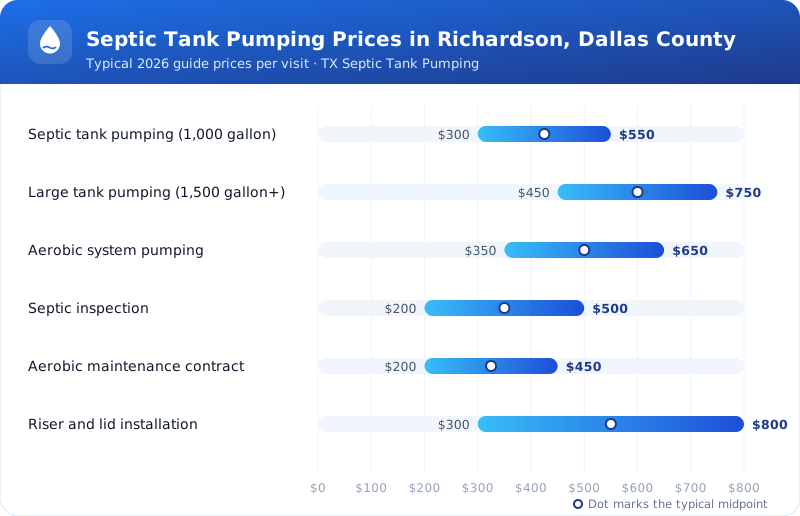
| Guide price to pump | $300 to $550 for a 1,000 gallon tank | $350 to $650 per pumping visit |
| Service agreement | Usually not required | Yearly maintenance contract, guide price $200 to $450 |
| Moving parts | Few, mostly the outlet filter | Blower, pump and controls that need periodic checks |
| Typical risk if ignored | Solids reach the drain field | Treatment stops and waste reaches the yard |
Choosing a Pumping Company in Richardson: Questions to Ask
With one company listed inside Richardson, comparing options may mean looking at providers in nearby towns. Whichever company you call, a few direct questions will tell you more than a sales pitch.
- What credentials does the company hold for on-site sewage work, and can you see them?
- Is the price a flat pumping fee, and does it include locating and uncovering the lid?
- Does the visit include a visual check of the tank, baffles and filter?
- Will you receive a written service record with the date and any problems noted?
- What are the hours, and is there an extra charge for a Sunday or after-hours callout?
- If the system is aerobic, what does the yearly maintenance contract cover?
Texas Rules for Septic Systems and Where Permits Come From
The Texas Commission on Environmental Quality regulates on-site sewage facilities across the state, including the design, installation, operation and maintenance of septic systems. Pumping is routine maintenance, but installing, repairing or altering a system usually involves more formal steps. Those steps are governed by state rules, and local offices may add their own requirements for permits and inspections.
Because local permit steps and inspection details can change, confirm them with your city or county office before any repair, replacement or new installation. A pumping company familiar with the area can also tell you what paperwork a project typically needs. Keeping copies of pumping records, inspection reports and any permits will help when you sell the home or troubleshoot a problem later.
Before the Truck Arrives: Access and Records
A little preparation can shorten the visit and reduce the chance of extra charges. Clear the area around the lids, make sure pets are secured, and tell the company if the lids are buried under soil, gravel or landscaping. Gather any earlier service records so the technician knows the last pumping date and any repairs already done. If you cannot find the tank, many homeowners check old site plans or ask the previous owner, and the company can use locating tools if needed.
What to Do If Your Tank Is Backing Up Right Now
If sewage is backing up or pooling outside, stop using water as much as you can. Avoid running the dishwasher, washing machine or long showers until the system is checked, because extra water pushes the problem further into the drain field. Keep people and pets away from the wet area.
Call a septic company as soon as you notice the problem. Richardson Porta Pros lists Monday through Saturday hours, so a Sunday problem may need an after-hours or weekend callout, which is often billed as an extra fee. Guide prices for an emergency or weekend callout run $100 to $300 on top of the regular service cost.