Septic tank pumping companies · Dallas County
Listings last refreshed October 16, 2026
Best Septic Tank Pumping in Irving [2026 Update]
1 septic tank pumping company in Irving, ranked by Pump Score using Google reviews and profile data.
✓ How we rankFree directory, no pay-to-rank
Septic tank pumping Irving TX is a search that usually starts with a slow drain or a question about the tank in the backyard. Most people want two answers quickly: how often the tank needs emptying and what the job should cost. This guide covers both, along with the warning signs, the Texas rules that apply to on-site systems, and the one company our directory currently lists in Irving.
Top Rated Septic Tank Pumping Companies in Irving Compared
Compare the top picks side by side. Full write-ups follow below.
| # | Septic Company | Best for | Score | Rating | Verified |
|---|---|---|---|---|---|
| #1 | Zava Septic Pumping | Trying a newer local septic company | 0.8 | — | — |
Irving Septic Tank Pumping Reviews and Ratings
1. Zava Septic Pumping
Best for: Trying a newer local septic company
100 E Royal LnNo reviews yet
Score breakdown and details
- Location
- Irving · 100 E Royal Ln, Irving, TX 75039
- Track record
- New or lightly reviewed
- Rating
- No Google reviews yet
- Profile
- Unclaimed listing (Google data)
- Today
- Hours not published
Strengths
- Direct phone number published, no lead form in the way
Watch Out For
No Google reviews yet. Ask for references or recent customers you can speak to.
Our take: Our top pick in this area. A Pump Score of 0.8/10 reflects the best combination of rating, review depth and profile completeness here.
Hiring Local Septic Tank Pumping in Irving
If your home in Irving runs on a septic tank, the basic system works the same way it does anywhere else in Texas. Wastewater from toilets, sinks, showers and laundry flows into a buried tank, where solids settle to the bottom and grease rises to the top. Clearer liquid leaves the tank and moves out to a drain field. Solids that build up over time can eventually leave the tank and clog that field, and a drain field repair costs far more than a routine pumping.
Use this page as a planning tool. Read the timing and warning sections first, check the guide prices, and then call the listed provider with specific questions about your tank size, lid access and any extra charges.
How Often a Septic Tank in Irving Needs Pumping
For most household tanks, pumping every 3 to 5 years is the usual guideline. That range is a starting point, not a fixed rule. The right interval depends on tank size, how many people live in the home, how much water goes down the drains, and whether a garbage disposal sends extra food solids into the tank. A family of four with a 1,000 gallon tank and heavy laundry use will fill it faster than a couple in a home with light water use.
The best way to set your schedule is to ask the crew to measure the sludge and scum layers when they open the tank, then write the date down and set a reminder for the next visit. A written record also helps when you sell a home, because buyers and inspectors often ask when the tank was last serviced. Keep the paperwork with your home files so you are not guessing years later.
- Tank size: a larger tank holds more solids before it needs emptying.
- Household size: more people means more wastewater and more solids.
- Garbage disposals: they add food waste that settles faster than toilet paper.
- Water use: long showers and several laundry loads a day shorten the interval.
Warning Signs Your Irving Septic Tank Is Full
Septic problems rarely appear overnight. The early signs usually show up in the fixtures inside the house first, and then in the yard. A full tank can keep working for a while before it fails all at once, so treat any combination of these symptoms as a reason to call for an inspection rather than waiting for a backup.
- Drains in sinks, showers or tubs run slowly, even after you clear the trap.
- Toilets gurgle or need more than one flush to clear.
- A sewage odor appears inside the house or near the tank lid.
- Patches of grass over the drain field stay soggy or turn unusually green.
- Water backs up into a shower or tub when a toilet is flushed.
- Wastewater surfaces in the yard or pools near the tank or the field.
What Is the Pump in My Septic Tank?
Many homeowners ask this question after a technician mentions a pump, and the honest answer is that most standard septic tanks do not have one. A conventional tank works by gravity. Wastewater enters at one end, solids settle to the bottom, grease and scum float to the top, and the clearer liquid in the middle leaves through an outlet to the drain field. No electricity is involved, which is why many owners never think about the tank until a problem appears.
Some properties do have pumps, and it helps to know which type you own before you book service. Pumping the tank and servicing a pump are separate jobs, and the cost of each is different.
Effluent Pumps
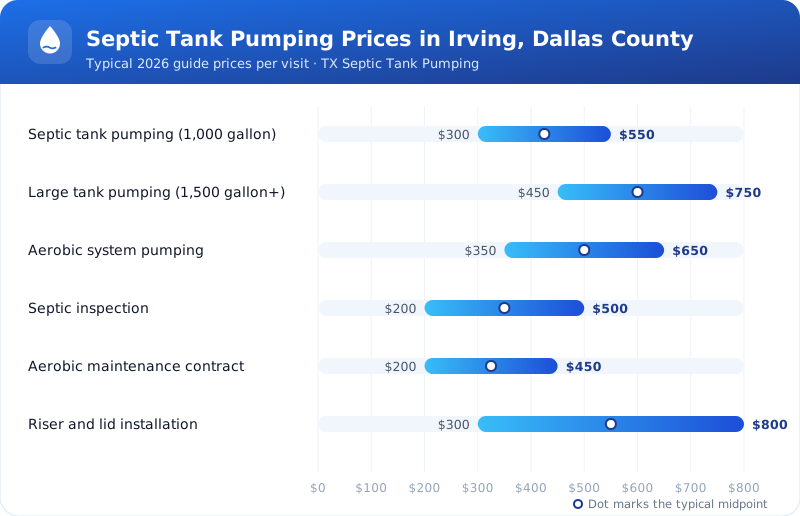
Some systems use an effluent pump in a separate chamber, usually when the drain field sits higher than the tank. That pump moves liquid uphill to the field. A failed effluent pump is not the same as a full tank, and replacing one is a separate repair. Our guide range for septic or effluent pump replacement runs about $800 to $1,800.
Aerobic Systems
Aerobic treatment units use a small air pump and a mixing chamber to treat wastewater before it reaches the disposal area. These systems need regular attention, and most owners carry a yearly maintenance contract. Aerobic system pumping costs more than a standard tank, with our guide range sitting between $350 and $650.
How a Septic Tank Pumping Visit Works in Irving
A typical visit follows the same basic sequence, whether the tank is a few years old or several decades. Knowing the steps helps you ask better questions and spot anything that seems skipped.
- Locate the lidThe crew finds the access lids first. Many tanks are buried deep, and locating and uncovering the lid can add a separate charge, with our guide range at $50 to $200.
- Open and inspectThe technician opens the lids and checks the liquid level, the inlet and outlet baffles, and any visible buildup of solids or scum.
- Pump the contentsThe truck hose removes scum, liquid and sludge until the tank is empty. Ask whether the crew cleans the tank walls and floor before they leave.
- Check the baffles and filterA thorough visit includes a look at the baffles and any effluent filter. Problems caught here are much cheaper to fix than problems found after a backup.
- Record and scheduleAsk for a written note of the pumping date, what was found, and the recommended next interval. Keep it with your home records.
Texas Rules That Apply to Irving Septic Systems
In Texas, the Texas Commission on Environmental Quality, usually called TCEQ, regulates on-site sewage facilities, which covers most residential septic systems. That includes how systems are designed, installed and operated, and it shapes what licensed professionals must do when they work on a tank or field. Homeowners do not need to memorize the full rulebook, but it helps to know that a septic system is a regulated facility and not just a yard feature.
Local offices can add requirements of their own, and this page does not list specific county or city permit fees or rules for Irving. Before any excavation, riser installation or repair, confirm the current requirements with TCEQ or the local authority that handles on-site permits for your property. Asking the pumping company which records it provides after a visit is a practical way to keep your own paper trail complete.
Questions to Ask Before Booking a Septic Pumping Visit
A short phone call can prevent surprises on the day of service. Write down the answers so you can compare them with the quote and the invoice.
- Does the quote include locating and uncovering the lid, or is that a separate charge?
- Is the tank size confirmed before the price is given?
- Will the crew check the baffles and any effluent filter during the visit?
- What is the emergency or weekend charge, and when does it apply?
- Will the technician explain what was found and suggest a pumping interval?
- If the home has an aerobic system, does the company handle that type and offer a maintenance contract?
Shower, Laundry and Toilet Water in an Irving Septic Tank
Yes, shower water goes to the septic tank. So do bath water, sink drains, laundry and every toilet flush. All household wastewater ends up in the same tank, so daily habits have a direct effect on how quickly solids build up and how often the tank needs service.
Some items never belong in a septic system at all, and they cause clogs or damage that a pumping alone cannot fix.
- Spread laundry across the week rather than running several large loads in one day.
- Avoid flushing wipes, including those marketed as flushable, and feminine products.
- Keep grease, oil and fats out of sinks and the garbage disposal.
- Limit chemical drain cleaners, paint thinners and solvents, which can disturb the bacteria that break down waste.
- Use a garbage disposal sparingly, since food solids settle into the tank.
- Fix running toilets and leaking faucets, because extra water shortens the time between pumpings.