Septic tank pumping companies · Comal County
Listings last refreshed October 16, 2026
Best Septic Tank Pumping in Bulverde: Top Rated & Trusted
1 septic tank pumping company in Bulverde, ranked by Pump Score using Google reviews and profile data.
✓ How we rankFree directory, no pay-to-rank
If you are looking for septic tank pumping Bulverde TX homeowners rely on, you are probably at one of two points. Either the tank is due for its regular service, or something in the house has started to act up and you want to know who can come out. This page covers both. It explains how a pump out works, what the work should cost in Texas, what to keep out of the drains, and who is currently listed for Bulverde in our directory.
Top Rated Septic Tank Pumping Companies in Bulverde Compared
Compare the top picks side by side. Full write-ups follow below.
| # | Septic Company | Best for | Score | Rating | Verified |
|---|---|---|---|---|---|
| #1 | Craig's Septic Plumbing | A local septic company you can call direct | 1.5 | 1 reviews | — |
Bulverde Septic Tank Pumping Reviews and Ratings
1. Craig's Septic Plumbing
Best for: A local septic company you can call direct
Bulverde1 reviews
Score breakdown and details
- Location
- Bulverde · Bulverde, TX 78163
- Track record
- New or lightly reviewed
- Rating
- 1 Google reviews
- Profile
- Unclaimed listing (Google data)
- Today
- Hours not published
Strengths
- Direct phone number published, no lead form in the way
Watch Out For
Only 1 reviews so far, so the rating could still move. Worth asking about experience.
Our take: Our top pick in this area. A Pump Score of 1.5/10 reflects the best combination of rating, review depth and profile completeness here.
Hiring Local Septic Tank Pumping in Bulverde
Bulverde sits in Comal County in the Hill Country, and that shapes how septic systems behave here. Many lots have thin soil over limestone, which leaves drain fields less room to spread and can leave tanks sitting closer to rock than people expect. Pumping is the same basic job it is anywhere else, but the access lid can be harder to find on a rocky lot. Ask any provider how they plan to locate the lid before the truck arrives.
Our directory lists one company for Bulverde at this time, Craig's Septic Plumbing, and its listing appears below with the details we have on file. Read the sections above and below it for what to expect on a visit. Use the guide prices as a planning tool, not as a quote.
Reading the Bulverde Listing Before You Call
Our Bulverde ranking uses Pump Score, and right now it has one entry, Craig's Septic Plumbing in ZIP 78163. A short list is not a reason to skip the homework. Use the listing to check the basics before you dial, and write down your questions so the call stays focused.
Most of the questions that matter come down to what the price includes. A quote that sounds low can turn into a higher bill once the lid is found and the tank is opened.
- Confirm the service area covers your street, since Bulverde is spread across rural lots and some addresses sit well outside the town center.
- Ask whether the price includes locating and uncovering the lid, which is often billed as a separate item.
- Ask whether the visit includes a look at the baffles, the outlet filter, and the condition of the drain field, or only the pumping itself.
- Ask how pricing changes if your tank is larger than 1,000 gallons or if your home has an aerobic system.
- Read the Google review count on the listing. This entry shows one review, so ask the company for references or recent customers in your area if you want more to go on.
How a Septic Tank Pump Out Works on a Bulverde Lot
A standard pump out is a short visit, but each step matters. The sequence below is what a careful crew follows on most residential tanks, whether the lot is flat or sits on rocky ground.
- Locate the access lidThe technician finds the tank lid by probing with a rod, using the original installation plans, or checking the spot where the tank was set. On Hill Country lots, the search can take longer than expected.
- Open the tank and look insideThe lid is lifted and the crew checks the scum layer on top and the sludge layer on the bottom. They also look at the inlet and outlet baffles, which keep solids from leaving the tank too early.
- Pump the tankA vacuum truck removes the liquid and solids. The tank should be emptied fully, not just skimmed, so the solids cannot build back up at the same pace.
- Clean and inspect the outletIf the system has an effluent filter, it is cleaned or replaced. The crew also checks for cracks, roots, or signs that the tank is leaking.
- Explain what they foundA good pumper tells you the condition of the tank, notes anything that needs follow-up, and suggests when the next service should happen.
What Happens to a Toilet When the Septic Tank Is Full
A septic tank holds wastewater long enough for solids to settle and for liquid to flow out to the drain field. When the solids fill most of the tank, there is less room for that process to work. Liquid has nowhere to go fast enough, so the pressure shows up in the house first. Toilets drain slowly, sinks gurgle, and in serious cases wastewater can back up into the lowest drains, such as a shower or a floor drain.
A full tank can also push solids out toward the drain field. Once solids clog the soil around the drain lines, the field may fail. Replacing or repairing a drain field is far more costly than pumping the tank on schedule. Guide prices for drain field repair run from $2,000 to $10,000, which is a strong reason to act on the early signs.
Warning Signs That Your Tank Needs Attention Now
Some signs are minor and some are urgent. The table below sorts common symptoms by what they can point to and how quickly to respond. None of these signs confirms a specific problem on its own, so a technician should look at the system to be sure.
| What You Notice | What It Can Point To | What to Do |
|---|---|---|
| Toilets and sinks drain slowly across the house | Tank nearly full or outlet partly blocked | Schedule a pump out and inspection soon |
| Gurgling sounds from drains | Air moving through a restricted line | Book an inspection and avoid heavy water use |
| Sewage odor near the tank or drain field | Tank overflow, a cracked lid, or a failing field | Keep children and pets away and call promptly |
| Wet or unusually lush spot over the drain field | Wastewater rising toward the surface | Call right away and limit laundry and dishwasher use |
| Sewage backing up into a shower or tub | Tank or drain field backed up | Stop running water and call the same day |
What Not to Flush or Pour Into a Bulverde Septic System
Most septic trouble starts with something that should never have gone down the drain. The bacteria in a tank break down human waste and toilet paper, but they cannot handle many everyday products. Keep this list near the bathroom and the kitchen sink.
- Paper towels, which do not break down like toilet paper and can clog the outlet and filter.
- Wipes, including those labeled flushable, since they tend to hold together in the tank.
- Feminine hygiene products, cotton swabs, dental floss, and plastic of any kind.
- Cooking grease, fats, and oils, which harden in the tank and block flow.
- Coffee grounds and food scraps from garbage disposals, which add solids faster than the tank can handle.
- Chemical drain cleaners, solvents, paint thinner, and motor oil.
- Large amounts of bleach or antibacterial cleaners, which can harm the bacteria the system depends on.
- Unused medications, which can disrupt treatment and should go to a proper disposal site.
Conventional Tanks Versus Aerobic Systems in Bulverde
Bulverde homes use both conventional septic tanks and aerobic treatment systems. The pumping job is similar in both cases, but the maintenance around the system is not. Knowing which type you have will tell you what to ask a provider and what to budget for.
Aerobic systems add air to speed up treatment, and they include mechanical parts such as pumps, timers, and spray or sprinkler components. Because of those parts, aerobic systems need ongoing maintenance, usually through a service contract. A conventional tank depends mostly on settling and the drain field, so the main routine task is pumping on schedule.
| Feature | Conventional Tank | Aerobic System |
|---|---|---|
| How it treats wastewater | Settles solids and relies on the drain field | Adds air to speed treatment before the drain field |
| Routine pumping | Typically every 3 to 5 years | Pumping on a schedule set by the provider |
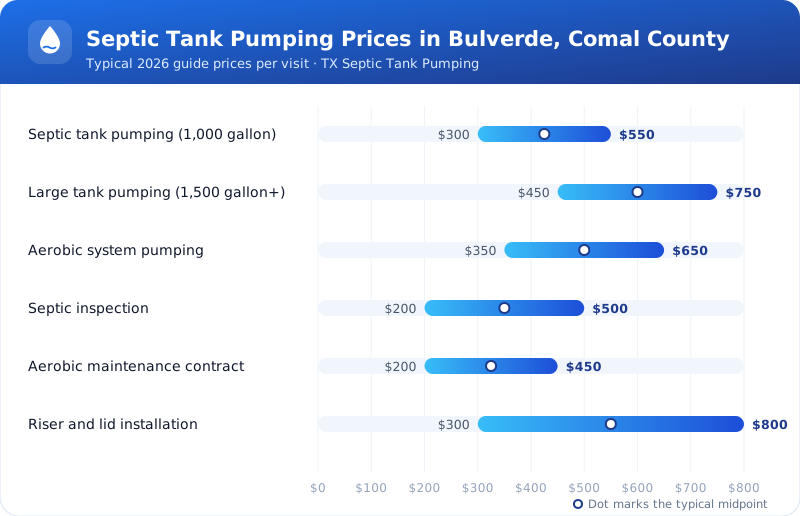
| Guide price for pumping | $300 to $550 for a 1,000 gallon tank | $350 to $650 for aerobic system pumping |
| Ongoing service | Pumping and inspections as needed | Maintenance contract, guide $200 to $450 per year |
| Mechanical parts to watch | Few, mostly the outlet filter | Pumps, timers, and spray components |
Keeping a Pumping Record for Your Bulverde Home
A written record makes the next service easier to plan. Keep the date of each pump out, the name of the provider, what was found in the tank, and any repairs that were made. If you sell the home later, that record also shows a buyer that the system has been maintained.
Store the paperwork with the home's original installation plans if you have them. If you do not, ask the technician to note the lid location and tank size on the invoice. Knowing where the lid sits saves time and money on every future visit.