Septic tank pumping companies · Angelina County
Listings last refreshed October 16, 2026
Best Septic Tank Pumping in Burke [2026 Update]
1 septic tank pumping company in Burke, ranked by Pump Score using Google reviews and profile data.
✓ How we rankFree directory, no pay-to-rank
Septic tank pumping in Burke, TX is usually a planned chore, but it becomes urgent fast when a tank backs up or a drain field starts to smell. Burke sits in Angelina County in the East Texas Piney Woods, and the one company in our directory with a Burke address is J.I. Lufkin Septic on Andrews Ln, ZIP 75941. This page explains how often a home in this area should schedule a pump out, what the work typically costs at guide prices, and what to check before you book.
Top Rated Septic Tank Pumping Companies in Burke Compared
Compare the top picks side by side. Full write-ups follow below.
| # | Septic Company | Best for | Score | Rating | Verified |
|---|---|---|---|---|---|
| #1 | J.I. Lufkin Septic | Saturday appointments | 3.2 | 4 reviews | — |
Burke Septic Tank Pumping Reviews and Ratings
1. J.I. Lufkin Septic
Best for: Saturday appointments
Andrews Ln4 reviews
Score breakdown and details
- Location
- Burke · Andrews Ln, Burke, TX 75941
- Track record
- New or lightly reviewed
- Rating
- 4 Google reviews
- Profile
- Unclaimed listing (Google data)
- Today
- See hours on profile
Strengths
- Direct phone number published, no lead form in the way
- Opening hours published
- Open on Saturdays
Watch Out For
Only 4 reviews so far, so the rating could still move. Worth asking about experience.
Our take: Our top pick in this area. A Pump Score of 3.2/10 reflects the best combination of rating, review depth and profile completeness here.
Hiring Local Septic Tank Pumping in Burke
Burke is a small place, and that shapes how you shop. Our directory lists one pumping company in town, rated 5 on Google from 4 reviews. That is a thin pool, so the decision is less about ranking and more about whether the service fits your system, your schedule and your budget. Many people who search for this phrase also land on results for other Texas towns with similar names, including Burkburnett, so confirm the address before you call.
If you are new to septic systems, read the sections in order. If you already know your tank size and last pump date, jump ahead to the schedule section or the prices. Guide prices are planning ranges, not quotes, and the final figure depends on tank size, lid access and what the technician finds once the tank is opened.
Who Pumps Septic Tanks in Burke Right Now
Our directory lists one septic tank pumping company with a Burke address: J.I. Lufkin Septic, located on Andrews Ln in ZIP 75941. The listing shows hours Monday through Saturday and notes that the business is open 24 hours, which matters if a tank overflows on a weekend or late at night. The listing also shows 4 Google reviews with a 5 rating, so the score rests on a small number of customers.
Because Burke has only one listed option, it is still worth comparing with companies in nearby towns if the timing or price does not work for you. Ask what the visit includes, whether locating the lid is part of the price, and how the company handles tanks that need extra access work. Those questions apply to any septic pumper, whatever the size of its town.
Reading the J.I. Lufkin Septic Listing Before You Call
Use the listing details as a starting checklist. A short phone call usually answers the questions that change the final bill.
- Address: Andrews Ln, Burke, TX, ZIP 75941
- Phone: (936) 208-7310
- Hours: Monday through Saturday, with 24-hour availability as listed
- Google reviews: 4 reviews, rated 5
- Confirm tank size, lid depth and whether the visit covers an aerobic unit if you have one
- Ask whether the quoted price includes uncovering and locating the lid
How Often a Burke Home Should Pump Its Tank
Most households with a conventional tank schedule a pump out every 3 to 5 years. The right interval for your home depends on how much water the household uses and how much solid waste reaches the tank.
Why Solids Decide the Timing
Solids settle to the bottom of the tank as sludge, while grease and light material float up as scum. Bacteria break down some of the waste, but they cannot handle everything. When the sludge layer grows too close to the outlet, solids can leave the tank and clog the drain field. A pump out clears the buildup before that happens, and the technician can measure the layers to tell you how much time is left.
- A household of two or three people with a 1,000 gallon tank often falls within the 3 to 5 year range.
- Larger households, garbage disposals and frequent laundry push solids into the tank faster and shorten the interval.
- Smaller households with few visitors may go longer, but the tank still needs an inspection to confirm the sludge level.
- A tank that has never been pumped since installation should be checked soon, especially if you bought an older home.
Warning Signs That Your Tank Is Full Early
Do not wait for the calendar if the house starts giving you signals. These symptoms can point to a tank that needs attention now.
- Drains across the house run slowly, including sinks, showers and tubs
- Gurgling sounds in pipes after a toilet flushes
- A sewage smell in the yard, near the tank or around the drain field
- Soggy ground or unusually lush, green grass over the drain field
- Sewage backing up into the lowest drain, such as a shower or floor drain
What Happens When the Septic Tank Fills Up
When a tank is full, wastewater has nowhere to settle, and the liquid moves out to the drain field carrying more solids than it should. The field is made of soil and gravel trenches that filter water. Once solids clog the soil around the trenches, water sits near the surface instead of soaking in. The field can fail, and a failed field is far more expensive to fix than a missed pump out.
Our guide range for drain field repair runs from $2,000 to $10,000, depending on how much of the field needs work. A pump out is the cheaper step, which is why a tank with warning signs should be checked before the problem reaches the field.
Conventional Tanks Compared With Aerobic Systems
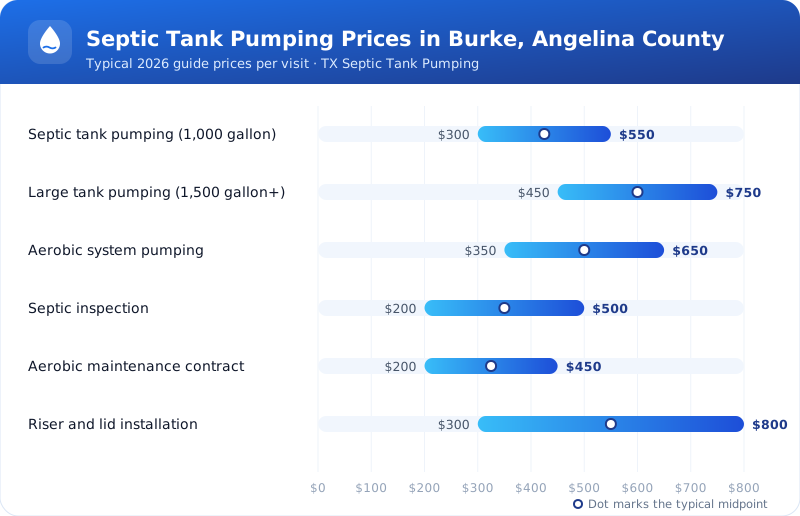
Not every system is a simple tank. Aerobic systems add air and a treatment chamber, so they need routine service on top of pumping. The table shows how the two types differ in what they need and what they tend to cost at guide prices.
| System type | What it needs | Guide price range |
|---|---|---|
| Conventional tank, 1,000 gallon | Pumping every 3 to 5 years | $300 to $550 per pump out |
| Conventional tank, 1,500 gallon or larger | Pumping at the larger tank size | $450 to $750 per pump out |
| Aerobic system | Pumping plus regular service and a maintenance contract | $350 to $650 per pump out |
| Aerobic maintenance contract | Yearly service visits | $200 to $450 per year |
| New aerobic system installed | One-time installation | $8,000 to $18,000 |
What Aerobic Owners Should Plan For
Aerobic systems depend on working parts such as pumps, air components and effluent filters, so skipped service can stop the treatment process. Risers that bring the access lids up to ground level make inspections and pumping easier. Ask whether the pumping company handles the service visits or whether you need a separate maintenance provider.
What to Keep Out of the Tank and Drain Field
Most septic trouble starts with what goes down the drain. The items below cause the most common problems, and many of them are sold as safe when they are not.
Spreading Out the Laundry
Running several loads back to back gives the tank and drain field more water than they can handle at one time. Spreading loads across the week gives the soil time to absorb each batch. That habit matters even more in a home that is already close to its pump date.
- Wipes, including those labeled flushable, which do not break down in the tank
- Cooking grease and oil, which harden and clog outlets and drain lines
- Harsh chemical drain cleaners and bleach in large amounts, which harm the bacteria that break down waste
- Coffee grounds, paper towels, cigarette butts and feminine products
- Medications, paint, solvents and other chemicals that should go to a proper disposal site
- Heavy laundry runs in one day, which send a large volume of water to the field at once
Texas Rules for Septic Systems and Who Oversees Them
The Texas Commission on Environmental Quality regulates on-site sewage facilities at the state level, which covers how systems are designed, installed and maintained. Homeowners who plan to install a new system or change an existing one should confirm the current requirements before work begins, since the rules and the paperwork can affect the project.
Keep a simple record of each pump out, including the date, the company and any notes about the tank condition. That record helps you track the interval, supports any future inspection and gives the next technician a useful history of the system.