Septic tank pumping companies · Anderson County
Listings last refreshed October 16, 2026
Best Septic Tank Pumping in Frankston: Trusted Local Experts
1 septic tank pumping company in Frankston, ranked by Pump Score using Google reviews and profile data.
✓ How we rankFree directory, no pay-to-rank
Septic tank pumping Frankston TX is a routine job that most homes need every three to five years, but the service works differently in a small rural town than it does in a city. Frankston sits in Anderson County in East Texas, where wooded land and spread-out homes mean many households rely on a septic tank instead of a city sewer line. This guide explains how to judge a pumping visit, what a fair bill looks like, and what to do between visits.
Top Rated Septic Tank Pumping Companies in Frankston Compared
Compare the top picks side by side. Full write-ups follow below.
| # | Septic Company | Best for | Score | Rating | Verified |
|---|---|---|---|---|---|
| #1 | J C's Septic Tank Services | A local septic company you can call direct | 3.3 | 11 reviews | — |
Frankston Septic Tank Pumping Reviews and Ratings
1. J C's Septic Tank Services
Best for: A local septic company you can call direct
560 County Rd 43611 reviews
Score breakdown and details
- Location
- Frankston · 560 County Rd 436, Frankston, TX 75763
- Track record
- Growing review base
- Rating
- 11 Google reviews
- Profile
- Unclaimed listing (Google data)
- Today
- Hours not published
Strengths
- Direct phone number published, no lead form in the way
Watch Out For
Opening hours are not published. Call to check availability before you plan around a date.
Our take: Our top pick in this area. A Pump Score of 3.3/10 reflects the best combination of rating, review depth and profile completeness here.
Hiring Local Septic Tank Pumping in Frankston
Only one company is listed for Frankston in our directory right now, so this page cannot offer a side by side bid comparison. The listing below shows the company's address, ZIP code and phone number, along with 11 Google reviews and a 4.3 average. Treat that rating as a small sample, read the reviews yourself, and use the checklist in the first section to get clear answers before you book.
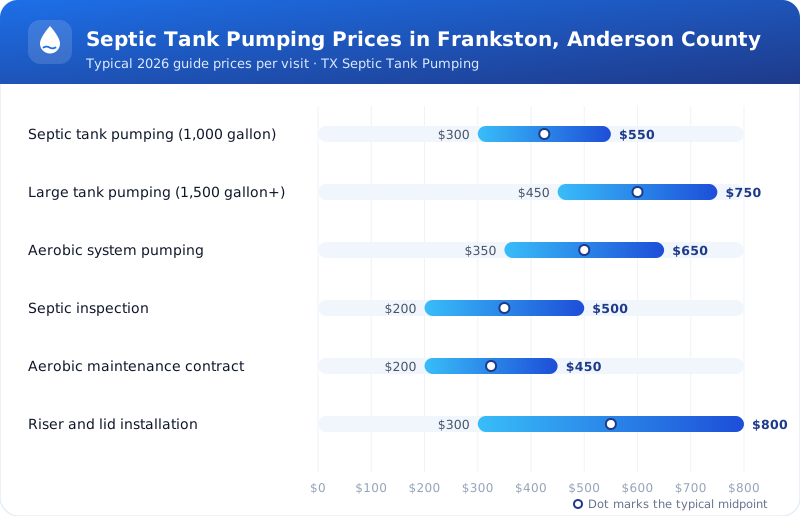
Frankston is also a fair drive from larger towns, so scheduling takes a little planning. The sections that follow cover pumping intervals, the steps a crew should follow, and the materials that should never go into the tank. You will also find 2026 Texas guide prices and notes on state rules and on the aerobic systems that some homes use.
Questions to Ask Before Booking Septic Tank Pumping in Frankston
Only one company is listed for Frankston in our directory, so you cannot compare bids in the usual way. You can still learn a lot from a short phone call. Write down the answers to these questions before you agree to a visit, then compare what you hear with the guide prices later on this page.
- What size is my tank in gallons, and will the price change if it is larger than the standard size?
- Does the quote include finding and uncovering the lid, or is that a separate charge?
- Will the crew inspect the baffles, outlet and effluent filter if my home has one, and will I get a written summary?
- Is there an extra charge for a weekend or after hours callout?
- If I have an aerobic system, do you handle pumping and maintenance, and how is that billed?
- Is my address inside your service area, and how far does the crew travel from its base?
How Often Frankston Homes Should Pump Their Tanks
Most homes with a conventional septic tank should plan on pumping every three to five years. That range is a general rule, and your own schedule may be shorter or longer. The best guide is the tank itself, so a service record that notes the sludge and scum levels will tell you more than a calendar alone.
Household Size and Water Use
A family that runs the dishwasher, two washing machines and a garbage disposal every day sends far more water into the tank than a couple who live alone. More water means solids move through the tank faster and the tank fills sooner. Older rural tanks were sometimes sized for fewer people, so check the tank size before you assume you have a long interval.
If you do not know your tank size, look at the old permit paperwork, ask the previous owner, or ask the crew to measure it during the first visit. Knowing the number lets you estimate how often the tank should be pumped and what a fair price should look like.
Warning Signs That Should Not Wait
Slow drains in several fixtures at once, gurgling toilets, sewage odors near the tank or drain field, and soggy or unusually green ground over the drain field all point to a tank or field that needs attention. If sewage backs up into a shower or floor drain, stop using water in the house and call a pumper right away. Waiting can turn a routine pumping into a repair.
What a Pumping Visit Looks Like From Start to Finish
A normal visit is straightforward, but knowing the steps helps you judge whether the crew is working carefully and charging for what it actually does.
- Find and open the lidThe crew locates the access lid, which may be buried under soil or grass. Uncovering it can be a separate charge, so ask about that before the visit.
- Measure the layersBefore pumping, the crew checks the scum layer on top and the sludge layer on the bottom to estimate how full the tank is and whether it is overdue.
- Pump the tankA vacuum truck removes the liquid, scum and sludge. Most tanks are pumped fully so the crew can see the interior walls and baffles.
- Inspect the baffles and outletThe crew checks the inlet and outlet baffles and the outlet tee for cracks, blockages or damage that could let solids reach the drain field.
- Check the effluent filterIf your system has an effluent filter, the crew should clean or inspect it, since a clogged filter can send solids into the field.
- Get a written recordAsk for a summary that lists the tank size, the condition of the baffles and any repairs recommended. Keep it with your home records, because it helps you track the next pumping date and gives any future buyer a clear history.
Conventional Tanks Compared With Aerobic Systems
Many rural homes in Anderson County have a conventional tank, but some have an aerobic treatment unit with a pump and air system. The two need different care and carry different costs, so know which one you own before you book a visit.
| System | How It Works | Upkeep Pattern | Guide Price |
|---|---|---|---|
| Conventional septic tank | Solids settle, and liquid flows to a drain field | Pump every three to five years and inspect baffles | $300 to $550 for a 1,000 gallon pumping |
| Aerobic treatment unit | Air and a pump treat wastewater before it reaches the drain field | Pumping plus a yearly maintenance contract | $350 to $650 to pump, $200 to $450 per year for a contract |
What Not to Flush or Pour Into a Septic Tank
Your tank is designed for human waste and toilet paper. Almost everything else makes it fill faster or clogs the outlet. Keep this list near the bathroom and kitchen sink so everyone in the house knows what to avoid.
- Wipes of any kind, including those labeled flushable
- Feminine hygiene products, diapers and cotton swabs
- Cooking grease, oil and fats, which harden in the tank and can clog the outlet
- Large amounts of coffee grounds, eggshells and food scraps from the garbage disposal
- Paint, paint thinner, solvents, motor oil and pesticides
- Heavy amounts of bleach or chemical drain cleaners that can kill the bacteria that break down waste
- Unused medicines, which should go to a pharmacy take-back program instead
Texas Septic Rules and Who Oversees the Work
In Texas, the Texas Commission on Environmental Quality, or TCEQ, regulates on-site sewage facilities, which includes most household septic systems. State rules set standards for how systems are designed, installed and operated, and they shape what a qualified professional must do on the job. Local requirements can add to those standards and can change over time, so confirm the details with TCEQ or the appropriate local office before you install, repair or replace any part of your system.
For a routine pumping visit, the rules matter less day to day than the paperwork. Ask any company how it is authorized to perform the work under state rules, and keep copies of every service summary. A clear service history helps you plan the next visit and helps a buyer or inspector understand how the system has been kept up.
If you are weighing a repair or a new system, get written estimates and ask who will handle any permit paperwork. That question matters more than most people expect, because a repair done without the right approvals can cause trouble when you sell the property.
Reaching J C's Septic Tank Services on County Road 436
J C's Septic Tank Services is the company listed for Frankston in our directory. Its listed address is 560 County Rd 436, ZIP code 75763, and the phone number is (903) 876-3435. The company has 11 Google reviews with a 4.3 average, which is the only rating we hold for it.
Our data describes the listing under septic tank services but does not list its specific offerings, so confirm by phone what it does and how it prices add-ons. Read the reviews for patterns in communication, punctuality and price, then call with the questions from the checklist at the top of this page.