Septic tank pumping companies · Tyler County
Listings last refreshed October 16, 2026
Best Septic Tank Pumping in Warren, Ranked by Real Reviews
1 septic tank pumping company in Warren, ranked by Pump Score using Google reviews and profile data.
✓ How we rankFree directory, no pay-to-rank
Septic tank pumping Warren TX is a service most homeowners only think about after a drain backs up. Outside town limits, a home often relies on its own septic tank and drain field instead of a city sewer line, so the tank is the homeowner's job from start to finish. Pumping removes the solids and scum that build up over time, and skipping it is one of the most common ways a system fails early.
Top Rated Septic Tank Pumping Companies in Warren Compared
Compare the top picks side by side. Full write-ups follow below.
| # | Septic Company | Best for | Score | Rating | Verified |
|---|---|---|---|---|---|
| #1 | Dragon Wastewater Services | A local septic company you can call direct | 1.6 | 4 reviews | — |
Warren Septic Tank Pumping Reviews and Ratings
1. Dragon Wastewater Services
Best for: A local septic company you can call direct
817 Co Rd 47804 reviews
Score breakdown and details
- Location
- Warren · 817 Co Rd 4780, Warren, TX 77664
- Track record
- New or lightly reviewed
- Rating
- 4 Google reviews
- Profile
- Unclaimed listing (Google data)
- Today
- Hours not published
Watch Out For
Only 4 reviews so far, so the rating could still move. Worth asking about experience.
Our take: Our top pick in this area. A Pump Score of 1.6/10 reflects the best combination of rating, review depth and profile completeness here.
Hiring Local Septic Tank Pumping in Warren
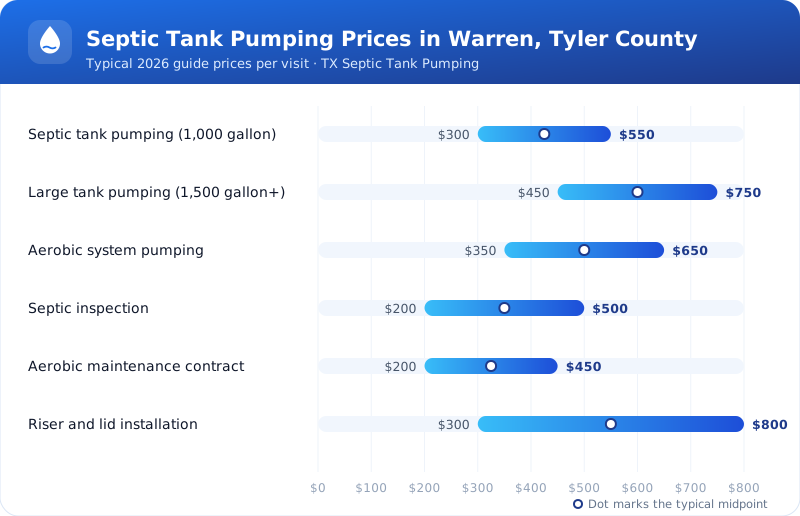
This guide explains what a pumping visit involves, how often to schedule one, what the work typically costs using our guide ranges, and how to check a provider before you hire. Our directory currently lists one company in Warren, Dragon Wastewater Services, with four Google reviews. That makes the search a little different from a big city search, so the questions below focus on how to judge a single local option and when it makes sense to look at providers in nearby towns.
Read the sections in order if you are new to septic systems. If you already know your tank size and the date of your last pumping, jump to the schedule table or the price guide. Either way, check the company listing below for the current address and details before you call.
Checking a Septic Pumper in Warren Before You Book
Start with the listing. In Warren the directory shows one company, so you are not comparing several quotes side by side. That is fine as long as you ask the right questions before a crew arrives.
- Confirm the company name and street address, including the Co Rd 4780 location, so you know where the crew is coming from.
- Ask whether the quote covers pumping only, or also locating the lid, inspecting the tank and disposing of the waste.
- Ask how they handle a tank they cannot find, since a buried lid can add locating and uncovering time.
- Ask whether any weekend or after-hours visit carries an extra callout charge.
- Ask for a written note on the date and the tank's condition so you have a record for the next visit.
- Read recent Google reviews, not just the total count.
What Happens During a Standard Pumping Visit
A typical visit is short when the tank is easy to reach. The steps below show what the crew usually does and what you should be ready for.
- Locate and uncover the access lidThe crew finds the tank lid, which may be buried under soil or landscaping. Uncovering a buried lid is often priced separately.
- Open the tank and check itThe lid comes off so the crew can look at the liquid level, the scum layer and the solids. A careful pumper notes anything unusual.
- Pump out the contentsA hose draws the sludge, scum and liquid into a truck. Most standard home tanks are emptied in one visit.
- Inspect the baffles and outletMany pumpers check the inlet and outlet baffles, since a broken baffle can let solids move toward the drain field.
- Clean the filter and close upIf the system has an effluent filter, it is cleaned or replaced. The lid goes back on and the area is left in order.
- Get the record in writingAsk for a note with the date and tank condition so you can plan the next septic tank pumping Warren TX visit with confidence.
How Often to Pump, by System Type
Most conventional tanks are pumped every three to five years. The right interval depends on tank size, how many people live in the home and how much water and solid waste goes into the system. The table is a starting point, not a replacement for a professional inspection.
| System or situation | Typical pumping interval | What to watch for |
|---|---|---|
| Conventional tank, average household | Every 3 to 5 years | Scum or solids near the outlet, slow drains |
| Conventional tank, larger household or heavy use | Check sooner than 3 years | Frequent backups, gurgling toilets |
| Aerobic treatment system | Follow the maintenance contract and service schedule | Alarm lights, odors, soggy spots over the drain field |
| Tank never pumped or date unknown | Pump as soon as possible, then set a schedule | Solids may already be reaching the drain field |
| Grease trap or separate pre-tank | Pump on the schedule your provider sets | Grease layer thick enough to slow flow |
Warning Signs Your Tank Is Overdue for Pumping
Waiting too long costs more than the pumping itself. These signs usually mean solids are building up or the drain field is under stress.
- Water or sewage backs up into tubs, showers or floor drains.
- Toilets gurgle or drain slowly, especially after water runs in another room.
- Bad odors appear near the tank, over the drain field or inside the house.
- Patches of grass over the drain field stay unusually green or stay soggy after dry weather.
- Water pools near the tank or drain field after rain.
- The tank was last pumped more than three to five years ago, or nobody knows the date.
Is There a Pump Inside Your Septic Tank?
Many standard septic tanks have no pump at all. Wastewater flows in by gravity, the solids settle, and the liquid leaves through the outlet toward the drain field. Some homes do have a pump, usually in a separate pump chamber or in an aerobic or pressure-dosed system, where effluent must be lifted or sent in doses to the drain field. A pump like that can fail, and our guide range for replacing a septic or effluent pump is $800 to $1,800.
Texas Rules and Who Oversees Septic Systems
In Texas, the Texas Commission on Environmental Quality (TCEQ) regulates on-site sewage facilities, which covers the tank, drain field and related parts. Local authorities may also have permit and inspection requirements. Our data does not list permit fees or local ordinances for Tyler County or Warren, so confirm any local requirement with the county before a new installation or a major repair.
- TCEQ: state rules for on-site sewage facilities across Texas.
- Local office: permits, inspections and any county-level requirements, which you should confirm directly.
- Pumper or installer: the company doing the physical work, which should explain what paperwork applies to your job.
Daily Habits That Stretch the Time Between Pumpings
Household habits affect how fast a tank fills more than most products on store shelves. Water volume and solids drive the pace.
- Spread laundry across the week instead of running many loads back to back, since a large amount of water in a short time pushes solids toward the outlet.
- Fix running toilets and dripping faucets, which add water every day.
- Flush only toilet paper. Do not flush wipes, paper towels, feminine products or diapers.
- Keep grease, cooking oil and coffee grounds out of the kitchen sink.
- Keep vehicles and heavy equipment off the drain field, and direct roof and yard runoff away from it.
- Avoid chemical drain openers and large amounts of harsh cleaner, since they can disturb the bacteria that break down waste.
The Cheapest Septic System to Install, and What Sets the Price
Our guide prices do not include a conventional septic system installation, so we cannot give you a verified low-end figure for one. What we do have is the guide range for a new aerobic system, which runs $8,000 to $18,000 installed. Aerobic systems usually cost more than a basic tank and drain field because they add equipment and an ongoing maintenance contract. The final price moves with soil, site slope, tank size and how far the drain field has to run.
Soil matters a great deal. Hill Country sites tend to have shallow, rocky ground, Gulf Coast sites often have clay and high water tables, and East Texas lots like those around Warren can mix sandy and clay soils that affect drain field design. Get a site evaluation before choosing a system, and compare written bids that describe the same equipment and drain field.