Septic tank pumping companies · Travis County
Listings last refreshed October 16, 2026
Best Septic Tank Pumping in Spicewood: Trusted Local Experts
1 septic tank pumping company in Spicewood, ranked by Pump Score using Google reviews and profile data.
✓ How we rankFree directory, no pay-to-rank
Septic tank pumping Spicewood TX homeowners ask about usually comes down to three questions: how often the tank should be serviced, who can reach it on a rocky lot, and what the visit is likely to cost. This page answers all three for Spicewood, a community in Travis County in the Texas Hill Country. It also explains how our directory ranks local providers, so you can compare options before you pick up the phone.
Top Rated Septic Tank Pumping Companies in Spicewood Compared
Compare the top picks side by side. Full write-ups follow below.
| # | Septic Company | Best for | Score | Rating | Verified |
|---|---|---|---|---|---|
| #1 | Hill Country Environmental Services - septic | Homeowners who want a septic company with a long track record | 8.4 | 223 reviews | — |
Spicewood Septic Tank Pumping Reviews and Ratings
1. Hill Country Environmental Services - Septic
Best for: Homeowners who want a septic company with a long track record
200 Lakeside Dr223 reviews
Score breakdown and details
- Location
- Spicewood · 200 Lakeside Dr, Spicewood, TX 78669
- Track record
- Established, very high review volume
- Rating
- 223 Google reviews
- Profile
- Unclaimed listing (Google data)
- Today
- See hours on profile
Strengths
- 223 Google reviews, a well established track record
- Direct phone number published, no lead form in the way
- Has its own website with more detail on services
- Opening hours published
Watch Out For
The Google profile is not owner verified. Double check the address and phone when you call.
Our take: Our top pick in this area. A Pump Score of 8.4/10 reflects the best combination of rating, review depth and profile completeness here.
Hiring Local Septic Tank Pumping in Spicewood
Pumping removes the sludge and scum that collect in a septic tank over time, which helps the drain field keep working. Most households need it every three to five years, but the right interval depends on tank size, how many people live in the home, and how much water and solid waste goes down the drain. Aerobic systems work differently. They run on a treatment cycle and usually follow a maintenance contract, with pumping scheduled by the provider, so knowing your system type is the first step to booking the right visit.
Our directory lists one ranked company for Spicewood so far. The sections below show you how to judge that listing and any other provider you find, what to expect during a visit, and how to tell whether your tank is due for service.
Reading the Spicewood Pumping Listing Before You Call
The listing below is the only ranked company for Spicewood in our directory, so it sets the baseline for your comparison. Hill Country Environmental Services - septic has a website, a phone line at (830) 220-3176, and a street address on Lakeside Dr. Its 223 Google reviews show how many local customers have shared feedback, though review volume is not the same as service quality.
The directory orders listings by Pump Score. Google star ratings appear only where a business has one in our data, so this page does not show a star rating for the Spicewood company. Compare the review counts, the hours, and the service details you hear directly from each company.
When you call, ask the same questions of every provider you consider. Ask what the quoted price covers, whether the tank lid is included, how long the visit usually takes, and whether a written record of the pumping date will be provided. Clear answers on these points make it easier to compare two quotes that look different on paper.
Signs a Spicewood Septic Tank Needs Pumping Now
Most warning signs appear slowly. Catching them early often means a routine pumping instead of an urgent call after hours or on a weekend.
Watch for these signs in your home and yard:
- Drains across the house run slowly, including sinks, showers and tubs.
- Toilets gurgle, or drains bubble when water runs somewhere else in the home.
- Sewage odor appears near the tank, over the drain field or in indoor drains.
- The grass over the drain field stays unusually green or soggy, even in dry weather.
- Wastewater pools in the yard above the drain field.
- Backups happen after heavy laundry days or when guests stay over.
What Happens During a Septic Tank Pumping Visit
A standard visit follows a predictable order. The steps below describe the common flow for a conventional tank, and your provider can explain any differences for your system.
- Locate the tankThe technician finds the lid using your records, a probe or a locator if the lid is buried. On rocky Hill Country ground, this step can take longer than it does on a flat, open lot.
- Uncover and expose the accessSoil is removed so the lid can be opened safely. If the lid sits deep, a riser can make future visits faster and less disruptive.
- Pump the tankSludge, scum and liquid are removed, and the technician notes the sludge and scum levels found inside.
- Check the componentsThe inlet and outlet baffles are inspected, and any effluent filter is cleaned or checked when one is present.
- Close up and record the visitThe lid is secured, the pumping date and tank condition are recorded, and you receive guidance on when to schedule the next service.
How Often Spicewood Households Should Pump, by System Type
The table below gives general rhythms. Your interval depends on the system and how the household uses it, so treat these as starting points rather than fixed promises.
If you do not know your last pumping date, ask for a locate and inspection before scheduling a full pump. Records from the previous owner, a county file or the provider's notes can help set the next date.
| System or Situation | Common Pumping Rhythm | What Changes the Timing |
|---|---|---|
| Conventional tank, average household | Every 3 to 5 years | Tank size and number of occupants |
| Conventional tank with a garbage disposal | Often sooner than 3 years | Extra solids added to the tank |
| Tank with an effluent filter | Filter cleaned on the schedule the provider sets | Solids load and water use |
| Aerobic treatment unit | Follows the maintenance and pumping schedule in the service agreement | Manufacturer guidance and provider inspections |
| Home with heavy water use or frequent guests | Check the tank more often than the standard range | Daily water volume and occupancy |
Conventional Tank or Aerobic System: Choosing the Right Service Plan
Pumping alone does not cover every system. The two most common types need different kinds of attention, and comparing them helps you budget for the years ahead.
Conventional Septic Tanks
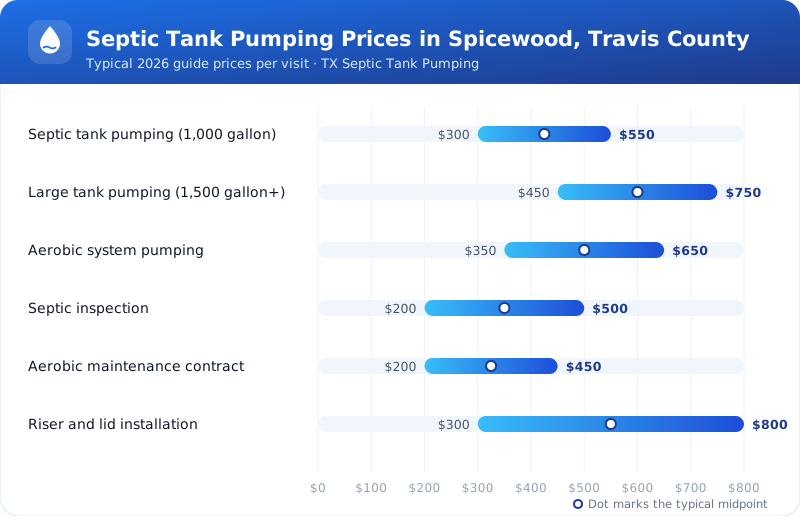
A conventional tank separates solids and liquids passively. The main job is pumping on a set interval, along with occasional checks of the tank, baffles and drain field. Guide pricing for pumping a 1,000 gallon tank falls between $300 and $550, and a larger 1,500 gallon or bigger tank runs $450 to $750.
Aerobic Treatment Systems
An aerobic system adds air to treat wastewater more actively, so it usually has mechanical parts, alarms and pumps that need attention. These systems typically run on a maintenance contract, and pumping is one part of the visit rather than the whole job. Guide pricing is $350 to $650 for aerobic pumping and $200 to $450 a year for a maintenance contract.
What Not to Flush or Pour Down a Spicewood Septic System
Most septic trouble starts with what goes down the drain. Keep these items out of the system:
- Wipes, including those labeled flushable
- Grease, cooking oil and fat
- Feminine hygiene products, diapers and paper towels
- Coffee grounds, eggshells and food scraps
- Chemical drain cleaners, paint thinners and solvents
- Medications, which should go to a take-back program or the trash
- Large amounts of harsh cleaners or bleach
The 10 Acre Rule, TCEQ Oversight, and Planning a New System
People often search for the 10 acre rule when they plan a home or lot in Texas. This page does not state a specific rule, because the answer depends on property details and local requirements. Confirm the rule for your land with TCEQ or the local permitting office before you buy or build, since TCEQ regulates on-site sewage facilities across the state.
If you need a new system, expect the design and permit steps to come first. Guide pricing for a new aerobic system installed runs $8,000 to $18,000, but the final cost depends on site conditions, the design and the permits required. In Hill Country ground with rock close to the surface, excavation can add to the scope, so ask for a written plan with the work described step by step before any digging begins.
Replacing a single part is often cheaper than replacing the whole system. Guide pricing for a septic or effluent pump replacement runs $800 to $1,800, and drain field repair runs $2,000 to $10,000. A pumping visit can help identify which problem you are dealing with before you commit to a larger project.