Septic tank pumping companies · Travis County
Listings last refreshed October 16, 2026
Best Septic Tank Pumping in Pflugerville [2026 Update]
1 septic tank pumping company in Pflugerville, ranked by Pump Score using Google reviews and profile data.
✓ How we rankFree directory, no pay-to-rank
Finding septic tank pumping Pflugerville TX homeowners can count on takes a little more checking than most people expect. Right now the directory lists one company in Pflugerville, Pflugerville Porta Pros, with three Google reviews. That is a short list, so this page does two jobs. It shows you that listing in full, and it explains what a pumping visit involves, how often a tank needs service, and what a typical bill looks like. With those facts you can judge any quote, whether it comes from this company or from a pumper in a nearby town.
Top Rated Septic Tank Pumping Companies in Pflugerville Compared
Compare the top picks side by side. Full write-ups follow below.
| # | Septic Company | Best for | Score | Rating | Verified |
|---|---|---|---|---|---|
| #1 | Pflugerville Porta Pros | Saturday appointments | 3.8 | 3 reviews | — |
Pflugerville Septic Tank Pumping Reviews and Ratings
1. Pflugerville Porta Pros
Best for: Saturday appointments
2505 W Pecan St3 reviews
Score breakdown and details
- Location
- Pflugerville · 2505 W Pecan St, Pflugerville, TX 78660
- Track record
- New or lightly reviewed
- Rating
- 3 Google reviews
- Profile
- Unclaimed listing (Google data)
- Today
- See hours on profile
Strengths
- Direct phone number published, no lead form in the way
- Has its own website with more detail on services
- Opening hours published
- Open on Saturdays
Watch Out For
Only 3 reviews so far, so the rating could still move. Worth asking about experience.
Our take: Our top pick in this area. A Pump Score of 3.8/10 reflects the best combination of rating, review depth and profile completeness here.
Hiring Local Septic Tank Pumping in Pflugerville
If your home uses a septic system, the tank is a buried container, usually concrete or fiberglass, that holds solids while liquid moves on to a drain field. Solids and scum build up in the tank over time. Pumping removes them before they reach the drain field, where a clog is far more expensive to fix. A pumping visit is routine work, but the details still vary from one company to the next, from lid access to what gets checked while the tank is open.
Use the listing and the sections below together. Compare the company's details against the checklist, and ask for a written price before the truck arrives.
Choosing a Septic Pumper in Pflugerville, TX
Before you call anyone, confirm a few basics. A pumping company should be able to tell you what size tank it expects to empty, what it charges for locating the lid, and whether a weekend or emergency visit costs extra. Ask those questions up front so the bill does not surprise you after the work is finished. Keep a short written note of the answers, since phone conversations are easy to forget.
Start with the tank itself. If you know its size, say so on the call. If you do not, ask the company how it estimates size and how the price changes for a larger tank.
- Ask whether the quoted price covers pumping only or also includes locating and uncovering the lid.
- Confirm the tank size, which is often 1,000 gallons for a typical home, and ask how the price changes for a larger tank.
- Ask whether the crew checks the baffles, the outlet and the effluent filter while the tank is open.
- Check the company's open days. Pflugerville Porta Pros lists Monday through Saturday, so a Sunday emergency needs a different plan.
- Ask for a written estimate and a receipt that states what was pumped and where the waste went.
- Look at the number of Google reviews. A business with only a few reviews has less public feedback to read before you decide.
What Happens During a Pumping Visit
A standard visit for a residential tank usually moves through the same stages, whichever company you hire. Knowing the sequence helps you spot a visit that skips steps. It also helps you ask better questions if the crew does something you did not expect.
- Locate the access lidThe crew finds the tank lid, which may sit under soil or sod. Uncovering a buried lid is sometimes a separate charge, so ask about it before the visit.
- Open the tank and look insideWith the lid off, the crew checks the liquid level and the scum layer on top. They should also look at the baffles that guide flow into and out of the tank.
- Pump the contentsA hose connects to a vacuum truck, which removes the liquid, scum and sludge from the tank. A standard tank should be emptied fully, not just skimmed.
- Inspect the outlet and filterThe outlet baffle and effluent filter, if the tank has one, should be checked for clogs and cleaned as needed. A clogged filter can send solids into the drain field even when the tank is pumped.
- Close up and keep the paperworkThe lid goes back on and the soil is replaced. Keep the receipt with the date of service, since it helps you track the next pumping and show a buyer or inspector the service history.
How Often a Septic Tank Needs Pumping
Most standard septic tanks need pumping every 3 to 5 years. That range is a starting point, not a fixed rule. A tank that serves a large family, a home with a garbage disposal, or a household that runs several loads of laundry each day fills faster than one that serves two people. The age of the system and the size of the tank matter too, and the only reliable way to know the current level is to check it.
Standard Gravity Tanks
A conventional tank separates solids from liquid. Solids settle to the bottom and scum floats on top, while the liquid in the middle drains out to the drain field. When either layer grows too thick, solids can leave the tank with the liquid and clog the soil. That is the point where a routine pumping becomes a much larger repair.
Aerobic Systems
Aerobic treatment units add air to break down waste, and they need more hands-on care than a standard tank. Owners usually pay for periodic pumping and also for a maintenance contract, often billed yearly. Aerobic units have moving parts and electrical components, so a service visit can catch a problem before it turns into a failure.
Warning Signs the Tank May Be Full
Slow drains, gurgling pipes and sewage odors near the house can all point to a full tank or a clogged drain field. Watch the yard as well. Wet or spongy ground over the drain field, or patches of unusually green grass in one spot, can mean effluent is rising to the surface. Do not wait for several of these signs to show up at once.
- Toilets and drains that run slowly, especially several fixtures at the same time
- Gurgling sounds from plumbing after water is used
- Sewage odor inside the house or near the tank lid
- Soggy ground over the drain field, even during dry weather
- Sewage backing up into tubs, showers or floor drains
What Should Never Go Into a Septic Tank
A septic tank depends on bacteria to break down what goes in, and it depends on solids settling out. Materials that kill those bacteria or clog the outlet shorten the time between pumpings and raise the risk of a failed drain field. Keep these items out of the system, even if the packaging says they are safe.
- Wipes labeled flushable, which usually do not break down in the tank
- Grease, oil and fat poured down the kitchen sink
- Feminine hygiene products, diapers and cotton swabs
- Harsh chemical drain cleaners used again and again
- Coffee grounds and food scraps, which add solids quickly
- Paint, solvents, pesticides and other household chemicals
Can a Septic Tank Go 20 Years Without Pumping?
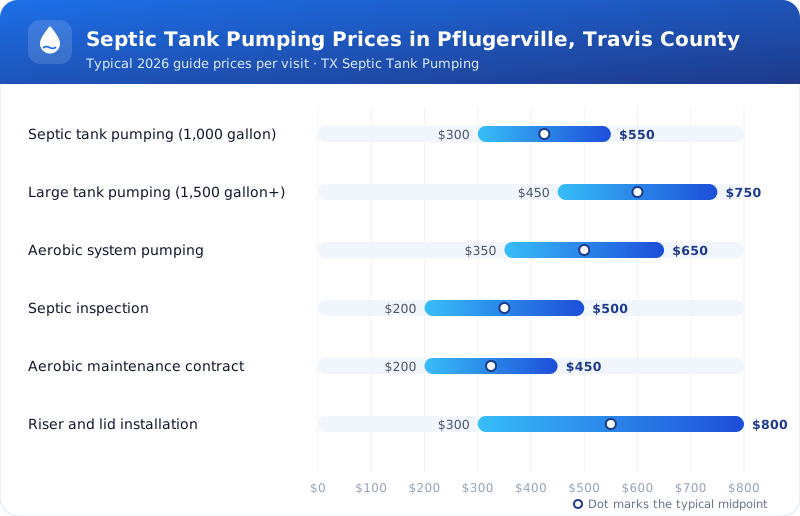
A tank can seem to work for a long time, and that is the problem. It may keep draining normally for years while solids quietly build up. Eventually the sludge layer reaches the outlet and carries solids into the drain field, where they can clog the soil. Repairing a drain field costs far more than pumping the tank. The guide range for drain field repair is $2,000 to $10,000, compared with a few hundred dollars for routine pumping.
If you bought a home and cannot find pumping records, do not guess. A septic inspection, with a guide price of $200 to $500, shows the condition of the tank and the drain field. A pumping schedule started from a known date is far easier to keep than a repair plan built after a backup.
Texas Septic Rules Homeowners Should Know
The Texas Commission on Environmental Quality, known as TCEQ, regulates on-site sewage facilities across the state, which covers most septic systems. TCEQ sets the baseline standards for how these systems are built, operated and maintained. Local permitting and inspection can add steps on top of those standards, so check with the county or city before you dig up the drain field, add a bedroom or replace a system.
A licensed installer or pumping company can tell you what paperwork applies to a particular property. Keeping service receipts and any permit records in one folder makes that conversation faster and makes a future sale easier to document.