Septic tank pumping companies · Terry County

Listings last refreshed October 16, 2026

Best Septic Tank Pumping in Brownfield [2026 Update]

1 septic tank pumping company in Brownfield, ranked by Pump Score using Google reviews and profile data.

✓ How we rankFree directory, no pay-to-rank

Septic tank pumping in Brownfield, TX is the kind of job most homeowners only think about when a drain starts running slow or a patch of yard smells wrong. By then the tank is often overdue. Regular pumping keeps solids from building up and moving into the drain field, where repairs cost far more than a routine visit.

Top Rated Septic Tank Pumping Companies in Brownfield Compared

Compare the top picks side by side. Full write-ups follow below.

#Septic CompanyBest forScoreRatingVerified
#1J C's Septic SystemA local septic company you can call direct2.23 reviews—
  1. 1J C's Septic SystemA local septic company you can call direct2.2

Brownfield Septic Tank Pumping Reviews and Ratings

1

1. J C's Septic System

Best for: A local septic company you can call direct

2.2Pump Score

1318 Lubbock Rd3 reviews

Score breakdown and details
Location
Brownfield · 1318 Lubbock Rd, Brownfield, TX 79316
Track record
New or lightly reviewed
Rating
3 Google reviews
Profile
Unclaimed listing (Google data)
Today
Hours not published
Recommendation2.2
Trust2.1

Confidence: low

Strengths

  • Direct phone number published, no lead form in the way

Watch Out For

Only 3 reviews so far, so the rating could still move. Worth asking about experience.

Our take: Our top pick in this area. A Pump Score of 2.2/10 reflects the best combination of rating, review depth and profile completeness here.

1septic company ranked
3Google reviews analyzed
0open Saturdays
$300–550typical 1,000 gal pump out

Hiring Local Septic Tank Pumping in Brownfield

Brownfield sits in Terry County on the South Plains, and our directory currently lists one septic company for the town. That makes this page a little different from a big-city guide. Instead of comparing a long list of pumpers, you get one local listing, a clear picture of what the work involves, and guide prices so you can judge any quote you receive, from this company or another one you find on your own.

Below you will find the listing, a walkthrough of a typical pumping visit, the signs that a tank is due, and a plain comparison of conventional and aerobic systems. The questions people ask most often about pumps, laundry, showers, and tank size are answered near the end. Nothing here replaces a site visit, but it should help you ask better questions before anyone starts digging.

How to Choose a Septic Pumper When Only One Company Is Listed

A short list is not a reason to skip the usual checks. Before you agree to anything, confirm that the company is the one you are talking to, get the job details in writing, and ask who will physically do the work. A good first call covers the tank size, the last time the tank was pumped, whether you know where the lid is, and whether the company will show you the sludge and scum levels before they leave.

Ask for a written estimate that lists what is included. A basic pumping quote should say whether the price covers locating the lid, whether it includes an inspection of the baffles and effluent filter, and whether any disposal fees apply. If an estimate is vague, ask for a line-by-line version before you schedule the visit.

The Brownfield Listing: What the Directory Shows Today

The table of ranked companies for Brownfield currently has one entry. The details below come straight from that listing. We do not list services, hours, or credentials here because the directory data for this company does not include them, so confirm those points on your first call.

Why the Small Review Count Matters

Three reviews is not enough to judge a business by itself. It simply means there is little public feedback to read. Use the phone call as your real interview, and ask for two or three past customers in town who can speak to how the company handled the lid, the cleanup, and the final bill.

  • Company: J C's Septic System
  • Address: 1318 Lubbock Rd, Brownfield, TX, ZIP 79316
  • Phone: (806) 637-3009
  • Google reviews in our data: 3
  • Coverage in this directory: Brownfield, ZIP 79316

What Happens During a Typical Pumping Visit

Most residential pumping visits follow the same general sequence. The exact steps can vary by system type and by what the crew finds once the lid is open, but a homeowner should expect something close to this order.

  1. Locate and uncover the lidThe crew finds the tank access points and digs down to the lids if they are buried. Locating and uncovering can add a separate charge, so ask about it before the visit.
  2. Measure the sludge and scumThe technician checks how much solid material sits at the bottom and how thick the floating scum layer is. These numbers help decide whether the tank truly needed pumping now.
  3. Pump the tankA vacuum truck removes the liquid and solids from the tank. The goal is to empty the tank fully, not just skim the top.
  4. Check the baffles and effluent filterInlet and outlet baffles should be intact. If the tank has an effluent filter, it should be cleaned or inspected while the tank is open.
  5. Record the workAsk for a written record that notes the date, the tank size if known, the condition of the baffles and filter, and the next recommended pumping date.

Signs a Tank in Brownfield Needs Pumping Now

Pumping every three to five years is the common guideline for a household septic tank, but the interval depends on how many people live in the home, how much water they use, and how big the tank is. Watch for these warning signs. If you see more than one at once, schedule a visit soon.

  • Drains, toilets, or showers run slowly across several fixtures at once
  • Gurgling sounds in plumbing after water is used
  • Sewage odor near the tank, the house, or the drain field
  • Unusually lush or spongy grass over the drain field, even in a dry spell
  • Sewage backing up into the lowest drains in the house
  • Water pooling near the tank lid or the drain field area

What Not to Flush or Pour Down a Septic Drain

Most septic problems start with something that should never have gone down the drain. Solid materials that do not break down fill the tank faster and can clog outlets. Harsh chemicals can kill the bacteria that help break down waste. Keep the following out of the system.

  • Wipes labeled flushable, paper towels, feminine products, and diapers
  • Cooking grease, oil, and fat poured down sinks
  • Coffee grounds, eggshells, and food scraps from the garbage disposal
  • Chemical drain cleaners, paint, solvents, and pesticides
  • Excess bleach or heavy use of antibacterial cleaners
How Much Does Septic Tank Pumping Cost in Brownfield?

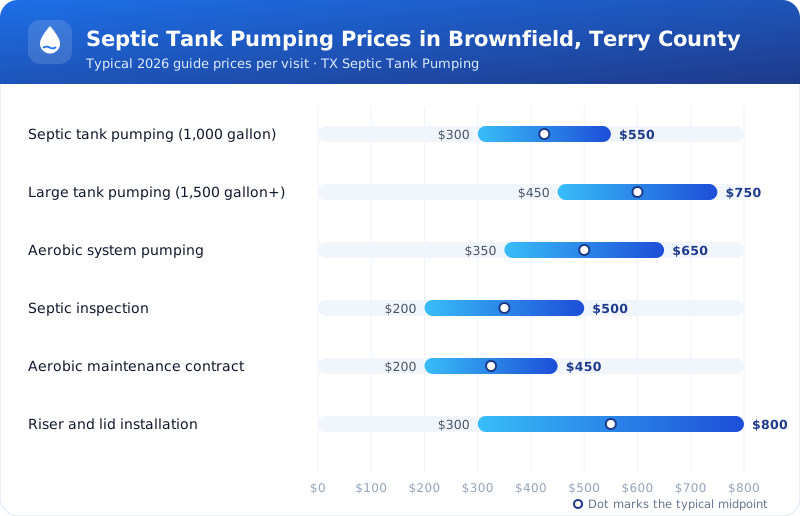
The guide prices below give you a general range for common septic work in Texas. They are not quotes. A pumping visit on a standard 1,000 gallon tank typically runs from $300 to $550, and a larger tank of 1,500 gallons or more usually runs from $450 to $750. Aerobic system pumping falls between $350 and $650. Locating and uncovering the lid is a separate charge at $50 to $200, which matters in a yard where the lid has been buried for years.

Other items can add to the total. An inspection typically costs $200 to $500, and an aerobic maintenance contract runs $200 to $450 a year. Riser and lid installation may cost $300 to $800. Emergency or weekend callouts can add $100 to $300. For major repairs, a drain field repair often falls between $2,000 and $10,000, and a new aerobic system installed typically costs $8,000 to $18,000. Ask any pumper for an estimate that shows which of these items are included.

Typical 1,000 gal pump out$300 to $5502026 guide price for Brownfield
Septic tank pumping Brownfield, TX
Typical septic tank pumping prices in Brownfield
ServiceGuide price
Pumping
Septic tank pumping (1,000 gallon)Standard residential tank, lid already exposed$300 to $550
Large tank pumping (1,500 gallon+)Bigger homes or two compartment tanks$450 to $750
Aerobic system pumpingTrash, aeration and pump tanks emptied$350 to $650
Locating and uncovering the lidDepends on depth and soil$50 to $200
Grease trap pumpingRestaurants and commercial kitchens$250 to $500
Emergency or weekend calloutAdded to the pumping price$100 to $300
Inspection and maintenance
Septic inspectionVisual and operational check, often for a home sale$200 to $500
Aerobic maintenance contractYearly, three visits as required in many Texas counties$200 to $450
Effluent filter cleaningOften included with a pump out$75 to $150
Repairs and installs
Riser and lid installationSaves digging on every future pump out$300 to $800
Septic or effluent pump replacementPump unit, float switch and labor$800 to $1800
Drain field repairSize, soil and access dependent$2000 to $10000
New aerobic system installedDesign, permit and install$8000 to $18000

Guide prices only, not quotes from listed businesses. Always confirm with your septic company.

Pumping Intervals by System Type

The system type changes how often you should plan for service. Conventional tanks mostly need periodic pumping. Aerobic systems also need the pumping schedule plus ongoing maintenance, so the two costs should be budgeted together.

System typeTypical pumping intervalMaintenance to plan for
Conventional tank with drain fieldEvery 3 to 5 yearsEffluent filter check during pumping, baffle inspection
Aerobic treatment unitPumping as the manufacturer and installer advise, often on a shorter cycleYearly maintenance contract, regular service visits, spray or drip field checks
Large tank (1,500 gallons or more)Based on household use, usually inspected at the same scheduleSame as conventional, with a larger pumping volume

Conventional or Aerobic: Which Fits a Brownfield Home

The short answer is that neither system is better for every property. A conventional system is simpler and needs less routine attention, but it depends on the soil and drain field working well. An aerobic system adds an air-driven treatment step and can suit lots or soils where a conventional drain field is harder to build. The choice usually comes down to site conditions and the installer's recommendation.

What Is the Pump in My Septic Tank?

Many conventional systems move wastewater by gravity and have no pump at all. Some designs use a small effluent pump in a separate chamber to send treated liquid up to the drain field. Aerobic systems use an air pump or blower to supply oxygen to the treatment chamber. If you are not sure what is in your system, the installer's drawing or the permit file will usually show it.

Cost Trade-Offs Between the Two

A new aerobic system generally costs more to install and more to keep running than a conventional one, because it needs a maintenance contract. A conventional system can still need a costly drain field repair if it fails. Compare the full cost over the life of the system, not just the installation quote.

Laundry, Showers, and Water Use With a Full Tank

A full or near-full tank does not mean you have to stop using water altogether. It does mean you should spread out the load so the tank is not pushed beyond what it can hold. If the drains are already slow, cut back on the biggest water users first and call a pumper.

  • Showers are usually fine, but keep them shorter and avoid running several at once
  • Spread laundry across the week instead of doing many loads in one day
  • Fix running toilets and dripping faucets, since small leaks add up
  • Do not run the dishwasher and washing machine at the same time if the tank is backing up
  • Stop using the drains if sewage comes up into fixtures and call for service

Tank Size, Bedrooms, and What the Permit Says

Tank size is set by the design rules that apply to the home, and the number of bedrooms is one of the main inputs. A 1,000 gallon tank is common for smaller homes, but that does not mean it fits every household. The best source for your home's sizing is the original permit, the installer's drawing, or the on-site sewage facility file. Texas regulates on-site sewage facilities through the Texas Commission on Environmental Quality, and a licensed installer can confirm what your system was designed for.

Best Time to Book Septic Tank Pumping in Brownfield

Book a pumping visit before the tank reaches the warning stage, not after the drains have already backed up. If your last service was more than three years ago, or if you have an aerobic system due for its maintenance visit, schedule soon. Calling ahead also gives you time to locate the lid and clear a path for the truck. Many homeowners find that a planned visit costs less and causes less disruption than an emergency callout.

General Texas booking pattern for septic tank pumping companies, shown as a guide rather than measured local data.

  1. Jan
  2. Feb
  3. Mar
  4. Apr
  5. May
  6. Jun
  7. Jul
  8. Aug
  9. Sep
  10. Oct
  11. Nov
  12. Dec

Frequently Asked Questions About Septic Tank Pumping Companies in Brownfield

Straight answers to the questions homeowners ask before booking a septic company.

Run a septic tank pumping business?

Claim your listing from $10 a month and stand out to local homeowners.

See plans
What is the pump in my septic tank?

Many conventional septic systems rely on gravity and have no pump. Some use a small effluent pump in a separate chamber to move treated liquid to the drain field. Aerobic systems use an air pump or blower to add oxygen to the treatment chamber.

Which is better, a conventional or aerobic septic system?

Neither is better for every property. Conventional systems are simpler and need less routine attention, while aerobic systems can suit sites where a conventional drain field is harder to build. The installer's recommendation based on the soil and lot should guide the choice.

How many bedrooms does a 1000 gallon septic tank support?

Tank sizing depends on design rules that consider the number of bedrooms and expected daily water use. Check the original permit, the installer's drawing, or the on-site sewage facility file, since a licensed installer can confirm what your system was designed for.

How many loads of laundry a day with septic?

There is no single number that fits every home, because tank size and household use both matter. Spreading laundry across the week instead of running many loads in one day helps keep the tank from being overloaded.

Can I take a shower if my septic tank is full?

Showers are usually fine, but keep them shorter and avoid running several water fixtures at once. If drains are slow or sewage backs up into fixtures, stop using water and call a pumper.

What is the cheapest septic system to install?

A conventional system usually costs less to install than an aerobic system, which also needs an ongoing maintenance contract. Installation cost depends heavily on the soil, lot size, and local site conditions, so get a site-specific estimate before deciding.

How often should a septic tank be pumped?

Pumping every three to five years is the common guideline for a household septic tank. The right interval depends on household size, water use, and tank size, and aerobic systems also need their scheduled maintenance.

How much does septic tank pumping cost in Brownfield, TX?

Guide prices for pumping a 1,000 gallon tank in Texas typically run from $300 to $550, and larger tanks usually run from $450 to $750. These are general ranges, not quotes, so ask for a written estimate that shows what is included.

Find Septic Tank Pumping Near Brownfield

Where the septic company listed above are based.

Open in Google Maps

Do You Run a Septic Company?

Claim your listing from $10 a month, or get featured in your town with a link to your website.

See plans and pricing