Septic tank pumping companies · Tarrant County
Listings last refreshed October 16, 2026
Best Septic Tank Pumping in Keller [Reviewed & Ranked]
1 septic tank pumping company in Keller, ranked by Pump Score using Google reviews and profile data.
✓ How we rankFree directory, no pay-to-rank
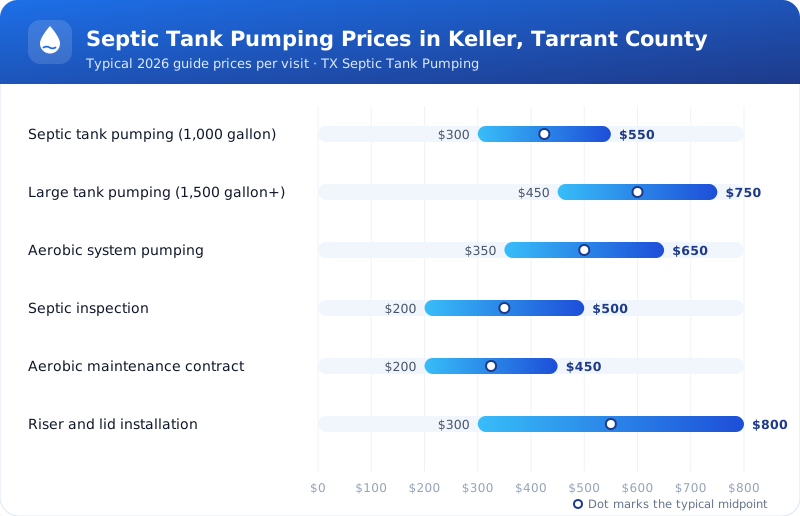
Septic tank pumping in Keller, TX is routine maintenance, but most people land on this page because something has changed. A tank is getting full, a lender or buyer asked for service records, or a drain has started running slow. This guide covers what pumping costs, how often it is due, what a visit involves, and which provider is listed for ZIP code 76248.
Top Rated Septic Tank Pumping Companies in Keller Compared
Compare the top picks side by side. Full write-ups follow below.
| # | Septic Company | Best for | Score | Rating | Verified |
|---|---|---|---|---|---|
| #1 | S & J Septic and Sewer Cleaning | Trying a newer local septic company | 0.8 | — | — |
Keller Septic Tank Pumping Reviews and Ratings
1. S & J Septic and Sewer Cleaning
Best for: Trying a newer local septic company
Bear Creek Parkway Acadiana Lane, 2531No reviews yet
Score breakdown and details
- Location
- Keller · Bear Creek Parkway Acadiana Lane, 2531, Keller, TX 76248
- Track record
- New or lightly reviewed
- Rating
- No Google reviews yet
- Profile
- Unclaimed listing (Google data)
- Today
- Hours not published
Strengths
- Direct phone number published, no lead form in the way
Watch Out For
No Google reviews yet. Ask for references or recent customers you can speak to.
Our take: Our top pick in this area. A Pump Score of 0.8/10 reflects the best combination of rating, review depth and profile completeness here.
Hiring Local Septic Tank Pumping in Keller
Keller sits north of Fort Worth in Tarrant County. If your home is served by a septic system instead of a city sewer line, the tank is a maintenance item you cannot skip. The Texas Commission on Environmental Quality regulates on-site sewage facilities across the state, but the day to day job of keeping solids out of the drain field falls to the homeowner. Routine pumping is the cheapest protection you have, since drain field repairs cost far more.
The directory lists one ranked provider in Keller right now, S & J Septic and Sewer Cleaning. Its Google profile shows a 5 rating from 93 reviews, which is the strongest local signal we have. One listing does not mean you should skip comparison. It means you should read the details below, call with a list of questions, and widen the search to nearby towns if the first call does not work out.
Who Is Pumping Septic Tanks in Keller Right Now
The directory lists one septic provider in Keller, TX 76248: S & J Septic and Sewer Cleaning, located at Bear Creek Parkway Acadiana Lane, 2531, with a phone line at (469) 969-9928. Its Google profile carries a 5 out of 5 rating across 93 reviews, which is the strongest signal available for the town.
Read the reviews yourself before you call. Look for mentions of arrival times, whether the crew found the lid without a long search, and how the invoice was explained. Those details often matter more to a homeowner than an overall average, because they describe what the visit will actually feel like.
A single listing also changes how you should approach the call. There is no second quote to compare against inside the directory, so your own questions do the comparing. Write down the tank size you think you have, the last date it was pumped if you know it, and whether you have a garbage disposal. Those three facts let the provider give you a realistic estimate on the first call instead of after a site visit.
How Often a Keller Tank Needs Pumping
Pumping every three to five years is the general rule for a typical household with a 1,000 gallon tank. Smaller tanks may need attention every two to three years, and a larger household fills a tank faster than a couple living alone. The schedule is a guideline rather than a law, so the most reliable guide is the sludge and scum depth measured at each visit.
Many owners keep a simple log. Note the pumping date, the crew's findings, and any repairs. When a home changes hands or a permit or lender asks for records, that log saves time and makes the tank's history easy to explain.
- Household size and water use, since laundry and long showers add volume
- Tank size, with smaller tanks filling sooner
- Garbage disposal use, which adds solids to the tank
- Earlier pumping records and any inspection notes
- Slow drains or gurgling pipes between scheduled visits
What a Pumping Visit Usually Involves
A typical visit follows the same basic sequence on most properties. The steps below describe what a homeowner should expect to see, and they help you judge whether the work was done thoroughly.
- Locate the lidThe access lid can be buried under soil or turf. Finding and uncovering it is sometimes billed as a separate line item, so ask before the crew arrives.
- Open and inspectThe tank is opened and checked for solids levels, baffle condition, and any signs of damage or cracking.
- Pump the tankLiquids and sludge are removed by vacuum truck until the tank is emptied to the proper level.
- Check the outlet and filterIf the system has an effluent filter, it should be checked and cleaned as needed so solids do not reach the drain field.
- Record the findingsAsk for a written note of the tank size, the levels found, and the suggested date for the next visit.
Pumping Versus Aerobic Systems: What Changes
Not every property has a standard septic tank. Aerobic treatment systems use air to treat wastewater and need more attention than a conventional tank, so it helps to know which one you have before you book. Check your permit paperwork or ask the previous owner if you are unsure.
Aerobic systems generally need a maintenance contract on top of pumping. That is why an aerobic owner should confirm the contract terms and the service schedule before the first visit. Conventional tanks mostly need a pumping schedule and a watchful eye on the drain field.
| System | What Pumping Involves | How Often Attention Is Needed |
|---|---|---|
| Conventional septic tank | Remove sludge and scum from the tank | Every three to five years for many typical homes |
| Aerobic treatment unit | Pump the tank and service the aeration parts | Pumping plus regular maintenance, often under a yearly contract |
| Grease trap or interceptor | Remove grease and food solids | Depends on how much grease the kitchen produces |
Questions to Ask Before Booking in Keller
With one listed provider, your questions do the comparing. Use the list below on the first call, and write down the answers so you can check the invoice against them later.
A short, clear conversation at the start prevents most surprises. If a provider cannot explain the price in plain terms, that is useful information too.
- Do you pump by tank size, and what size is my tank?
- Is locating and uncovering the lid included, or billed separately?
- Will you note the sludge and scum levels in writing?
- Do you service aerobic systems, and do you offer a maintenance contract?
- What is the charge for a weekend or after-hours visit?
- Will you write down the suggested date for the next pumping?
Warning Signs That Mean Call Now, Not Next Season
Some signs point to a full tank or a struggling drain field. Waiting can turn a routine pumping job into a repair job, and drain field repair in the guide price table runs much higher than a scheduled visit.
If you notice any of the following, call a provider as soon as you can. Ask whether the visit carries an emergency or weekend callout charge before the crew is dispatched.
- Sewage backing up into drains, sinks, or toilets
- Soggy or unusually green ground over the drain field
- Gurgling pipes or slow drains throughout the house
- A sewage smell in the yard or near the tank