Septic tank pumping companies · Tarrant County
Listings last refreshed October 16, 2026
Best Septic Tank Pumping in Haslet, Ranked by Real Reviews
1 septic tank pumping company in Haslet, ranked by Pump Score using Google reviews and profile data.
✓ How we rankFree directory, no pay-to-rank
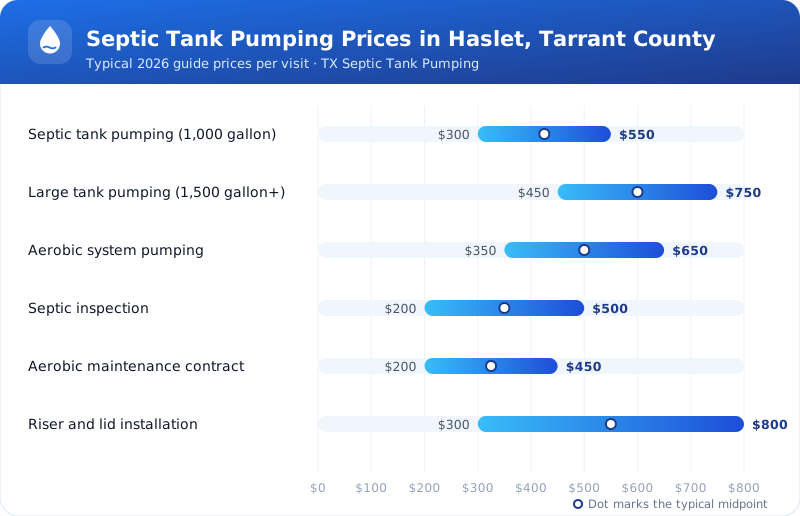
If you are searching for septic tank pumping Haslet TX, the first thing to know is that this directory lists one ranked company for the town, Tri-County Pumping LLC. That business has 102 Google reviews and a Google rating of 5. Haslet sits in Tarrant County, and the company's ZIP code is 76052. This page explains how often a home with a septic system needs pumping, what warning signs to watch for, how Texas regulates these systems, and what you can expect to pay in 2026.
Top Rated Septic Tank Pumping Companies in Haslet Compared
Compare the top picks side by side. Full write-ups follow below.
| # | Septic Company | Best for | Score | Rating | Verified |
|---|---|---|---|---|---|
| #1 | Tri-County Pumping LLC | An established local septic company with plenty of reviews | 7.7 | 102 reviews | — |
Haslet Septic Tank Pumping Reviews and Ratings
1. Tri-County Pumping LLC
Best for: An established local septic company with plenty of reviews
10964 Blue Sky Dr102 reviews
Score breakdown and details
- Location
- Haslet · 10964 Blue Sky Dr, Haslet, TX 76052
- Track record
- Established, healthy review volume
- Rating
- 102 Google reviews
- Profile
- Unclaimed listing (Google data)
- Today
- See hours on profile
Strengths
- 102 Google reviews, a well established track record
- Direct phone number published, no lead form in the way
- Has its own website with more detail on services
- Opening hours published
Watch Out For
The Google profile is not owner verified. Double check the address and phone when you call.
Our take: Our top pick in this area. A Pump Score of 7.7/10 reflects the best combination of rating, review depth and profile completeness here.
Hiring Local Septic Tank Pumping in Haslet
A septic tank is a buried, watertight box that holds household wastewater long enough for solids to settle into sludge at the bottom and grease to float up as scum. Liquid in the middle moves out to the drain field. Pumping removes the sludge and scum, which is the only way to empty what builds up over time. Most conventional tanks need pumping every three to five years, but the right interval depends on your household size, your water use and the size of the tank.
Because Haslet has only one ranked provider, many homeowners will also compare businesses based in Azle, Keller or Fort Worth. Read the listing details and the guide prices below before you book.
Who Pumps Septic Tanks in Haslet Today
The ranked list for Haslet currently has one entry: Tri-County Pumping LLC, located at 10964 Blue Sky Dr in ZIP 76052. The company has 102 Google reviews and a Google rating of 5. Its listing shows open days on all seven days of the week, which matters if a tank backs up on a weekend or a holiday and you cannot wait until Monday.
Searches for Haslet also bring up septic businesses whose listed addresses are in Azle and Fort Worth, so you will likely see more than one name as you compare options. Before you pay a deposit, confirm where the company is based, which trucks will come to your property, and whether the crew services the type of system you have. A short phone call can answer those questions faster than reading reviews alone.
How Often a Haslet Home Should Have Its Tank Pumped
The common guideline for a conventional septic tank is pumping every three to five years. That range is a starting point, not a rule. Several factors push the schedule shorter or longer, and it is worth checking them against your own household.
- Tank size: a smaller tank fills faster, so a 1,000 gallon tank in a busy home may need attention sooner than a larger one.
- Household size: more people means more wastewater and more solids entering the tank each day.
- Garbage disposal use: ground food adds solids that settle into sludge, so heavy disposal use shortens the interval.
- Water use pattern: spreading laundry across the week is easier on a tank than running several large loads in one day.
- System type: aerobic systems run on a different schedule and usually need a maintenance contract in addition to occasional pumping.
Warning Signs That the Tank Is Full
Several signs often appear together when a tank is nearing capacity or a drain field is starting to struggle. One symptom alone can have other causes, but a cluster of these points toward a pumping visit. Do not wait for a full backup before you call a septic provider.
- Drains throughout the house run slowly, not just one sink or tub.
- Gurgling sounds come from toilets or drains when water is used elsewhere in the house.
- A sewage smell appears near the tank lid or over the drain field.
- The ground over the drain field stays wet, soggy or unusually green when the rest of the yard is dry.
- Water or waste rises in a tub, shower or toilet after you flush or drain something.
What Happens When a Septic Tank Is Never Pumped
When a tank is too full, there is no room for new wastewater to settle. Solids that should stay in the tank begin moving toward the outlet and can enter the drain field. Over time, that material clogs the soil around the field pipes, and the liquid has nowhere to go. The result is slow drains, backups in the house and, eventually, a drain field that needs repair.
A toilet is often the first fixture to show the problem. It may flush slowly, gurgle when other water is used, or fill close to the rim after a flush. In some homes, wastewater backs up into tubs and showers instead. These symptoms are a signal to schedule service, because a backup in the house means the system has already exceeded its capacity.
Some homeowners ask whether a tank can go 20 years without pumping. A tank may sit for a long time without a visible failure, but waiting that long is risky. Solids keep accumulating, and once they reach the outlet, they can damage the drain field. Drain field repair in the guide range runs $2,000 to $10,000, which is far more than routine pumping.
Texas Septic Rules and Who Oversees Them
The Texas Commission on Environmental Quality, usually called TCEQ, regulates on-site sewage facilities across the state. That includes septic tanks, drain fields and aerobic treatment units. For a homeowner, the most useful thing to know is that the state sets the baseline, but local governments can add their own permit and inspection steps. Check with your county or city before you dig, replace a component or add a new system.
Maintenance is another area where the rules and the system type matter. Aerobic systems need ongoing service, which is why many owners sign a yearly maintenance contract. A conventional tank has no contract requirement in the same way, but it still needs regular pumping to protect the drain field. Keeping a record of each service visit can help when you sell the home or apply for any local permit.
Conventional Tanks Versus Aerobic Systems in Haslet Yards
Many Haslet homes run a conventional tank, but some use an aerobic system that treats wastewater with added air. The two need different care, and the price of a visit can differ. Check your system type before you book so the provider brings the right equipment and schedule.
| Feature | Conventional tank | Aerobic system |
|---|---|---|
| How it treats wastewater | Settles solids and sends liquid to the drain field | Adds air to break down waste before it reaches the drain field |
| Usual pumping timing | Every three to five years for many homes | Set by the system and its service plan |
| Maintenance contract | Not typically required | Usually needed, guide range $200 to $450 per year |
| Guide pumping price | $300 to $550 for 1,000 gallons | $350 to $650 |
| Common warning sign | Slow drains and sewage smell near the tank | Alarm or indicator light, plus the same backup signs |
What Goes Down the Drain and What Stays Out
Shower water does go to the septic tank. Water from showers, sinks, toilets, dishwashers and washing machines all drains into the tank, which then separates solids from liquid. Limiting the total volume and keeping certain materials out of the system helps the tank work as designed and extends the time between pumpings.
- Keep out wipes, including those labeled flushable, because they do not break down in the tank.
- Avoid grease, fats and oils, which harden in the tank and build up as scum.
- Keep out diapers, sanitary products, paper towels and cat litter.
- Limit chemical drain cleaners, paint thinners and strong disinfectants, since they can disturb the bacteria that help break down waste.
- Spread laundry and dishwashing over the week rather than running everything in one day.