Septic tank pumping companies · Tarrant County
Listings last refreshed October 16, 2026
Best Septic Tank Pumping in Grapevine [Reviewed & Ranked]
1 septic tank pumping company in Grapevine, ranked by Pump Score using Google reviews and profile data.
✓ How we rankFree directory, no pay-to-rank
If you are searching for septic tank pumping grapevine tx, you are probably trying to answer three things: how often the tank needs emptying, what the job should cost, and who can come out to do it. This page covers all three, with a Grapevine specific look at the one pumping company currently listed for the town.
Top Rated Septic Tank Pumping Companies in Grapevine Compared
Compare the top picks side by side. Full write-ups follow below.
| # | Septic Company | Best for | Score | Rating | Verified |
|---|---|---|---|---|---|
| #1 | Freedom Septic & Grease | Weekend bookings, open Saturday and Sunday | 5.6 | 21 reviews | — |
Grapevine Septic Tank Pumping Reviews and Ratings
1. Freedom Septic & Grease
Best for: Weekend bookings, open Saturday and Sunday
903 N Lucas Dr21 reviews
Score breakdown and details
- Location
- Grapevine · 903 N Lucas Dr, Grapevine, TX 76051
- Track record
- Growing review base
- Rating
- 21 Google reviews
- Profile
- Unclaimed listing (Google data)
- Today
- See hours on profile
Strengths
- 21 Google reviews, a well established track record
- Direct phone number published, no lead form in the way
- Has its own website with more detail on services
- Opening hours published
Watch Out For
The Google profile is not owner verified. Double check the address and phone when you call.
Our take: Our top pick in this area. A Pump Score of 5.6/10 reflects the best combination of rating, review depth and profile completeness here.
Hiring Local Septic Tank Pumping in Grapevine
A septic system is a buried tank that holds wastewater from your house long enough for solids to settle and for the liquid to flow out to a drain field. Solids build up over time. When the sludge layer gets too thick, material can move into the drain field and clog it. Pumping removes the sludge and scum so the system keeps working. Most households need it every 3 to 5 years, though a larger family or a tank that is small for the home may need it sooner.
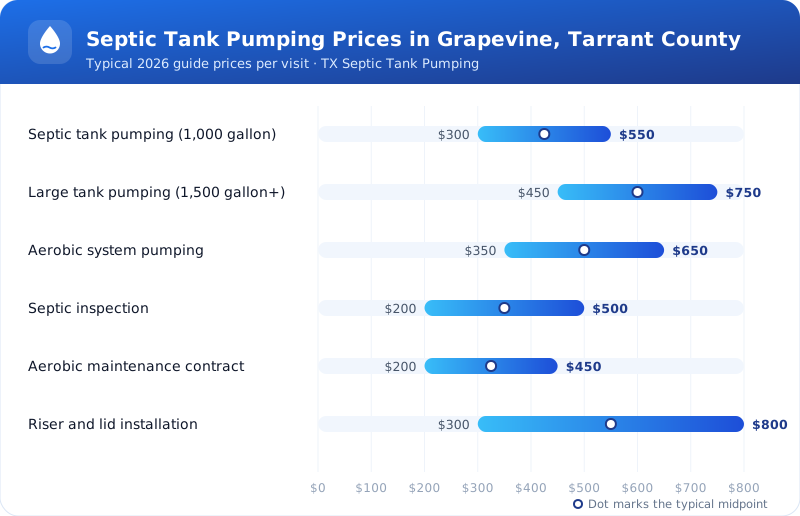
Below you will find the ranked listing for Grapevine, a plain guide to warning signs and what the pumping visit involves, a short summary of Texas rules, and guide prices for common jobs. The prices are ranges to help you plan. They are not quotes.
How Often a Grapevine Household Should Pump Its Tank
The 3 to 5 year guideline is a starting point, not a fixed schedule. Tank size matters, and so does the number of people living in the home and how much water goes down the drain. A four bedroom house with a 1,000 gallon tank fills faster than a two person home with the same tank, so the interval shifts with how the house is used. Guests, a home office, a teenager doing laundry every day and a dishwasher running every night all add to the load.
Many owners keep a simple log with the date of each pumping and the technician's notes. If you bought an older home and cannot find a record of the last pumping, schedule one before you assume the tank is fine. A pumper can measure the sludge and scum layers and tell you how much room is left in the tank. That gives you a better answer than a calendar alone, and it helps you decide whether the next visit should come sooner or later than the usual range.
Warning Signs the Tank Is Due Before the Schedule Says So
Waiting too long usually shows up in the house first. Watch for the signs below and call for service if more than one appears at the same time, or if one keeps coming back after a quick fix.
- Drains that run slowly across several fixtures at once
- Gurgling in pipes when you flush or run water
- Toilets that are slow to empty after a flush
- Sewage odors around the tank, the drain field or inside the house
- Wet, unusually green or spongy ground over the drain field
- Sewage backing up into tubs, showers or floor drains
What Happens During a Pumping Visit
A standard visit is short, but a few steps matter for the price and for the quality of the work. Ask the technician to explain each one before the pump starts.
- Locate the access lidThe technician finds the tank and its access points. If the lid is buried under soil, mulch or a patio, it may need to be uncovered first, which is a separate cost in the guide prices.
- Open and inspectThe lid is opened and the tank is checked for the sludge layer, the scum layer and the general condition of the walls and baffles.
- Pump the contentsA vacuum truck removes the liquid and solids. Many pumpers also check the outlet baffle and the effluent filter if the system has one, because a clogged filter can send solids toward the drain field.
- Close up and record the visitThe tank is closed and the area is left tidy. Ask for written notes on what was found, the tank condition and the suggested date for the next pumping. Keep those notes with the house papers.
Conventional Tanks and Aerobic Systems Need Different Care
Not every system in a Grapevine yard is a simple septic tank. Aerobic systems add air and a treatment chamber to break down waste before it reaches the drain field. That extra step means they need the tank pumped and also need ongoing service. Confirm which type you have before you book, because the technician and the price can both change.
Aerobic systems also include mechanical and electrical parts, so a service plan is common. A yearly maintenance contract helps catch problems early and keeps the system in its designed condition.
| Feature | Conventional septic tank | Aerobic treatment system |
|---|---|---|
| How it treats waste | Settles solids and lets liquid flow to the drain field | Adds air so bacteria break down waste before it reaches the drain field |
| Typical pumping need | Every 3 to 5 years for many homes | Pumping on a schedule set by the service provider |
| Ongoing service | Usually pumping and inspection only | Yearly maintenance contract is common |
| Guide price range | $300 to $550 for a 1,000 gallon tank | $350 to $650 for pumping, plus $200 to $450 a year for a maintenance contract |
Texas Rules: What TCEQ Covers and Who to Ask
The Texas Commission on Environmental Quality, or TCEQ, regulates on-site sewage facilities in Texas, which includes septic systems. Its rules cover how systems are designed, installed and maintained, and they shape the kind of work a licensed professional can do.
A homeowner should not assume every local requirement is the same. Rules can vary by property and by the agency that handles permits and records for the address. Before you plan a repair, a new installation or a riser project, ask the local permitting office which requirements apply to your property. Keep the pumping and service records in a folder, since a permitting office or a buyer may ask for them later.