Septic tank pumping companies · Somervell County
Listings last refreshed October 16, 2026
Best Septic Tank Pumping in Glen Rose [Updated 2026]
1 septic tank pumping company in Glen Rose, ranked by Pump Score using Google reviews and profile data.
✓ How we rankFree directory, no pay-to-rank
Anyone searching for septic tank pumping Glen Rose TX should know the job is routine, but the timing is easy to forget. A septic tank holds solids that settle to the bottom and scum that floats to the top, and both build up whether or not anyone is watching. Most homeowners only think about the tank after a drain slows down or a toilet starts gurgling, which is usually later than ideal.
Top Rated Septic Tank Pumping Companies in Glen Rose Compared
Compare the top picks side by side. Full write-ups follow below.
| # | Septic Company | Best for | Score | Rating | Verified |
|---|---|---|---|---|---|
| #1 | Kryptonite Septic | Weekend bookings, open Saturday and Sunday | 5.3 | 17 reviews | — |
Glen Rose Septic Tank Pumping Reviews and Ratings
1. Kryptonite Septic
Best for: Weekend bookings, open Saturday and Sunday
111 Summit View17 reviews
Score breakdown and details
- Location
- Glen Rose · 111 Summit View, Glen Rose, TX 76043
- Track record
- Growing review base
- Rating
- 17 Google reviews
- Profile
- Unclaimed listing (Google data)
- Today
- See hours on profile
Strengths
- Direct phone number published, no lead form in the way
- Has its own website with more detail on services
- Opening hours published
- Open on Saturdays
Watch Out For
The Google profile is not owner verified. Double check the address and phone when you call.
Our take: Our top pick in this area. A Pump Score of 5.3/10 reflects the best combination of rating, review depth and profile completeness here.
Hiring Local Septic Tank Pumping in Glen Rose
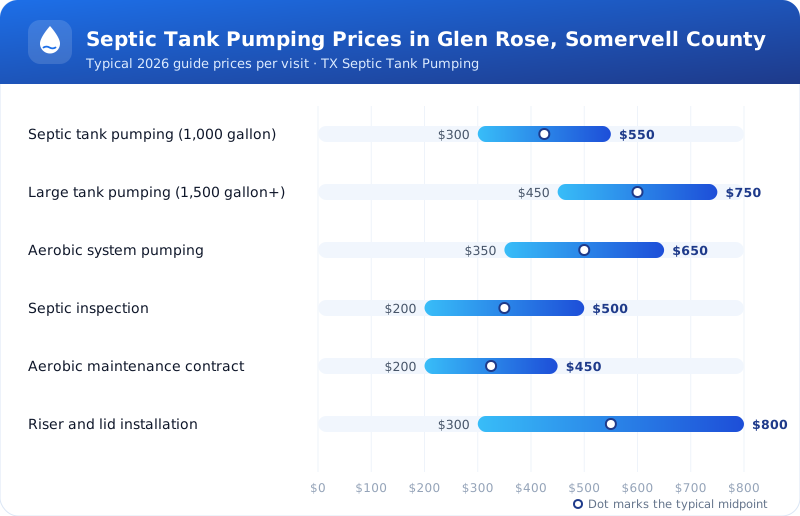
A typical 1,000 gallon tank serving a household needs pumping about every three to five years. The exact interval depends on how many people live in the home, how much water they use, and what goes down the drains. Our directory currently lists one company in Glen Rose, with 17 Google reviews and a 4.8 rating, so the choice is simpler here than in a large metro. The sections below cover how to tell when a tank is due, what the work should cost at guide prices, what to keep out of the system, and what to ask before a truck shows up in your yard.
What the Glen Rose Listing Covers Today
Our directory has one Glen Rose entry: Kryptonite Septic at 111 Summit View, ZIP 76043, phone (682) 500-2811. The company has a website and lists hours on every day of the week. Its 17 Google reviews average a 4.8 rating, which is the only rating in our data for this town.
One listing is a starting point, not a full comparison. Call the company, describe your tank size and what you already know about the system, and ask what the visit includes before you agree to anything. If you widen the search to nearby towns such as Granbury or Cleburne, check those providers the same way, using the same questions.
Signs a Glen Rose Tank Is Due for Pumping
Warning signs usually show up in the house first. Several of them at once is a stronger reason to call than any single symptom.
- Slow drains in more than one fixture at the same time
- Gurgling sounds in toilets or pipes after you run water elsewhere
- Water backing up into a tub, shower or floor drain
- A sewage smell near the tank lid, the drain field or inside the house
- Soggy or unusually lush ground over the drain field
- Sludge or scum near the outlet during a septic inspection
How Often a 1,000 Gallon Tank Needs Pumping
The three to five year range is a common guideline, not a rule. Household size and daily habits move a tank toward either end of that range. The table below shows the factors that most often change the schedule. None of them replaces a professional inspection, which can measure how much sludge has built up.
If you are unsure where your home falls, ask for an inspection before the pumping visit. The inspection cost is listed in the guide prices, and it gives you a measured answer instead of a guess.
| Household factor | Likely effect on the pumping schedule |
|---|---|
| Four or more people using water daily | Often pushes the schedule toward the shorter end, around three years |
| Two people, mostly away from home | Often allows the longer end, closer to five years |
| Garbage disposal in regular use | Adds solids and scum, so pumping may come sooner |
| Water softener or large water-using appliances | Adds water volume and can shorten the interval |
| Earlier inspection showing heavy sludge | Calls for pumping sooner than the usual schedule |
What Happens When the Tank Gets Full
A tank works by letting solids settle and scum float while liquid flows out to the drain field. When the solids and scum take up most of the usable space, there is less room for settling. Solids can then move toward the outlet and into the soil, where they clog the ground that treats the water.
What a Full Tank Does to Your Toilets
A full tank has nowhere to send new wastewater, so the system pushes it back toward the house. Toilets may flush slowly, bubble when another fixture drains, or water may rise in the bowl after you flush. The lowest drain in the house, often a tub or floor drain, usually shows the problem first.
Why Waiting Can Cost More
Pumping a tank on time is a modest bill. Repeated overloading can damage the drain field, and drain field repair is one of the costly items in the guide prices, at $2,000 to $10,000. Pumping is cheaper than rebuilding soil that has been clogged.
What Never Goes Down a Septic Drain
The worst things to put in a septic tank are the ones that do not break down, or that kill the bacteria that do the work. Grease and wipes cause the most trouble, and harsh chemicals come close behind. Keep the following out of the drains and toilets.
- Grease, cooking oil and fat poured down the sink
- Wipes, including products labeled flushable
- Feminine hygiene products and diapers
- Coffee grounds and food scraps in large amounts
- Paint, solvents, thinners and motor oil
- Pesticides, herbicides and strong drain cleaners
- Medications and cat litter
- Large volumes of bleach or antibacterial cleaners at once
Spreading Out Laundry and Daily Water Use
Many homeowners ask how many loads of laundry a day a septic system can handle. No single number fits every home, because tank size, soil and household size all matter. The practical goal is to avoid sending a large volume of water into the tank all at once.
- Spread laundry across the weekRun a few loads on different days instead of several back to back on one afternoon.
- Use full loads with the right settingFull loads use water more efficiently than many small ones, and they avoid heavy surges.
- Fix running toilets and dripsA leaking fixture can add water to the tank every day without anyone noticing.
- Limit the garbage disposalScrape plates into the trash or compost so solids do not build up as quickly.
- Watch your water useA sudden jump on your water bill can point to a leak that pushes extra volume into the system.