Septic tank pumping companies · Smith County
Listings last refreshed October 16, 2026
Best Septic Tank Pumping in Whitehouse: Local Pros Compared
1 septic tank pumping company in Whitehouse, ranked by Pump Score using Google reviews and profile data.
✓ How we rankFree directory, no pay-to-rank
If you are searching for septic tank pumping whitehouse tx, you probably have a tank in the yard and a question that cannot wait much longer. The drains may be slowing down, the last pump-out may be years in the past, or you may have bought a home with an older system and no service records. Whatever brought you here, the practical answer comes down to three things: what a pump-out costs, how often your tank needs one, and which local company you can call.
Top Rated Septic Tank Pumping Companies in Whitehouse Compared
Compare the top picks side by side. Full write-ups follow below.
| # | Septic Company | Best for | Score | Rating | Verified |
|---|---|---|---|---|---|
| #1 | Texas Tank Services | Checking services and hours online before you call | 4.0 | 4 reviews | — |
Whitehouse Septic Tank Pumping Reviews and Ratings
1. Texas Tank Services
Best for: Checking services and hours online before you call
103 Stacy Dr4 reviews
Score breakdown and details
- Location
- Whitehouse · 103 Stacy Dr, Whitehouse, TX 75791
- Track record
- New or lightly reviewed
- Rating
- 4 Google reviews
- Profile
- Unclaimed listing (Google data)
- Today
- See hours on profile
Strengths
- Direct phone number published, no lead form in the way
- Has its own website with more detail on services
- Opening hours published
Watch Out For
Only 4 reviews so far, so the rating could still move. Worth asking about experience.
Our take: Our top pick in this area. A Pump Score of 4/10 reflects the best combination of rating, review depth and profile completeness here.
Hiring Local Septic Tank Pumping in Whitehouse
This page covers all three for Whitehouse, a small town in Smith County in the East Texas Piney Woods. Our directory lists one pumping business in Whitehouse, with 4 Google reviews, so the choice is simpler than in a larger city. It also means you should know what to ask before you book. Below you will find a plain explanation of how a tank works, the signs that it is overdue, what should never go down the drain, and how to prepare for a visit.
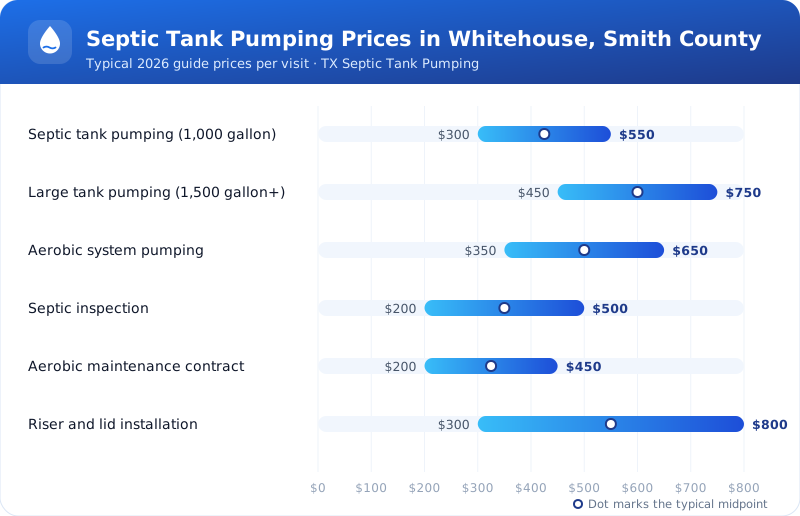
All prices here are guide ranges, not quotes. Use them to judge a phone estimate, not to replace one.
How a Septic Tank Works in a Whitehouse Yard
A septic system has two main parts. The tank is a sealed container, often concrete, fiberglass or polyethylene, that holds wastewater long enough for solids to settle to the bottom and grease to float to the top. The liquid in the middle flows out to a drain field, where soil filters and treats it.
Solids never leave the tank by design. Over time they build up, and when the sludge layer or scum layer gets too thick, material can escape to the drain field and clog the soil. That is why pumping removes what has collected, and why the tank itself should be checked at the same visit. Many homes in rural East Texas have older tanks with little paperwork, so a visit may also be the first time anyone has looked inside.
How Often Your Whitehouse Tank Needs Pumping
The general guideline for most households is pumping every 3 to 5 years. That range is a starting point. Your own tank may need service sooner or later depending on how it is used.
Factors that push the schedule shorter include:
- A small tank for the number of people in the house
- A household with several people or frequent guests
- A garbage disposal that runs often
- Heavy water use, such as long showers, many loads of laundry or a leaking toilet
- An aerobic system, which needs regular service under general septic guidance
Warning Signs the Tank Is Full
A full tank does not always announce itself clearly. Watch for the following signs and treat two or more of them as a reason to call a pumper soon.
When a tank is full, wastewater has nowhere to go. Toilets may drain slowly, sinks may back up, and gurgling sounds may come from the drains. In severe cases, wastewater can back up into the home. Stop heavy water use right away if you see any of this, because more water only adds pressure to a full system.
- Toilets and drains are slow to empty
- Gurgling sounds from plumbing fixtures
- Sewage odor in the yard or near the tank lid
- Lush, unusually green grass over the drain field
- Water standing or pooling on the drain field after rain
- Backups in the lowest drain in the house
What Should Never Go Down a Septic Drain
Most septic trouble starts with what goes down the drain. The tank relies on bacteria to break down waste, and many common household products can kill them or leave solids that the tank cannot handle. Keep the following out of the system:
- Cooking grease, oil and fat, which harden and clog the outlet
- Wipes, including those labeled flushable
- Diapers, feminine hygiene products and paper towels
- Coffee grounds and large food scraps
- Paint, solvents, motor oil and pesticides
- Chemical drain cleaners and large amounts of bleach
- Unused medications
Laundry, Showers and Daily Water Use
People often ask how many loads of laundry a day a septic system can handle. No single safe number applies to every home, because tank size, soil type and the drain field all matter. The practical rule is to avoid putting large volumes of water into the system all at once. Spreading loads across the week, instead of running several back to back, gives the drain field time to absorb the water.
Fixing leaks is one of the most useful steps you can take. A running toilet or a dripping faucet adds water every day, and that water is pushed through the tank whether anyone is home or not. Water-saving fixtures and full loads of laundry also help reduce the strain without changing your routine much.
Booking a Pump-Out in Whitehouse, Step by Step
A little preparation keeps the visit fast and helps you compare quotes fairly. Work through these steps before the truck arrives.
- Find the tank lidLocate the access lid and the drain field before calling. If the lid is buried, ask the company whether locating and uncovering it is included in their price. Guide prices for this work run $50 to $200.
- Confirm the tank sizeCheck old permits, the installer's records or the lid area. A 1,000-gallon tank and a 1,500-gallon tank are priced differently, so the size changes your estimate.
- Ask what the visit includesFind out whether the price covers pumping only, or also an inspection. Guide prices for an inspection run $200 to $500.
- Schedule a weekday visitBook a time when someone can be home to show the lid and answer questions. Ask about after-hours or weekend fees before you agree.
- Keep the recordsWrite down the date, the tank size and any repairs made. The next pumper and the next buyer will both want to see them.
What the Only Listed Pumper in Whitehouse Shows
Our Whitehouse listing is small, and it is worth reading the details carefully before you call. The table below shows only what the directory has on file for this business. It does not include a star rating, and it does not describe services beyond the listing.
A business with 4 Google reviews has a limited track record online. Use that as a reason to ask direct questions about pricing, scheduling and how the company handles a full system, rather than as a reason to rule it out.
| Detail | What the Directory Lists |
|---|---|
| Business | Texas Tank Services |
| Town | Whitehouse, Smith County |
| Street address | 103 Stacy Dr |
| ZIP code | 75791 |
| Phone | (903) 839-2830 |
| Website | Yes |
| Open days listed | Monday through Friday |
| Google reviews | 4 |