Septic tank pumping companies · Smith County
Listings last refreshed October 16, 2026
2 Best Septic Tank Pumping Companies in Flint [2026 Update]
2 septic tank pumping companies in Flint, ranked by Pump Score using Google reviews and profile data.
✓ How we rankFree directory, no pay-to-rank
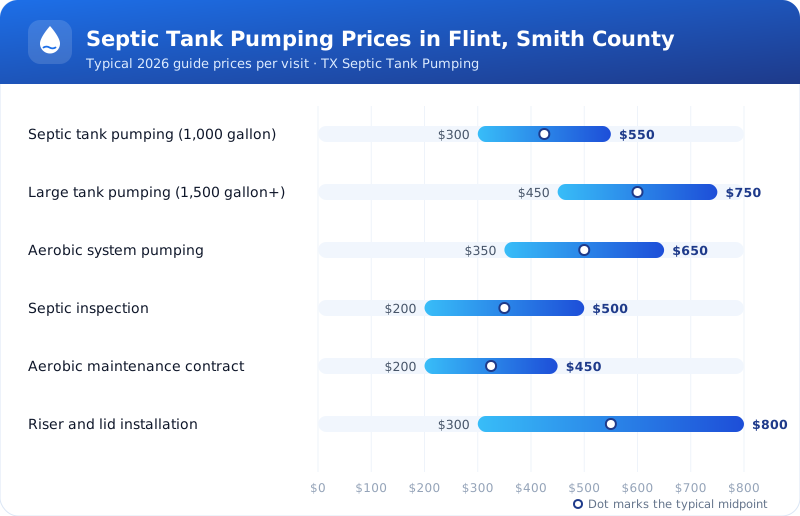
Septic tank pumping Flint TX is routine work for most homes in this part of Smith County, but the details still matter. Timing, tank access, and the crew you choose all affect the final bill and how smoothly the visit goes. Flint sits in the Tyler area of East Texas, so residents have a few local companies to compare. This page explains what to expect, what the work costs in general terms, and how to tell when your tank needs attention.
Top Rated Septic Tank Pumping Companies in Flint Compared
Compare the top picks side by side. Full write-ups follow below.
| # | Septic Company | Best for | Score | Rating | Verified |
|---|---|---|---|---|---|
| #1 | SBCC Inc | Checking services and hours online before you call | 5.3 | 17 reviews | — |
| #2 | Krugler Septic Systems | Trying a newer local septic company | 1.6 | — | — |
Flint Septic Tank Pumping Reviews and Ratings
1. SBCC Inc
Best for: Checking services and hours online before you call
19682 State Hwy 15517 reviews
Score breakdown and details
- Location
- Flint · 19682 State Hwy 155, Flint, TX 75762
- Track record
- Growing review base
- Rating
- 17 Google reviews
- Profile
- Unclaimed listing (Google data)
- Today
- See hours on profile
Strengths
- Direct phone number published, no lead form in the way
- Has its own website with more detail on services
- Opening hours published
Watch Out For
The Google profile is not owner verified. Double check the address and phone when you call.
Our take: Our top pick in this area. A Pump Score of 5.3/10 reflects the best combination of rating, review depth and profile completeness here.
2. Krugler Septic Systems
Best for: Trying a newer local septic company
17089 County Rd 1182No reviews yet
Score breakdown and details
- Location
- Flint · 17089 County Rd 1182, Flint, TX 75762
- Track record
- New or lightly reviewed
- Rating
- No Google reviews yet
- Profile
- Unclaimed listing (Google data)
- Today
- See hours on profile
Strengths
- Direct phone number published, no lead form in the way
- Opening hours published
Watch Out For
No Google reviews yet. Ask for references or recent customers you can speak to.
Our take: A strong shortlist option with a Pump Score of 1.6/10. Compare availability and price against the septic companies above.
Hiring Local Septic Tank Pumping in Flint
A septic tank holds wastewater long enough for solids to settle into a sludge layer and for grease to float to the top as scum. Bacteria break down part of the waste, but they cannot keep up forever. As the sludge builds up, solids can move toward the drain field and clog the soil, and a clogged drain field is one of the more expensive problems a homeowner can face. Pumping removes the buildup before that happens, and an inspection during the visit shows how much room is left in the tank.
The Texas Commission on Environmental Quality regulates on-site sewage facilities across the state, and the rules that apply to your system depend on its design and age. This guide covers general practice and the information we have for Flint. For any permit, inspection, or design question, check with the TCEQ or your county before work begins.
What to Check Before Calling a Flint Septic Company
A short phone call before you book can save a return trip and a surprise invoice. Most homeowners only pump a tank every few years, so it is easy to forget what the last visit included. Use the questions below to set the scope of the job before a truck arrives.
- Ask whether the price covers a 1,000 gallon tank or a larger one, since guide ranges differ by tank size.
- Ask if the quote includes locating and uncovering the lid, which is often a separate charge.
- Confirm the weekday schedule, because both Flint listings in our data show Monday through Friday hours.
- Ask who will inspect the tank and whether they will tell you the sludge and scum levels.
- Ask where the waste is taken and whether that site appears on your service record.
- Get the quote in writing before the crew starts work.
Flint Companies Side by Side
Here is how the two Flint listings compare on the details in our directory. Review counts are Google review counts, and our data does not include a star rating for either company. A missing detail here means only that it was not in our listing data, so it is worth asking directly.
| Company | Address | Phone | Listed Hours | Google Reviews |
|---|---|---|---|---|
| SBCC Inc | 19682 State Hwy 155, Flint, TX 75762 | (903) 825-7248 | Monday to Friday | 17 |
| Krugler Septic Systems | 17089 County Rd 1182, Flint, TX 75762 | (903) 520-6834 | Monday to Friday | Not listed in our data |
What the Listings Show
SBCC Inc has a website listed in our data and describes itself as offering septic system installations, maintenance, and repairs. Its listing also mentions free estimates, which is useful for comparing options, though an estimate is not the same as free pumping. Krugler Septic Systems is listed with a phone number, street address, and weekday hours, but our data does not include a website or a review count for it.
Neither listing gives enough detail to say which company is better for your system. Call both, describe your tank size and any aerobic equipment, and compare the answers. The company that explains its scope clearly is often the easier one to work with.
How Often a Flint Septic Tank Needs Pumping
The common guidance is to pump a septic tank every 3 to 5 years. A 1,000 gallon tank in a household of average size often falls within that range, but the right schedule depends on how the system is used. Several factors push the timing earlier or later.
Some tanks go longer between pumpings, and some need service sooner. An inspection shows the actual sludge and scum level, which is more useful than a calendar alone. Waiting 20 years without pumping is not a safe target, because the tank can fill and push solids toward the drain field well before then.
- Household size and daily water use
- Tank size, since a larger tank fills more slowly
- Garbage disposal use, which adds solids to the tank
- Laundry loads spread across the week or run in one day
- Whether the drain field sits on a slope or in wet soil
- Past pumping records and any inspection notes
Warning Signs Your Flint Tank Is Full
Toilets and drains are often the first place a full tank shows itself. When the tank has no room, wastewater has nowhere to go, so it slows down and backs up toward the house. Common signs include slow drains throughout the home, gurgling in the plumbing, a sewage smell near the tank or drain field, and wet or unusually lush grass over the drain field.
If sewage shows up in a tub or toilet, cut back on water use right away and call a pumping service. Flushing more or running more loads only pushes waste further into a system that is already overloaded.
What a Septic Pumping Visit Involves
A typical visit follows the same general pattern from one company to the next. The details vary with the age of the tank, how deep it sits, and whether the system has an effluent filter or other parts that need attention.
- Locate and uncover the lidThe crew finds the access lid and digs it out if it is buried. Locating and uncovering is often a separate line item, with a guide range of $50 to $200.
- Pump the tankA truck with a vacuum hose removes the liquid, sludge, and scum from the tank.
- Inspect the baffles and outletThe crew checks whether the inlet and outlet baffles are intact, whether the outlet is clear, and whether the tank shows cracks or leaks.
- Clean the effluent filterIf your system has an effluent filter, it should be cleaned or replaced during service so that solids do not carry into the drain field.
- Record the visitAsk for a written service record with the date, tank condition, and disposal site. Keep it with your home papers, since it helps with future service calls.
Aerobic Systems Need More Than Pumping
Some homes in Smith County and the surrounding area use aerobic treatment systems rather than a conventional tank and drain field. An aerobic system adds air to the wastewater to speed treatment, and it has moving parts, such as pumps, blowers, and alarms, that need regular attention. Aerobic systems are generally paired with a maintenance contract, which covers scheduled inspections and parts checks throughout the year.
If you own an aerobic system, ask any Flint company whether it works on your brand and model before you book. Pumping an aerobic tank is priced differently from a standard tank, and a maintenance contract is a separate expense. Our data does not list which aerobic services either Flint company offers, so confirm those details by phone.
What Not to Flush or Pour Down the Drain
Anything that does not break down quickly adds to the sludge layer or harms the bacteria that treat wastewater. Keeping a small trash can in the bathroom for the items that do not belong in the system is one of the simplest ways to extend the time between pumpings.
- Wipes, including those labeled flushable
- Grease, cooking oil, and fat poured down the sink
- Coffee grounds and food scraps, even with a disposal
- Feminine hygiene products and diapers
- Paper towels and other heavy paper products
- Medications, paint, solvents, and similar chemicals
- Large amounts of bleach or harsh drain cleaners
Additives Like Ridex and Other Septic Claims
Homeowners often ask whether a septic additive such as Ridex can replace pumping. Additives are sold as a way to help break down solids, but they do not remove sludge that has already built up in the tank. They also do not change the need for periodic pumping and inspection. Read any product label carefully, and treat claims that promise to eliminate pumping with caution.
A pumping crew can tell you what your tank actually needs. If you are thinking about an additive, ask the crew before you add anything to the system, especially if you have an aerobic unit or a recent inspection report that lists specific concerns.
Comparing Free Estimates and Cheap Pumping Offers
Many people search for free or cheap septic pumping before they search for a company. A free estimate is a useful way to compare options, but a very low price for pumping can leave out the lid work, the inspection, or a disposal fee. The lowest number on the page is not always the lowest total cost once the visit is finished.
Compare the same scope from each company. Make sure every quote lists the tank size, whether lid access is included, whether the tank will be inspected, and whether you receive a written record. Guide prices on this page are ranges, not quotes, and the final figure depends on the company and the condition of your system.