Septic tank pumping companies · Red River County
Listings last refreshed October 16, 2026
Best Septic Tank Pumping in Clarksville: Trusted & Reviewed
1 septic tank pumping company in Clarksville, ranked by Pump Score using Google reviews and profile data.
✓ How we rankFree directory, no pay-to-rank
If you are searching for septic tank pumping Clarksville TX, you probably have a tank in the yard, a drain field you want to protect, and a few questions about cost and timing before you pick up the phone.
Top Rated Septic Tank Pumping Companies in Clarksville Compared
Compare the top picks side by side. Full write-ups follow below.
| # | Septic Company | Best for | Score | Rating | Verified |
|---|---|---|---|---|---|
| #1 | J & M Pumping Services | A local septic company you can call direct | 4.5 | 35 reviews | — |
Clarksville Septic Tank Pumping Reviews and Ratings
1. J & M Pumping Services
Best for: A local septic company you can call direct
1299 Co Rd 212335 reviews
Score breakdown and details
- Location
- Clarksville · 1299 Co Rd 2123, Clarksville, TX 75426
- Track record
- Growing review base
- Rating
- 35 Google reviews
- Profile
- Unclaimed listing (Google data)
- Today
- Hours not published
Strengths
- 35 Google reviews, a well established track record
- Direct phone number published, no lead form in the way
Watch Out For
Opening hours are not published. Call to check availability before you plan around a date.
Our take: Our top pick in this area. A Pump Score of 4.5/10 reflects the best combination of rating, review depth and profile completeness here.
Hiring Local Septic Tank Pumping in Clarksville
This page covers what the local listing shows right now, how often a tank usually needs pumping, what guide prices look like across Texas, and the questions people ask most before booking. The short version is that our directory currently lists one septic pumping company in Clarksville, J & M Pumping Services, with 35 Google reviews and a 5 rating. That makes the choice simpler, but it also means you should ask direct questions before you schedule.
Septic work in Red River County is also a planning job. Tanks are normally pumped on a schedule rather than only after something breaks, and the state rules that apply come from the Texas Commission on Environmental Quality, known as TCEQ. Use the sections below as a checklist, then call the company to confirm what it offers and what it would charge for your tank.
What to Have Ready Before You Call in Clarksville
Most septic calls go faster when you have a few facts ready. Find the tank lid, know roughly how many people live in the home, and check whether the system is a conventional tank or an aerobic unit. Aerobic systems follow a different maintenance routine, so say so up front.
Access matters too. A buried lid can add labor time, and a crew that arrives to an unmarked yard may spend the first part of the visit searching. If you have a sketch from the original installation or a map from a past service, keep it near the phone so you can describe the tank position in plain terms, such as the distance from the back door or the corner of the house.
- Tank location, and whether the lid is visible or buried
- Number of bedrooms and the number of people who live in the home
- Tank size, if you know it from the permit or installation papers
- Whether the system is conventional or aerobic
- Date of the last pumping, if you have a record
- Any slow drains, backups or odors you have noticed recently
How Often a Clarksville Septic Tank Needs Pumping
Most septic tanks are pumped every 3 to 5 years. That range is a starting point, not a promise. A tank serving a large household with heavy water use fills faster than one serving two people who are mostly away. Solids settle to the bottom, scum floats to the top, and when the sludge layer gets too close to the outlet, solids can carry toward the drain field.
Tank size and daily habits change the math more than most homeowners expect. A 1,000 gallon tank that handles a couple well may struggle with a family of six that runs laundry several days a week. Before you set a schedule for septic tank pumping Clarksville TX, count the people in the house and think honestly about water use.
The Usual Interval
For most households, a three to five year schedule keeps solids well below the outlet. Write the pumping date on a calendar or in a file so the next visit is not a guess. A service receipt with the date, tank size and any notes is the best record to keep.
When to Pump Sooner
Pump sooner if you have a garbage disposal, a large household, a tank smaller than the home needs, or water heavy habits such as long laundry days. Also pump sooner if the drain field is wet or the grass over it is unusually green during dry weather. Those signs can point to a full tank before the plumbing shows any trouble.
Reading the Only Clarksville Listing Side by Side
The table reflects only what appears in the directory entry for this business. It does not list services, hours or prices, so those details need to come from the company itself.
One listed company with 35 Google reviews and a 5 rating is a useful starting signal, but a small review count means each review carries more weight. Read a few of them with an eye on what the reviewer actually asked for, then compare that with what you need. A review about a quick pump-out is not the same as a review about a buried lid or a failing drain field.
| Detail | What the Directory Shows |
|---|---|
| Company | J & M Pumping Services |
| Town | Clarksville |
| ZIP code | 75426 |
| Street address | 1299 Co Rd 2123 |
| Phone | (903) 517-7696 |
| Google reviews | 35 |
| Google rating | 5 |
How to Book a Septic Pumping Visit in Red River County
A clean booking takes one phone call if you prepare first. These steps keep the visit on track and help you avoid surprises on the invoice.
- Locate the lidFind each access lid before you call. If the lids are buried, ask whether the company uncovers them and what that costs.
- Confirm the jobGive the tank size if you know it, the system type, and the date of the last pumping. Say whether the system is aerobic.
- Ask about travel and timingRural addresses can add drive time. Ask whether a weekend or emergency visit costs extra and how soon a crew can come out.
- Get the total in writingAsk for the full amount before the truck arrives, including any locating, riser work or inspection you may need.
- Keep the service recordSave the receipt and write down the date, the tank size and anything the crew noted about the baffles, scum or solids.
Aerobic Systems Need More Than a Pump-Out
Aerobic systems use a mechanical process to treat wastewater before it reaches the drain field. Because they have moving parts and electrical components, they need more regular attention than a standard tank. Pumping is only one part of that care.
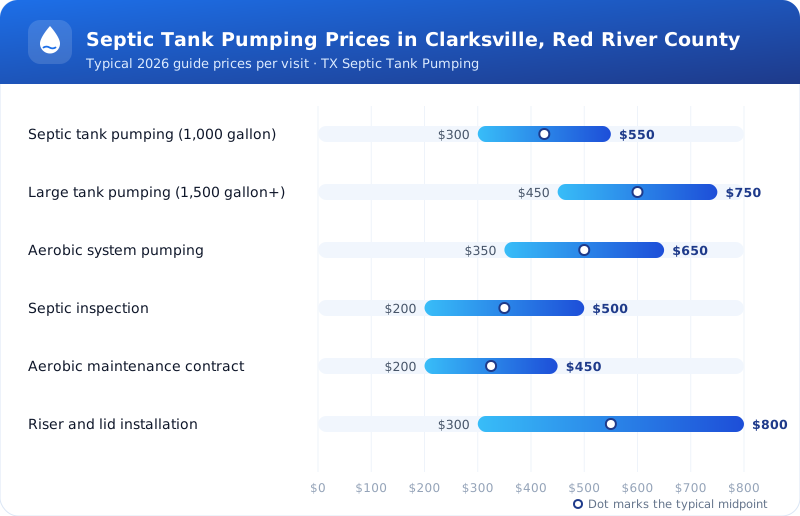
The guide range for pumping an aerobic system is $350 to $650, while a yearly maintenance contract runs $200 to $450. Ask whether the contract covers inspections, service visits and parts, and whether pumping is included or billed separately. A contract that is unclear on those points can cost more later than a clear one that costs a little more up front.
Why Aerobic Units Differ
A standard tank mostly holds solids and lets liquid flow out. An aerobic unit adds air and active treatment, so a failure in a component can affect the whole system. That is why aerobic owners in Texas usually keep a maintenance agreement in place rather than waiting for a problem.
What a Maintenance Contract Covers
Ask the company to put the scope in writing. Find out how many service visits are included, whether filters or effluent parts are covered, and what happens if a visit reveals a larger repair. A written scope protects you when the system acts up in the middle of the year.
Lot Size, Permits and the Ten Acre Question
This page does not confirm a specific acreage rule for Red River County. Texas on-site sewage facilities are regulated by TCEQ, and local requirements can add to state rules, so lot size questions should go to the state agency or the local permitting office.
Installation of a new tank or system normally involves a permit, a site evaluation and work by a licensed installer. If you are planning a new system, get the design and the permit path in writing before any excavation begins. A short written plan prevents costly changes after the trench is already open.
When you talk to an installer, ask who prepares the design, how the drain field will be sized for your soil, and what inspections happen before the system is covered. Those three answers tell you more about the job than a quick price estimate does.
What Not to Flush Before the Truck Arrives
Many backups start with items that never should have gone down the drain. Keep these out of the system, both before and after a pumping, so the tank can settle and the drain field can do its job.
- Wipes, including those marketed as flushable
- Cooking grease, oil and fats from pans or the sink
- Coffee grounds, eggshells and food scraps from the garbage disposal
- Chemical drain openers, paint, solvents and motor oil
- Feminine hygiene products, diapers and cotton swabs
- Large amounts of bleach or harsh cleaners that can disturb bacteria in the tank
Warning Signs That a Drain Field Is Struggling
Drain field trouble often shows up before a tank fails outright. Watch for these signs and call sooner rather than later, since a full tank left too long can make the drain field harder and more expensive to repair.
- Slow drains throughout the house
- Gurgling pipes or toilets that bubble when you run water
- Sewage odors near the tank or over the drain field
- Wet, spongy ground or standing water over the drain field
- Grass that stays unusually green over one area during dry weather
- Backups in tubs, showers or floor drains