Septic tank pumping companies · Red River County
Listings last refreshed October 16, 2026
Best Septic Tank Pumping in Bogata: Local Pros Compared
1 septic tank pumping company in Bogata, ranked by Pump Score using Google reviews and profile data.
✓ How we rankFree directory, no pay-to-rank
Septic tank pumping in Bogata, TX is a routine job that most homeowners only think about when something goes wrong. Bogata sits in rural Red River County, and most homes here run on their own on-site system rather than a city sewer line. That means the tank, the drain field and the pipes between them are your responsibility from start to finish.
Top Rated Septic Tank Pumping Companies in Bogata Compared
Compare the top picks side by side. Full write-ups follow below.
| # | Septic Company | Best for | Score | Rating | Verified |
|---|---|---|---|---|---|
| #1 | Tri County Septic Systems | Trying a newer local septic company | 0.8 | — | — |
Bogata Septic Tank Pumping Reviews and Ratings
1. Tri County Septic Systems
Best for: Trying a newer local septic company
260 County Road 1420No reviews yet
Score breakdown and details
- Location
- Bogata · 260 County Road 1420, Bogata, TX 75417
- Track record
- New or lightly reviewed
- Rating
- No Google reviews yet
- Profile
- Unclaimed listing (Google data)
- Today
- Hours not published
Strengths
- Direct phone number published, no lead form in the way
Watch Out For
No Google reviews yet. Ask for references or recent customers you can speak to.
Our take: Our top pick in this area. A Pump Score of 0.8/10 reflects the best combination of rating, review depth and profile completeness here.
Hiring Local Septic Tank Pumping in Bogata
This page explains what a pumping visit involves, how to tell when your tank is due, and what the work usually costs in Texas. It also shows the one company our directory currently lists for the 75417 ZIP code, so you can decide whether to call it or look further afield. Prices here are guide ranges, not quotes, and the actual figure depends on tank size, access and the condition of the system.
Pumping is only one part of keeping a septic system working. Solids build up in the tank over time, and when they get too deep they can flow toward the drain field and clog it. Knowing the signs and the typical schedule helps you catch a problem while it is still a pumping bill rather than a drain field repair.
Who Handles Septic Tank Pumping in Bogata, TX 75417
Our directory lists one septic business for Bogata and the 75417 ZIP code. Tri County Septic Systems is located at 260 County Road 1420 in Bogata, and its phone number is (903) 632-5110. The company appears in the ranked listing below, and the listing shows the basic contact details we have on file.
Because the brief shows only one company for this town, the listing below is short. A short list does not mean the work is hard to find. Many rural homeowners in Texas already have a service relationship with a crew that covers their county, so ask neighbors which company they use before you start calling around. Whichever provider you choose, confirm that they are licensed for on-site sewage work in Texas and that they will explain what they found when they open the tank.
Warning Signs Your Bogata Septic Tank Is Full
A full tank rarely announces itself in one dramatic way. Most homeowners notice a combination of small changes that get worse over a few weeks. These are the signs that show up most often:
- Drains that run slowly in several fixtures at once, not just one sink
- Gurgling sounds in toilets or pipes after water is used somewhere else in the house
- Sewage smell near the tank lid, the drain field or inside the home
- Wet, soggy or unusually green patches over the drain field, even during dry weather
- Sewage backing up into a shower or tub drain
- Toilets that flush slowly or need plunging more often than usual
How Often a 1,000 Gallon Tank in Bogata Needs Pumping
The common guidance for a standard household tank is pumping every 3 to 5 years. Actual timing depends on how many people live in the home, how much water they use and what goes down the drains. The table below gives a general picture for the most common setups in rural Texas homes.
| System or household | General pumping guidance |
|---|---|
| 1,000 gallon tank, household of two to four people | Commonly every 3 to 5 years |
| 1,000 gallon tank, larger household or heavy water use | Check sooner, often every 2 to 3 years |
| 1,500 gallon tank or larger | Schedule by inspection results, often every 3 to 5 years |
| Aerobic treatment unit | Follow the maintenance contract and the unit's service schedule |
| Any system with warning signs listed above | Have it inspected and pumped without waiting for the usual interval |
What Happens During a Septic Pumping Visit
Most visits follow the same general order. The steps below describe what a homeowner can expect, though details vary by tank design and access.
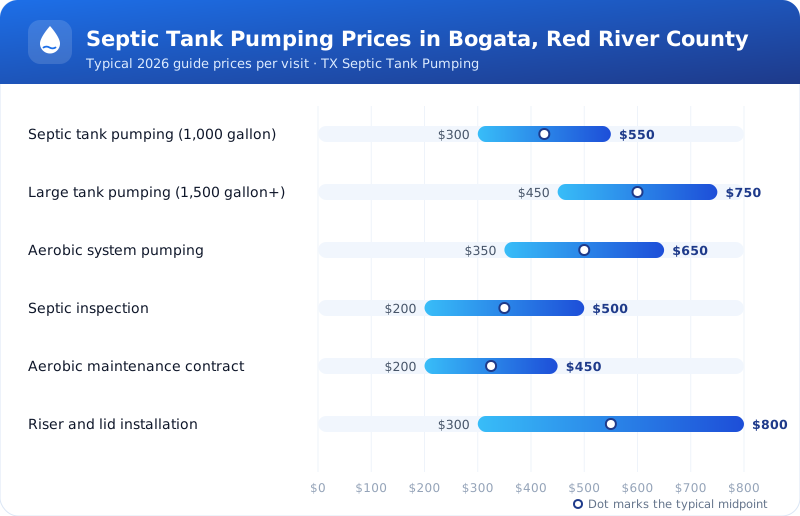
- Locate and uncover the lidThe crew finds the access lid, which may be buried under soil or grass. Uncovering a buried lid is sometimes billed as a separate item, with a guide range of $50 to $200.
- Open and check the tankThe lid is opened and the crew checks the liquid level, the scum layer and the solids. This is also a good time to look at the baffles and outlet.
- Pump out the contentsA vacuum truck removes the liquid and sludge from the tank. For a 1,000 gallon tank the guide range is $300 to $550.
- Inspect the outlet and filterMany systems include an effluent filter. A good crew checks it and cleans it if it is present, so solids do not carry toward the drain field.
- Explain what was foundBefore leaving, the technician should tell you the condition of the tank, any cracks or leaks, and when the next pumping is likely due.
Practical Steps Before the Pump Truck Arrives
A little preparation saves time and helps the crew work efficiently. Check these items before the appointment:
- Confirm the tank location, or mark it with a stake if the lid is buried
- Clear a path for the truck and keep pets and children away from the open lid
- Note any plumbing problems you have seen in the past few months
- Ask whether the tank has an effluent filter and where it is located
- Ask about a riser if the lid is deep in the ground, since riser and lid installation has a guide range of $300 to $800
- Ask the crew to record the pumping date so you know when the next visit is due
Pumping, Additives and Repairs: Comparing Your Options
Homeowners often ask whether a product can stand in for pumping. Most septic guidance says additives do not replace routine pumping. A tank that is full of solids will still need to be emptied, and a product does not remove the sludge already in the tank. Repairs are a different category, and they cost much more than pumping when they are needed. The comparison below puts the main options side by side with general guide ranges.
| Option | What it does | Guide price range |
|---|---|---|
| Routine pumping | Removes accumulated solids and scum from the tank | $300 to $550 for 1,000 gallon tank |
| Inspection | Checks tank condition, baffles and the drain field | $200 to $500 |
| Additive or treatment product | Claims to support bacteria, but does not replace pumping | Varies by product, not a substitute for pumping |
| Effluent pump replacement | Replaces a failed pump in the system | $800 to $1,800 |
| Drain field repair | Fixes damaged or clogged absorption area | $2,000 to $10,000 |
Emergency Septic Calls and Weekend Visits Near Bogata
A backup into the house cannot always wait for a regular appointment. Emergency and weekend callouts usually carry an added charge, with a guide range of $100 to $300 on top of the standard pumping price. Ask the listed company whether it can respond outside normal hours before you need it, and write the number on the fridge or in your phone.
If you are stuck with a backup and cannot reach the local listing, check with a provider in Clarksville, Paris or Mt Pleasant. Distances from Bogata are roughly 14, 23 and 24 miles, so response times are usually longer than in town. Shut off water use in the house while you wait to limit further backup.
Keeping Your Drain Field Healthy Between Pumpings
Pumping keeps solids out of the drain field, but daily habits matter just as much. Spread laundry across the week instead of running many loads in one day. Fix leaky faucets and running toilets, since extra water flowing through the system pushes solids through the tank sooner.
Keep heavy vehicles and structures off the drain field, and do not plant trees near it, because roots can damage the lines. Avoid flushing wipes, grease, cooking oil, medications and chemical cleaners. Keeping the area over the tank accessible also makes every future pumping faster and less expensive.