Septic tank pumping companies · Rains County
Listings last refreshed October 16, 2026
2 Best Septic Tank Pumping Companies in Emory [Updated 2026]
2 septic tank pumping companies in Emory, ranked by Pump Score using Google reviews and profile data.
✓ How we rankFree directory, no pay-to-rank
Septic tank pumping in Emory, TX is routine maintenance that most homeowners need every three to five years, and the job goes faster when you know what to ask before the truck arrives. Emory sits in Rains County in the East Texas region, where rural lots, long driveways, and clay soils are common. Those conditions shape how a tank gets accessed, how a system drains, and how quickly problems can build up.
Top Rated Septic Tank Pumping Companies in Emory Compared
Compare the top picks side by side. Full write-ups follow below.
| # | Septic Company | Best for | Score | Rating | Verified |
|---|---|---|---|---|---|
| #1 | L & L Plumbing & Septic | Checking services and hours online before you call | 5.9 | 29 reviews | — |
| #2 | Richard Songer Septic Sand & Gravel LLC | A local septic company you can call direct | 3.0 | 3 reviews | — |
Emory Septic Tank Pumping Reviews and Ratings
1. L & L Plumbing & Septic
Best for: Checking services and hours online before you call
1700 FM 51529 reviews
Score breakdown and details
- Location
- Emory · 1700 FM 515, Emory, TX 75440
- Track record
- Growing review base
- Rating
- 29 Google reviews
- Profile
- Unclaimed listing (Google data)
- Today
- See hours on profile
Strengths
- 29 Google reviews, a well established track record
- Direct phone number published, no lead form in the way
- Has its own website with more detail on services
- Opening hours published
Watch Out For
The Google profile is not owner verified. Double check the address and phone when you call.
Our take: Our top pick in this area. A Pump Score of 5.9/10 reflects the best combination of rating, review depth and profile completeness here.
2. Richard Songer Septic Sand & Gravel LLC
Best for: A local septic company you can call direct
4450 FM 5153 reviews
Score breakdown and details
- Location
- Emory · 4450 FM 515, Emory, TX 75440
- Track record
- New or lightly reviewed
- Rating
- 3 Google reviews
- Profile
- Unclaimed listing (Google data)
- Today
- See hours on profile
Strengths
- Direct phone number published, no lead form in the way
- Opening hours published
Watch Out For
Only 3 reviews so far, so the rating could still move. Worth asking about experience.
Our take: A strong shortlist option with a Pump Score of 3/10. Compare availability and price against the septic companies above.
Hiring Local Septic Tank Pumping in Emory
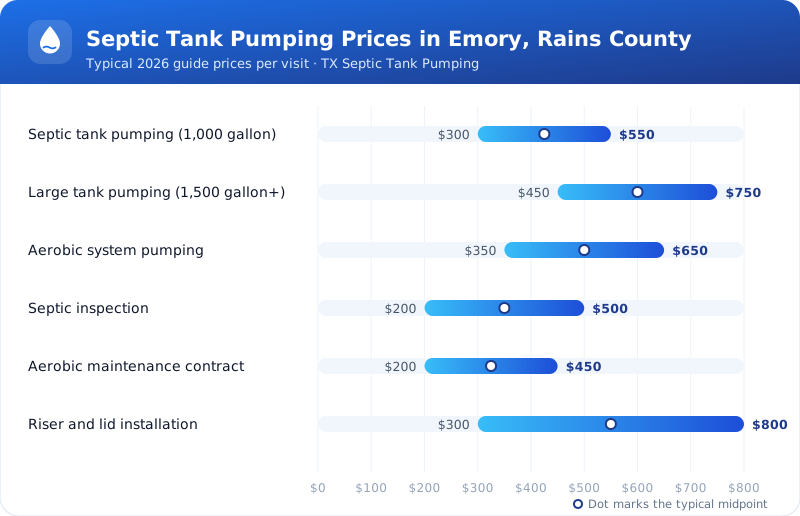
This page covers what to check before you book, how the two companies listed for Emory compare on the details we can verify, and what a typical pumping visit involves. You will also find guide prices for common septic work, warning signs that your tank is full, and a short list of items that should never go down a drain. Prices here are general ranges for Texas, not quotes, so get a written estimate from any company you call.
Use this page as a starting point. Call a company, describe your tank size and system type, and ask how they will handle locating the lid if it is buried. A few minutes on the phone can save a second trip and an unexpected fee.
What to Check Before You Book Septic Pumping in Emory
A little preparation makes the call shorter and helps you compare quotes fairly. Gather these details before you phone any company.
- Tank size, usually printed on the permit or install paperwork. Many homes have a 1,000 gallon tank, while larger households or bigger homes may have 1,500 gallons or more.
- System type. Note whether you have a conventional tank or an aerobic system, since aerobic units need different service.
- Date of your last pumping. If you do not know, say so. The company can plan from the visible condition of the tank.
- Lid and riser location. If the lid is buried under soil or gravel, ask about uncovering it, which is priced separately.
- Access route. Note gates, fences, low branches, and soft ground near the tank so the crew can plan for the truck.
- Symptoms you have seen, such as slow drains, gurgling pipes, or wet spots over the drain field.
Emory Companies Side by Side
Our directory lists two Emory providers, and the table below uses only the details we can verify: address, phone, Google review count, and the days each company is open. Review counts are Google totals, not ratings, and we do not assign stars.
Review depth is one signal, but it is not the whole story. A company with three reviews may be just as careful as one with twenty-nine, so ask both to explain their process, their pricing for your tank size, and how they handle a buried lid. Get the answers in writing or in a clear email before you schedule.
| Company | Address | Phone | Google Reviews | Open Days | Website Listed |
|---|---|---|---|---|---|
| L & L Plumbing & Septic | 1700 FM 515, Emory, TX 75440 | (903) 473-1404 | 29 | Monday to Friday | Yes |
| Richard Songer Septic Sand & Gravel LLC | 4450 FM 515, Emory, TX 75440 | (903) 473-3899 | 3 | Monday to Friday | No |
Signs Your Emory Tank Is Ready for Pumping
A full tank rarely fails all at once. It usually gives you warnings in the house first. Treat any of these signs as a reason to schedule a visit, not a reason to wait for a bigger problem.
- Drains run slowly in several fixtures at the same time, not just one sink.
- Toilets gurgle when you run water elsewhere in the house.
- Sewage odors appear near the tank, the drain field, or inside the home.
- The ground over the drain field stays soft, wet, or unusually green in a strip.
- Water backs up into a shower, tub, or floor drain after heavy use.
- The tank has not been pumped in roughly three to five years, or you cannot remember the last time.
What a Pumping Visit Usually Involves
Every company runs its visit a little differently, but most follow the same general sequence. Knowing these steps helps you ask the right questions when you book.
- Confirm the tank size and system typeGive the company your tank size and whether the system is conventional or aerobic. This determines the price range you should expect.
- Locate and uncover the lidIf the access point is buried, the crew may need to dig it out. Ask whether this is included or billed separately, since uncovering is a common extra charge.
- Pump the tankThe crew removes the accumulated solids and liquids from the tank, then checks the condition of the tank and its baffles or outlets as part of normal service.
- Check the system and note findingsAsk the crew to tell you what they saw, including any cracks, damaged baffles, clogged outlets, or a sludge level that suggests a problem with the drain field.
- Record the date and plan the next visitKeep a written record of the pumping date and the next recommended interval so the tank does not slip past its service window.
Conventional Tanks and Aerobic Systems Around Emory
Most homes in rural East Texas use a conventional tank that separates solids from liquids, then sends the liquid to a drain field. The tank fills gradually, and pumping removes the sludge and scum that build up over time. Clay soils and shallow water tables can slow the drain field, so a full tank tends to show up as slow drains and wet spots.
Conventional Tanks
A conventional tank usually needs pumping every three to five years, but the actual schedule depends on household size, water use, and whether a garbage disposal sends extra solids into the tank. Ask the company what interval they recommend for your home and write it down.
Aerobic Systems
An aerobic system adds air to the treatment process and needs regular service to keep working. Aerobic units require a maintenance contract in many cases, and pumping is only one part of that work. If you have one, confirm before booking that the company you call handles aerobic systems, because not every septic service does.
When the Tank Fills: Toilets, Drains, and Laundry Habits
When a tank is full, wastewater has nowhere to go. Solids can move toward the outlet, and liquid backs up toward the house. The first sign is often a toilet that drains slowly or gurgles when another fixture runs. If you see sewage rising in a toilet, shower, or floor drain, stop using water and call a septic company right away.
Laundry is a common cause of overload. Running several large loads back to back sends a surge of water into the tank. Spread loads across the week and avoid running the washer while you also run long showers or dishwashers. Our data does not set a single safe number of loads per day, so the goal is to keep water flow steady rather than bunched together.