Septic tank pumping companies · Navarro County
Listings last refreshed October 16, 2026
Best Septic Tank Pumping in Frost [Updated 2026]
1 septic tank pumping company in Frost, ranked by Pump Score using Google reviews and profile data.
✓ How we rankFree directory, no pay-to-rank
Septic tank pumping in Frost, TX is the maintenance task most rural homeowners put off until a drain backs up or the yard starts smelling wrong. Frost sits in Navarro County, where many homes depend on a buried tank and drain field instead of a city sewer line, so the tank is easy to forget. This page explains how often pumping is usually needed, what warning signs look like inside the house, and what to expect when you call a local crew.
Top Rated Septic Tank Pumping Companies in Frost Compared
Compare the top picks side by side. Full write-ups follow below.
| # | Septic Company | Best for | Score | Rating | Verified |
|---|---|---|---|---|---|
| #1 | Navarro County Septic Pumping Cleaning Corsicana | An established local septic company with plenty of reviews | 7.0 | 65 reviews | — |
Frost Septic Tank Pumping Reviews and Ratings
1. Navarro County Septic Pumping Cleaning Corsicana
Best for: An established local septic company with plenty of reviews
221 N Garitty St65 reviews
Score breakdown and details
- Location
- Frost · 221 N Garitty St, Frost, TX 76641
- Track record
- Established, healthy review volume
- Rating
- 65 Google reviews
- Profile
- Unclaimed listing (Google data)
- Today
- See hours on profile
Strengths
- 65 Google reviews, a well established track record
- Direct phone number published, no lead form in the way
- Has its own website with more detail on services
- Opening hours published
Watch Out For
The Google profile is not owner verified. Double check the address and phone when you call.
Our take: Our top pick in this area. A Pump Score of 7/10 reflects the best combination of rating, review depth and profile completeness here.
Hiring Local Septic Tank Pumping in Frost
The directory lists one septic pumping company with a Frost street address, Navarro County Septic Pumping Cleaning Corsicana at 221 N Garitty St, ZIP 76641. Its Google profile shows 65 reviews and a 4.9 rating. Because Frost has only one listing, many homeowners will also compare crews working out of Corsicana and other nearby towns. The sections below help you judge that choice on practical grounds rather than sales copy.
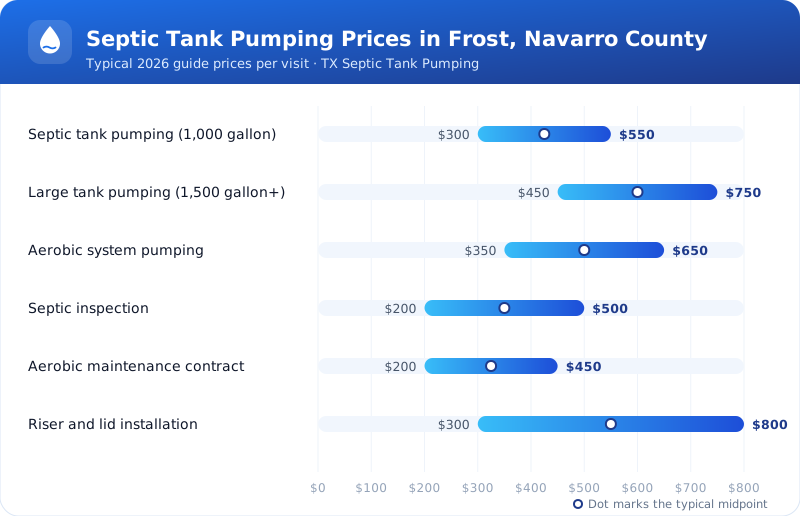
Guide prices appear further down the page. They are ranges, not quotes, and your final bill depends on tank size, how hard the lid is to reach, and whether the system is a conventional tank or an aerobic unit.
How Often Frost Homes Should Pump a 1,000 Gallon Tank
Most septic tanks need pumping every three to five years. A 1,000 gallon tank serving a household of three or four people often falls near the middle of that range. Households with more people, frequent guests, a garbage disposal, or heavy laundry use can fill a tank faster, which shortens the interval.
Pumping removes the sludge and scum that build up over time. Sludge settles to the bottom, scum floats at the top, and the clearer liquid between them flows out to the drain field. When solids fill too much of the tank, they can travel into the drain field and clog the soil. Replacing or restoring a drain field costs far more than a routine pumping visit, which is why the interval matters.
Write the date of each pumping on a calendar or on a card taped near the lid. A written record makes it easier to schedule the next visit and to show a buyer or inspector that the system has been maintained.
Frost Septic Pumping Options and Nearby Towns
Frost has one septic pumping company in this directory, and two other Navarro County towns also have listings. Many homes in the area are closer to neighboring towns than to Frost, so it helps to know how far each one sits. The distances below are approximate and measured from Frost.
- Bardwell, about 17 miles
- Corsicana, about 18 miles
- Richland, about 21 miles
- Rice, about 23 miles
- Ennis, about 23 miles
- Itasca, about 24 miles
Warning Signs Your Navarro County Tank Is Due
A full tank usually shows up in the house before it shows up in the yard. Slow drains and gurgling pipes are often the first clue. Check for these signs:
- Toilets flush slowly or gurgle when another fixture runs
- Sinks, showers, and tubs drain slowly across the house
- A sewage smell near the tank, the drain field, or the house
- Soggy ground or unusually green grass over the drain field
- Water pooling near the tank lid after rain
- Wastewater backing up into the lowest drain in the house
What to Do If More Than One Sign Appears
Any single sign can have another cause, such as a clogged fixture or a leak. Two or more signs at once usually mean the tank needs a look soon. Stop running water heavily through the house until a pumper has checked the system, since extra water can push solids toward the drain field.
Preparing Your Tank Before a Pumping Visit
A little preparation keeps the visit short and helps the crew find everything they need on the first try.
- Find the lidLocate the tank access lid before the crew arrives. If it is buried, plan for extra time to uncover it, since that is a separate charge in most price ranges.
- Clear the pathMove vehicles, pets, stored items, and landscaping that block the lid or the route to it.
- Pull your recordsHave the last pumping date and any inspection notes ready. A record of the tank size helps the crew estimate the job.
- Ease up on waterAvoid long showers, big laundry loads, and dishwasher runs on the day of the visit so the tank is not overloaded during pumping.
- Ask about the filterIf your system has an effluent filter, ask whether it will be checked or cleaned during the same visit.
What Never Belongs in a Septic System
A septic tank works only when the bacteria inside it can break down human waste and toilet paper. Many everyday products do not break down and can clog the tank, the outlet, or the drain field. Keep these out of the system:
- Cooking grease, oil, and fat poured down sinks
- Wipes, including ones labeled flushable
- Feminine hygiene products, diapers, and cotton balls
- Large amounts of coffee grounds or food scraps from the disposal
- Paint, solvents, thinners, and motor oil
- Large amounts of bleach, harsh drain cleaners, or chemical cleaners
- Medications, which can upset the bacteria the tank depends on
Ridex and Other Additives Compared With Pumping
Homeowners often ask whether an additive like Ridex can replace pumping. The table below compares the common options by what each one is meant to do and what it cannot do.
| Option | What it is meant to do | What it does not do |
|---|---|---|
| Pumping by a licensed crew | Removes sludge and scum from the tank | Repair a failing drain field on its own |
| Commercial additive such as Ridex | Marketed to help break down solids in the tank | Remove sludge already built up, or replace scheduled pumping |
| Effluent filter cleaning | Keeps solids from leaving the tank and reaching the drain field | Empty the tank or remove sludge |
| Bacteria or enzyme products | Promoted to speed breakdown of waste | Replace pumping or fix a clogged drain field |
Ask Before You Add Anything
Check with a pumper before adding any product, especially if the home has an aerobic system, since those units have their own maintenance needs. Pumping and filter checks remain the reliable way to protect the system.
Texas Rules and the 10 Acre Question
The Texas Commission on Environmental Quality, TCEQ, regulates on-site sewage facilities in the state, which includes septic systems. Questions about lot size, setback distances, and system design usually come up when someone is buying land or planning a build.
This page cannot confirm the details of any 10 acre rule, so do not rely on a rule of thumb from a forum or a listing. Check the current requirements with TCEQ or with the local authority before you buy land or build on it.
Laundry, Water Use, and Protecting the Drain Field
A drain field works best when water arrives in steady amounts rather than in bursts. Heavy use all at once can flood the soil faster than it can absorb the water, and that stresses the system over time. The habits below help protect the field between pumping visits.
Spreading Laundry Across the Week
There is no single safe number of laundry loads that fits every household, since tank size and drain field size differ. A practical approach is to spread loads over several days rather than running many in one afternoon, which gives the soil time to absorb the water.
Keeping Rain and Runoff Away
Direct downspouts and surface runoff away from the tank and drain field. Keep vehicles and heavy equipment off the area, and avoid planting trees with aggressive roots near the lines. Clay soils in Navarro County drain slowly after heavy rain, so surface water can linger over the field longer than expected.