Septic tank pumping companies · Montgomery County
Listings last refreshed October 16, 2026
Best Septic Tank Pumping in Porter: Top Rated & Trusted
1 septic tank pumping company in Porter, ranked by Pump Score using Google reviews and profile data.
✓ How we rankFree directory, no pay-to-rank
A search for septic tank pumping porter tx usually starts with a simple problem: a slow drain, a gurgling toilet, or a sudden realization that the last pump-out was years ago. Porter sits in Montgomery County, north of Houston, and in areas outside city sewer service, an on-site septic system is often the only way a home handles its wastewater. Knowing how the tank works and when it needs attention can save you from an expensive backup.
Top Rated Septic Tank Pumping Companies in Porter Compared
Compare the top picks side by side. Full write-ups follow below.
| # | Septic Company | Best for | Score | Rating | Verified |
|---|---|---|---|---|---|
| #1 | Two Sons Environmental Services | An established local septic company with plenty of reviews | 7.0 | 67 reviews | — |
Porter Septic Tank Pumping Reviews and Ratings
1. Two Sons Environmental Services
Best for: An established local septic company with plenty of reviews
23569 FM131467 reviews
Score breakdown and details
- Location
- Porter · 23569 FM1314, Porter, TX 77365
- Track record
- Established, healthy review volume
- Rating
- 67 Google reviews
- Profile
- Unclaimed listing (Google data)
- Today
- See hours on profile
Strengths
- 67 Google reviews, a well established track record
- Direct phone number published, no lead form in the way
- Has its own website with more detail on services
- Opening hours published
Watch Out For
The Google profile is not owner verified. Double check the address and phone when you call.
Our take: Our top pick in this area. A Pump Score of 7/10 reflects the best combination of rating, review depth and profile completeness here.
Hiring Local Septic Tank Pumping in Porter
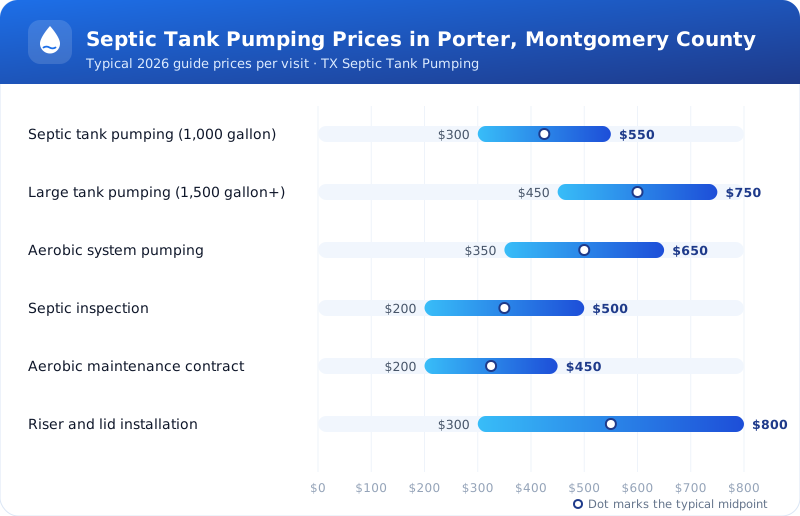
Our directory currently verifies one septic pumping company in Porter, Two Sons Environmental Services, which has 67 Google reviews. Search results also show other septic businesses across the wider Houston area, so it makes sense to compare before you book. The guide prices on this page will help you judge a quote, but they are ranges, not quotes, and your actual cost depends on tank size, access and the type of system you have.
This page is written for homeowners and small property owners. It covers how often a Porter tank should be pumped, the warning signs to watch for, what a service visit involves and what to avoid putting into the system. Where a rule depends on your lot, your county or a permit, we point you to the agency that makes that decision instead of guessing at the details.
The Verified Septic Pumping Company Serving Porter
Two Sons Environmental Services is the only Porter company in our directory at this time. It is listed at 23569 FM1314 in Porter, ZIP code 77365, with a phone number of (281) 354-9284 and 67 Google reviews. The listing shows a website and weekday hours, Monday through Friday.
The ranking below uses our Pump Score, so the order reflects how each listing compares with others we have checked. With only one company in town, you are not choosing between several local firms. If you need service on a weekend, check the nearby towns covered in this guide, since the open-day information in our data covers weekdays only for this company. Call before you book, and describe your system so the company can confirm the right equipment and visit length.
How Often a Porter Septic Tank Needs Pumping
Pumping frequency depends on how much solid waste enters the tank and how much room the tank has. A general starting point for a conventional tank is every 3 to 5 years, but your own schedule may be shorter or longer. The most reliable approach is to track the last service date and have the tank checked when the interval is reached.
- Conventional tanks: a common starting point is every 3 to 5 years.
- Large households or heavy water use: tanks fill faster and may need service sooner.
- Garbage disposals: they add solids to the tank and often shorten the interval.
- Aerobic systems: follow the maintenance contract and the service schedule set for your unit.
- Any system: ask the pumper to check sludge and scum levels during each visit, even if pumping is not yet due.
Warning Signs Your Porter Tank Is Full
A full tank rarely fails all at once. Most homeowners notice a pattern of small problems before a backup happens. If two or more of these signs show up together, schedule a pumping visit soon instead of waiting for the next routine date.
- Slow drains in sinks, showers and tubs across the house
- Gurgling sounds in toilets or pipes after water is used
- Sewage odor near the tank lid or over the drain field
- Wet, soggy or unusually green patches over the drain field
- Sewage backing up into a tub, shower or toilet
- An alarm or warning light on an aerobic system
Conventional Tanks Compared With Aerobic Systems
Many Porter properties have a conventional tank, while others use an aerobic treatment unit that needs more regular attention. The two systems share the same goal, but their maintenance needs and service costs differ. Check your system type before you book so you know whether you need a simple pump-out or a pump plus a maintenance visit.
| Feature | Conventional tank | Aerobic system |
|---|---|---|
| Main service need | Periodic pumping to remove settled solids | Pumping plus regular maintenance visits |
| Typical schedule | Often every 3 to 5 years | Follow the maintenance contract and pumping plan |
| Guide price range | $300 to $550 for a 1,000 gallon tank | $350 to $650 for pumping, plus $200 to $450 per year for a maintenance contract |
| Common warning sign | Slow drains and gurgling | Alarm or warning light, plus the same drain signs |
What a Pumping Visit Involves in Porter
A standard visit is straightforward, but knowing the sequence helps you ask the right questions and avoid surprises on the bill. Most of the time goes into finding and opening the tank, followed by the pumping itself. Ask for a clear explanation of what was removed and what condition the tank is in.
- Locate the tankThe pumper finds the tank and the access points. If the lid is buried, uncovering it can add a separate charge, so ask about that before the work begins.
- Open the access lidsSafe access is important. Risers can make future visits easier and reduce digging, and a riser installation is priced separately from routine pumping.
- Pump out the contentsThe crew removes liquid and settled solids from the tank. Ask whether the scum and sludge layers were measured or noted.
- Inspect the tank and outletA careful visit includes checking the baffles, the outlet and the effluent filter if one is installed. Problems found here are often cheaper to fix early.
- Set the next service dateBefore you leave, confirm when the tank should be checked again and write the date down. A simple calendar reminder prevents most missed pump-outs.
Texas Septic Rules, the 10 Acre Question and Where to Check
The Texas Commission on Environmental Quality, or TCEQ, regulates on-site sewage facilities in Texas, and that agency sets the baseline for how these systems are built and maintained. Local requirements can add to that baseline, and they vary by county and by property. This guide does not list county permit fees, local ordinances or inspection rules for Montgomery County, because those details change and should come from the official source.
The 10 acre question comes up often because lot size can affect what applies to a property. Do not rely on a single number from a website or a neighbor. Before you plan a new system, a repair or a property sale, contact TCEQ or the local office that handles on-site systems in Montgomery County and ask how the rule applies to your address.
What Not to Flush or Pour Into a Porter Septic System
Many septic failures start with the wrong items going down the drain. Materials that do not break down in the tank build up as solids, and some chemicals can disturb the bacteria that help treat wastewater. Keep this list near the kitchen sink and the bathroom as a quick reference for everyone in the house.
- Wipes, including those labeled flushable
- Cooking grease, oils and fat
- Coffee grounds and food scraps from the disposal in large amounts
- Feminine hygiene products, diapers and cat litter
- Paint, solvents, motor oil and pesticides
- Harsh chemical drain cleaners and large amounts of bleach
- Medications, which should go to a pharmacy take-back program instead