Septic tank pumping companies · McLennan County
Listings last refreshed October 16, 2026
Best Septic Tank Pumping in Mart: Trusted Local Experts
1 septic tank pumping company in Mart, ranked by Pump Score using Google reviews and profile data.
✓ How we rankFree directory, no pay-to-rank
Septic tank pumping in Mart, TX is currently covered in our directory by one listed provider, Breton Pumping Services, so your search ends at a single company rather than a field of options. That makes the homework you do before calling more important, from confirming the tank size to knowing which days the office is open.
Top Rated Septic Tank Pumping Companies in Mart Compared
Compare the top picks side by side. Full write-ups follow below.
| # | Septic Company | Best for | Score | Rating | Verified |
|---|---|---|---|---|---|
| #1 | Breton Pumping Services | A local septic company you can call direct | 2.7 | 2 reviews | — |
Mart Septic Tank Pumping Reviews and Ratings
1. Breton Pumping Services
Best for: A local septic company you can call direct
1570 Steinke Rd2 reviews
Score breakdown and details
- Location
- Mart · 1570 Steinke Rd, Mart, TX 76664
- Track record
- New or lightly reviewed
- Rating
- 2 Google reviews
- Profile
- Unclaimed listing (Google data)
- Today
- See hours on profile
Strengths
- Direct phone number published, no lead form in the way
- Opening hours published
Watch Out For
Only 2 reviews so far, so the rating could still move. Worth asking about experience.
Our take: Our top pick in this area. A Pump Score of 2.7/10 reflects the best combination of rating, review depth and profile completeness here.
Hiring Local Septic Tank Pumping in Mart
Mart sits in McLennan County in Central Texas, 19 miles from Waco and 7 miles from Riesel. Many homes in the surrounding rural areas depend on a buried tank and a drain field rather than a city sewer line, so pumping is a routine part of ownership, not an occasional repair. This page covers how often a 1,000 gallon tank usually needs service, the warning signs that show up before a backup, what should stay out of the system, how to book a visit step by step, and what guide prices look like before you call. It also explains how distance affects planning when your nearest pumper is a drive away.
Breton Pumping Services: The Only Listed Provider in Mart
Our directory currently has one company with a Mart address, and it appears first in the ranked listings below. Here is what the directory shows for it, so you can plan the call before you dial.
- Name: Breton Pumping Services
- Address: 1570 Steinke Rd, Mart, TX 76664
- Phone: (254) 875-2835
- Open days listed: Monday through Friday
- Google reviews: 2
- Listed town: Mart
How Often a 1,000 Gallon Septic Tank Needs Pumping in McLennan County
Most conventional septic tanks need pumping every 3 to 5 years. A 1,000 gallon tank is the size most homeowners mean when they ask about schedules, and it is common in homes of moderate size. The interval is a starting point, not a rule, because the amount of solids that settle into the tank depends on how the house is used every day.
Pumping removes the sludge that settles at the bottom and the scum that floats at the top. Leaving those layers in place lets solids move toward the outlet, where they can reach the drain field and clog it. That repair costs far more than a routine visit, so a schedule matters even when the system seems to be working.
Household Size and Water Use
A family of five that runs the washer and dishwasher every day fills a tank faster than a couple who is home part time. Heavy water use shortens the time between pumpings because more liquid and more solids pass through the tank. If you have added people to the house, changed your water habits, or had a guest house or workshop connected, count on pumping sooner than the original schedule suggested.
Garbage Disposals and Solids
A garbage disposal sends food scraps into the tank, which adds solids that have to be removed. Many homeowners who run a disposal daily find that their pumping interval runs toward the shorter end of the typical range. Keeping food waste in the trash or compost bin is one of the simplest ways to slow the buildup.
Warning Signs That a Septic Tank Is Full
A full tank does not usually fail all at once. The signs build over days or weeks, and catching them early often means a routine pump out instead of a emergency call. Watch for the following.
When a tank is full, wastewater has nowhere to go. Toilets may gurgle or back up, and drains throughout the house can run slowly. If the liquid level in the tank rises high enough, solids can move past the outlet toward the drain field, which is when the most expensive damage starts.
- Slow drains in several fixtures at the same time, not just one sink
- Gurgling sounds in toilets or pipes when water runs elsewhere in the house
- Toilets that back up or drain slowly, especially after laundry or showers
- A sewage smell near the tank, the drain field or indoor drains
- Wet, soggy, or unusually green patches over the drain field
- Sewage backing up into the lowest drain in the house
What Never Goes in a Septic Tank
A septic tank depends on bacteria to break down waste. Anything that kills those bacteria, or that does not break down at all, can shorten the life of the system. The worst items are usually the ones that look harmless in the bathroom or kitchen sink.
The list below covers the most common problem items. If you are unsure about a product, check the label for septic safe language, or keep it out of the system entirely.
- Chemicals such as paint, paint thinner, solvents, motor oil, and pesticides
- Large amounts of bleach, harsh drain cleaners, or antibacterial products
- Cooking grease, oil, and fat poured down the sink
- Wipes labeled flushable, which often do not break down in the tank
- Feminine hygiene products, diapers, and cat litter
- Coffee grounds, eggshells, and food scraps from a garbage disposal in heavy amounts
- Medications, which can carry chemicals into the system
Laundry, Showers and Spreading Out the Water Load
Homeowners often ask how many loads of laundry a day a septic system can handle. There is no single number that fits every home, because tank size, soil and household habits all change the answer. The more useful rule is to spread the water out. Running several loads back to back sends a large volume of water into the tank in a short window, which can push solids toward the outlet before they settle.
Spreading laundry across the week, running the dishwasher only when it is full, and fixing dripping faucets or running toilets all reduce the daily load. A slow leak that adds water every hour can matter as much as a single heavy wash day, so check the water meter if the house seems to use more water than it should. These habits cost little and give the tank more time between pumpings.
Booking a Pump Out in Mart: Steps From First Call to Finished Job
A pump out is simple when the tank is easy to reach and the call covers the right details. Use these steps to avoid delays on the day the truck arrives.
- Find the tank lid before you callLocate the access lid and note how far it sits from the house. If you cannot find it, ask the provider whether a lid locate is part of the job and what it may cost.
- Confirm the weekday windowThe listing shows Monday through Friday. Ask for a specific day and confirm that the truck can reach the lot, especially after rain.
- Ask what the visit coversAsk whether the quote includes pumping only, a visual check of the tank, or travel time. Get the total in writing before the crew arrives.
- Clear access on the day of serviceMove vehicles, pets and stored items away from the lid and the path to the tank so the crew can work without delay.
- Keep the receipt and set the next dateWrite down the pumping date and the tank size. Set a reminder for the next visit based on your household and water use.
Conventional Tanks and Aerobic Systems Need Different Visits
Not every home in Mart has the same kind of system. A conventional tank and drain field is the most common setup, but some properties use an aerobic treatment unit that adds air to the wastewater and uses a different outlet. The two need different kinds of attention, and the price range changes accordingly.
Aerobic systems also need routine maintenance beyond pumping, usually through a yearly contract. Ask Breton whether it services aerobic units before you book, because the directory does not list that detail for the company.
| Feature | Conventional tank | Aerobic system |
|---|---|---|
| Basic setup | Tank with a drain field | Tank with mechanical aeration and a treated outlet |
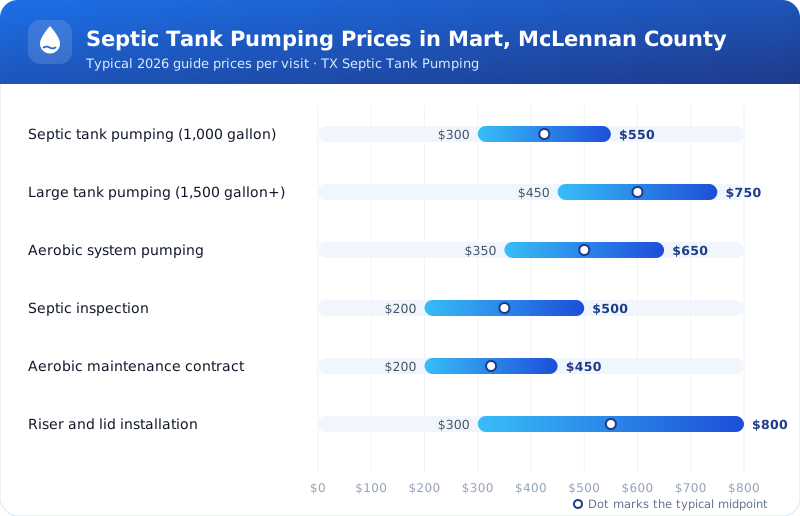
| Guide pumping cost | $300 to $550 for 1,000 gallon | $350 to $650 |
| Routine care | Pumping every 3 to 5 years | Pumping plus a yearly maintenance contract, guide $200 to $450 |
| Common warning sign | Slow drains, odor, backups | An alarm light or sound, plus the same drain signs |