Septic tank pumping companies · Mason County
Listings last refreshed October 16, 2026
Best Septic Tank Pumping in Mason: Local Pros Compared
1 septic tank pumping company in Mason, ranked by Pump Score using Google reviews and profile data.
✓ How we rankFree directory, no pay-to-rank
Septic tank pumping Mason TX homeowners search for usually comes down to one question: when was the tank last emptied? Solids settle to the bottom of a septic tank, scum floats to the top, and the liquid in between drains out to the drain field. Over time the sludge layer grows and leaves less room for settling. When that happens, problems start to show up inside the house or in the yard.
Top Rated Septic Tank Pumping Companies in Mason Compared
Compare the top picks side by side. Full write-ups follow below.
| # | Septic Company | Best for | Score | Rating | Verified |
|---|---|---|---|---|---|
| #1 | JDG Farms Septic System & Backhoe Service | Trying a newer local septic company | 0.8 | — | — |
Mason Septic Tank Pumping Reviews and Ratings
1. JDG Farms Septic System & Backhoe Service
Best for: Trying a newer local septic company
1856 Gipson RdNo reviews yet
Score breakdown and details
- Location
- Mason · 1856 Gipson Rd, Mason, TX 76856
- Track record
- New or lightly reviewed
- Rating
- No Google reviews yet
- Profile
- Unclaimed listing (Google data)
- Today
- Hours not published
Strengths
- Direct phone number published, no lead form in the way
Watch Out For
No Google reviews yet. Ask for references or recent customers you can speak to.
Our take: Our top pick in this area. A Pump Score of 0.8/10 reflects the best combination of rating, review depth and profile completeness here.
Hiring Local Septic Tank Pumping in Mason
This page explains what pumping involves in Mason County, how often a typical household tank needs it, what the work usually costs, and what to check before you book. The Pump Score ranking on this page includes one company that serves Mason, so the listing below is short. You can still use the guide ranges and checklists here to judge any quote you receive, whether it comes from that company or from a provider in a nearby town.
Mason sits in the Texas Hill Country, where rocky ground and shallow soils can make drain fields harder to build and keep working. That makes a regular pumping schedule more useful here than waiting for a symptom to appear.
How Septic Tank Pumping Works in Mason County
A pumping visit starts with finding the access lid. Many older tanks were buried with the lid several inches under soil or grass, so the crew may need to dig or ask you to mark it before they arrive. Once the lid is open, a vacuum truck removes the liquid and sludge from the tank, and the crew checks the inlet and outlet baffles for damage or blockage.
A standard pump-out of a home tank is usually a short visit. Good providers also check the effluent filter if your system has one, look at the condition of the tank, and tell you what they found. Ask for that information in writing so you have a record for the next service date.
Signs a Mason Tank Is Due for Pumping
A full tank rarely fails all at once. The warning signs usually build over several weeks. If you notice any of the following, schedule a pumping and an inspection before the problem gets worse:
- Drains run slowly in several fixtures at once, not just one sink
- Gurgling sounds in pipes after you flush or run water
- Toilets back up or bubble when the shower or washing machine runs
- A sewage smell near the tank lid or over the drain field
- Soggy ground or unusually lush, green grass in one area of the yard
- Sewage backing up into a tub or shower drain
Reading the Mason Pump Score Ranking
The listings that follow are ranked by our Pump Score, in order. For Mason, that order has one company. A short list does not mean you have no choices, since providers in nearby towns may serve your address. It does mean you should compare what each company tells you directly, rather than relying on a ranking to make the decision for you.
When you read any listing, look at the points below before you call:
- Whether the company lists the services you need, such as pumping, inspection or aerobic maintenance
- The ZIP codes and towns it names, which show how far it travels
- The phone number and how quickly the office answers when you call
- Google review counts, if any are shown for the business
Standard Tanks and Aerobic Systems Cost Different Amounts to Keep Running
Many homes in the area have a conventional tank with a drain field. Some have an aerobic treatment unit, which uses air and mechanical parts to treat wastewater before it reaches the drain field. Aerobic systems need more regular attention, and their upkeep costs differ. The table below compares the two in general terms, using the guide ranges for Texas.
| Item | Conventional tank | Aerobic system |
|---|---|---|
| Routine service | Pump-out every 3 to 5 years for a typical household | Pump-out plus regular servicing under a maintenance contract |
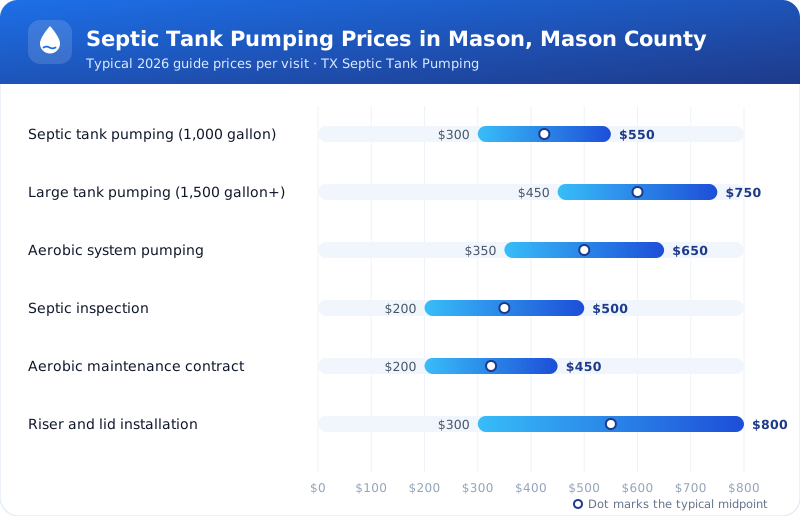
| Guide price for pumping | $300 to $550 for a 1,000 gallon tank | $350 to $650 for an aerobic system pump-out |
| Yearly ongoing cost | Usually none beyond pumping and inspection | $200 to $450 for an aerobic maintenance contract |
| Common repair | Riser and lid installation, $300 to $800 | Effluent or pump replacement, $800 to $1,800 |
| Who should check it | A licensed pumper during routine service | A provider who services aerobic units on a schedule |
How to Book a Pump-Out Before the Tank Gives You a Problem
A planned pumping costs less and causes less stress than an emergency call. These steps help you get the work done on your schedule.
- Find and mark the lidLocate the access lid before you call. If it is buried, mark the spot with a stake or flag so the crew can start right away.
- Check your last service dateLook for the date on your last pumping receipt. If you cannot find it, ask the company for its records or schedule an inspection first.
- Ask about travel and schedulingAsk whether the company serves your road and how far it travels. For rural Mason County, that answer shapes how soon you can be on the calendar.
- Confirm the scope of the visitAsk whether the price covers pumping only, or also an inspection of the baffles, the filter and the lid.
- Keep the written recordAfter the visit, file the invoice and the inspection notes. Put the next pumping date on your calendar before you leave.
Septic Permits and Records in Mason County
The Texas Commission on Environmental Quality regulates on-site sewage facilities across the state, and local permit offices handle the paperwork for installations and some repairs. Homeowners in Mason County can reach the county septic permits and development office for questions about permits and records. Keeping your own paperwork is useful even if you never need to file a permit, because pumping and inspection records help a buyer, a lender or a new service provider understand the system.
Who to Call About Permits
The Mason County septic permits and development office lists its phone line as (325) 347-2477. Office hours are 8:00 A.M. to 5:00 P.M., Monday through Friday. The listing also says after-hours questions can be sent by email, so check the county's current contact details before you write.
Keeping Records for Your Tank
Keep a simple file with the pumping dates, inspection reports, receipts and any repair notes. Write down the tank size if you know it, and sketch where the lid and drain field sit. A few minutes of record keeping can save time when you need a provider to find the system in an unfamiliar yard.
What Should Never Go Down a Septic Drain
Most septic failures start with something that should not have gone down the drain. Solids that do not break down fill the tank faster, and some chemicals kill the bacteria that treat wastewater. Avoid putting these items into the system:
- Wipes, including those labeled flushable
- Grease, cooking oil and fats poured down the sink
- Coffee grounds, eggshells and food scraps from a garbage disposal
- Chemical drain cleaners and harsh bleach used in large amounts
- Paint, solvents, motor oil and pesticides
- Feminine hygiene products, cotton swabs and cigarette butts
- Large amounts of water at once, such as a full laundry load with a leaking fixture
Hill Country Soils and the Real Cost of Waiting Too Long
Mason's ground is part of the Hill Country, where limestone and shallow, rocky soils sit over bedrock in many places. A drain field in that kind of ground has less room to spread and treat wastewater. When solids leave a neglected tank and reach the field, the repair can be far more expensive than the pumping would have been.
Why Shallow Soil Changes the Math
When the soil above bedrock is thin, a drain field has less space to treat effluent before it reaches rock. Keeping the tank pumped on schedule protects the field from solids it was never designed to handle. A drain field repair in the guide range of $2,000 to $10,000 can cost many times the price of routine pumping.
Why Twenty Years Is a Risky Gap
Some owners stretch the time between pumpings, but a tank that goes 20 years without service is almost certain to have built up a thick sludge layer. That layer can clog outlets and push solids toward the drain field. The safer approach is to pump on a regular cycle, usually every 3 to 5 years for a typical household, and adjust based on what the inspection shows.