Septic tank pumping companies · Loving County
Listings last refreshed October 16, 2026
Best Septic Tank Pumping in Mentone [Updated 2026]
1 septic tank pumping company in Mentone, ranked by Pump Score using Google reviews and profile data.
✓ How we rankFree directory, no pay-to-rank
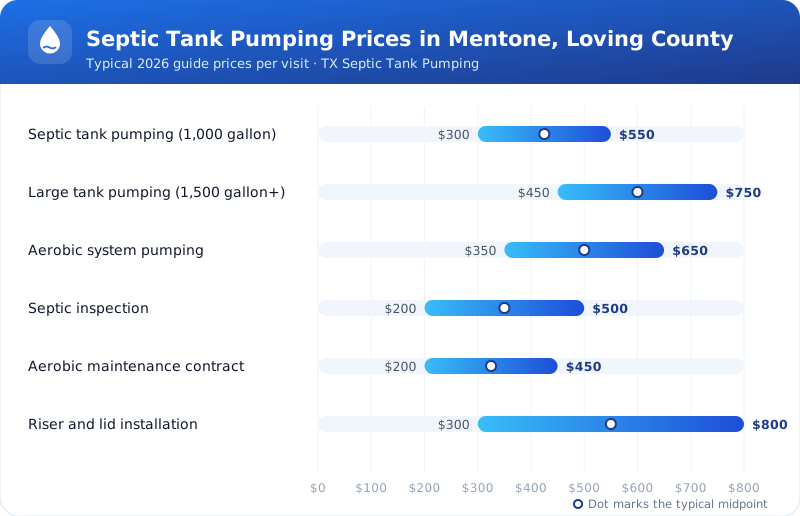
Septic tank pumping in Mentone, TX is the kind of job most homeowners only think about once a drain starts to slow or a sewage smell shows up near the yard. The tank keeps filling whether or not anyone is watching it, though. Mentone sits in Loving County in far West Texas, where service providers are spread out and a little planning goes a long way. This page covers the work itself, the typical costs, a sensible pumping schedule, and the one company our directory lists for the town.
Top Rated Septic Tank Pumping Companies in Mentone Compared
Compare the top picks side by side. Full write-ups follow below.
| # | Septic Company | Best for | Score | Rating | Verified |
|---|---|---|---|---|---|
| #1 | Milestone Environmental - Mentone Facility | Weekend bookings, open Saturday and Sunday | 4.2 | 5 reviews | — |
Mentone Septic Tank Pumping Reviews and Ratings
1. Milestone Environmental - Mentone Facility
Best for: Weekend bookings, open Saturday and Sunday
1674 US Hwy #285N5 reviews
Score breakdown and details
- Location
- Mentone · 1674 US Hwy #285N, Mentone, TX 79754
- Track record
- New or lightly reviewed
- Rating
- 5 Google reviews
- Profile
- Unclaimed listing (Google data)
- Today
- See hours on profile
Strengths
- Direct phone number published, no lead form in the way
- Has its own website with more detail on services
- Opening hours published
- Open on Saturdays
Watch Out For
Only 5 reviews so far, so the rating could still move. Worth asking about experience.
Our take: Our top pick in this area. A Pump Score of 4.2/10 reflects the best combination of rating, review depth and profile completeness here.
Hiring Local Septic Tank Pumping in Mentone
Our directory currently lists one septic provider in Mentone, Milestone Environmental - Mentone Facility, at 1674 US Hwy #285N in ZIP code 79754. It is listed as open every day of the week and around the clock, which matters when a tank backs up on a holiday weekend. Because the field is so small, your choice in town is narrower than most searchers expect, so knowing what a good visit looks like before you call will help you judge the service you receive.
Towns farther out, including Monahans about 42 miles away and Fort Stockton about 71 miles away, are worth checking if you want a second quote. Expect a longer drive for the truck, and ask whether that distance is built into the price.
What a Septic Pumping Visit Actually Involves
A septic tank is a buried, watertight container that holds wastewater long enough for solids to settle to the bottom and grease and scum to float to the top. Bacteria break down some of the material, but they cannot process everything, so sludge builds up over time. Pumping removes the liquid and solids so the tank has room to separate new waste properly.
A pumping visit is usually short once the crew is on site, but the preparation matters. The technician needs to reach the access lid, which may be buried under soil or a hard layer of caliche. After the tank is open, the crew pumps out the contents, checks the condition of the baffles and any effluent filter, and looks for cracks or signs of leaking.
The visit also gives you a useful look at how the system is holding up. A technician who sees heavy sludge, a damaged baffle, or a missing filter can tell you what needs attention. Ask for those findings in plain words so you can decide what to fix now and what can wait until the next visit.
How a Pumping Appointment Usually Goes
Most appointments follow the same basic path. Knowing the order helps you spot anything that seems skipped or unclear.
- Describe the systemTell the office the tank size if you know it, whether the home has a conventional septic tank or an aerobic unit, and when the tank was last pumped.
- Locate and uncover the lidIf the lid is buried, ask whether uncovering is included in the quote. It is often billed as a separate service.
- Pump the tankThe crew removes the liquid and sludge and hauls the waste away for proper disposal.
- Inspect the componentsLook over the baffles, the outlet filter, and the tank walls for damage or wear.
- Agree on the next dateAsk for a recommended pumping interval based on your household and tank size, and write that date on your calendar.
Milestone Environmental - Mentone Facility at a Glance
The table below lists what our directory records for the only septic provider in Mentone. Listings can change, so confirm the details by phone before you book.
The office address puts the business on US Highway 285 North, which is the main route through the area. Plan your call with the address in hand so the dispatcher can confirm the service area for your property.
| Detail | What the directory shows |
|---|---|
| Business name | Milestone Environmental - Mentone Facility |
| Street address | 1674 US Hwy #285N, Mentone, TX |
| ZIP code | 79754 |
| Phone | (432) 652-6895 |
| Hours | Open every day, open 24 hours |
| Website | Listed as having a website |
| Google rating | 4.9 |
| Reviews recorded for Mentone | 5 |
Questions to Ask Before Booking a Mentone Pump Out
A short phone call can prevent a surprise on the invoice. These questions cover the points that most often change the final bill or the quality of the work.
Write down the answers and the name of the person you spoke with. If a quote changes after the crew arrives, you will have something to refer to.
- Does the quoted price include finding and uncovering the lid, or is that a separate charge?
- What is the charge for a tank larger than 1,000 gallons?
- Is an after-hours or weekend callout fee added to the bill?
- Will the crew check the baffles and effluent filter, and will I receive a written note of what they found?
- Where is the waste taken for disposal?
- If the home has an aerobic system, does the company offer a yearly maintenance contract?
How Often a Mentone Home Should Schedule Pumping
For a typical 1,000 gallon tank, most guidance points to pumping every three to five years. The real schedule depends on how many people live in the home, how much water goes down the drain each day, whether a garbage disposal is used, and how quickly solids build up in the tank.
A home with a large household, frequent guests, or a garbage disposal running every day will often need pumping sooner than the average. A quieter household may go longer between visits, but the tank still deserves a check. Waiting too long risks solids flowing toward the drain field, which is the most expensive part of the system to repair.
If you are unsure, ask for an inspection that measures the sludge and scum layers. The result gives you a clear basis for the next date, rather than a guess based on the calendar.
Warning Signs the Tank Needs Pumping Soon
Septic systems usually give warning before they fail. Watch for the signs below and act on them early.
If two or more of these show up at once, call a provider rather than waiting for the next scheduled visit.
- Drains and toilets run slowly across the whole house
- Gurgling sounds in the plumbing when water runs
- A sewage odor near the tank or the drain field
- Wet, spongy, or unusually green ground over the drain field
- Water backing up into a tub, shower, or floor drain
- Toilets that are slow to clear after flushing
Caliche, Buried Lids and Access in West Texas
Much of West Texas has caliche, a hard layer of calcium carbonate that sits in or below the topsoil. Digging through it takes time and equipment, which is one reason a buried lid can add to the cost of a visit. Keep the access area clear of debris and note where the lid sits so the crew does not have to search for it. If the lid is buried, a locate and uncover service is the usual fix, and it is worth asking about before the appointment.
What Not to Flush or Pour Down the Drain
The tank can only handle what bacteria can break down and what the liquid can carry away. Items that fall outside that range cause most of the early problems.
Chemicals in large amounts can kill the bacteria that break down waste, and solids that do not dissolve fill the tank faster than expected.
- Grease, cooking oil, and fat
- Wipes, including those labeled flushable
- Diapers and feminine hygiene products
- Paint, solvents, and motor oil
- Chemical drain cleaners and harsh disinfectants
- Coffee grounds, eggshells, and other solids that do not break down