Septic tank pumping companies · Live Oak County
Listings last refreshed October 16, 2026
Best Septic Tank Pumping in George West [2026 Update]
1 septic tank pumping company in George West, ranked by Pump Score using Google reviews and profile data.
✓ How we rankFree directory, no pay-to-rank
If you need septic tank pumping George West TX residents can count on, the first thing to know is that this directory lists one company in town: Mike's Septic Services at 3128 US-281, ZIP code 78022. A short list is not necessarily a problem, but it changes how you should shop. Below you will find how pumping works, what it usually costs, how often a typical household tank needs service, and what to confirm before you book.
Top Rated Septic Tank Pumping Companies in George West Compared
Compare the top picks side by side. Full write-ups follow below.
| # | Septic Company | Best for | Score | Rating | Verified |
|---|---|---|---|---|---|
| #1 | Mike's Septic Services | A local septic company you can call direct | 2.2 | 3 reviews | — |
George West Septic Tank Pumping Reviews and Ratings
1. Mike's Septic Services
Best for: A local septic company you can call direct
3128 US-2813 reviews
Score breakdown and details
- Location
- George West · 3128 US-281, George West, TX 78022
- Track record
- New or lightly reviewed
- Rating
- 3 Google reviews
- Profile
- Unclaimed listing (Google data)
- Today
- Hours not published
Strengths
- Direct phone number published, no lead form in the way
Watch Out For
Only 3 reviews so far, so the rating could still move. Worth asking about experience.
Our take: Our top pick in this area. A Pump Score of 2.2/10 reflects the best combination of rating, review depth and profile completeness here.
Hiring Local Septic Tank Pumping in George West
George West is in Live Oak County in South Texas, and across rural areas like this one, a home without a sewer connection depends entirely on its own tank and drain field. Nobody from a city utility is coming to clear a backup. The tank holds solids and scum while bacteria work on what they can, and the sludge layer grows over time. When it gets too thick, solids move toward the drain field and clog it, and that is the expensive failure most owners want to avoid.
Septic tanks rarely warn you early. Most owners notice a problem only after drains slow down, toilets gurgle, or water pools over the drain field. Planning a routine pump-out before those signs appear costs far less than repairing a field, and that is the main reason this page spends so much time on schedules and prices. The rest of the page is written for someone who has one local option and still wants to make a sound decision.
How a Septic Pump-Out Actually Works
A pump-out means a crew opens the tank, measures the scum and sludge layers, and removes the contents with a vacuum truck. Many crews also inspect the baffles, check the outlet tee, and look at the effluent filter if one is installed. Ask whether they will do all three, because a pump-out that skips the filter does not fully protect the drain field.
The tank has to be found first. Many older tanks in rural areas have buried lids that are hard to locate, and the lid may need to be uncovered before pumping can start. Ask whether locating and uncovering is included in the quote or billed separately. If the lid is buried under soil, gravel or landscaping, expect extra time and cost. Once the crew has access, pumping itself usually takes a short visit, though the time varies with tank size and how much material has built up.
Pumping also gives the crew a chance to check the condition of the tank. A cracked or collapsed lid, a missing baffle, or a tank that appears to be leaking can all show up during a visit. Ask for a written note of what was found. It helps you plan any repairs and gives the next service provider a record to work from.
Warning Signs Your George West Tank Is Overdue
Any one of these signs can have other causes, but several showing up together usually point to the tank. Do not wait for the drain field to fail before you act. A tank pumped on schedule costs far less than a field replacement.
- Drains and toilets run slowly, even after a plunger or drain cleaner
- Gurgling in plumbing when water is used somewhere else in the house
- A sewage odor near the tank, over the drain field, or indoors
- Wet, spongy, or unusually green grass over the drain field
- Water backing up into a tub or shower when a toilet is flushed
- Toilets that overflow, or sewage showing up in the yard
What Happens to a Toilet When the Tank Is Full
When a tank is full, wastewater has nowhere to go, so it rises back up the house line. The first fixture to show it is often a toilet or shower on the lowest drain line, which may gurgle, bubble, or back up when water is used elsewhere. If you see this, stop using water heavily and call a service company rather than running more loads through the system.
Keep Your Own Log Between Visits
Check the system yourself between visits. Walk the drain field, note where the grass is greenest or wettest, and record the date the tank was last pumped. A simple log is useful when you call a company, because the crew can see how long it has been and whether earlier notes mention problems.
How Often a 1,000 Gallon Tank Needs Pumping Around George West
Pumping every three to five years is the general guidance most homeowners hear, and it is a reasonable starting point for a 1,000 gallon tank. The real interval depends on how many people live in the house, how much water they use, what goes down the drains, and whether a garbage disposal sends extra solids into the tank. A household of two with careful habits may go longer than a larger family that runs a disposal every day.
Measuring the sludge layer is a better guide than the calendar alone. A crew can tell you how much material has built up and whether the tank is approaching the outlet. That measurement, plus your household details, is what should drive the decision to schedule.
Can a Septic Tank Go 20 Years Without Pumping?
Some tanks do run for a long time between pump-outs, but going 20 years without service is a gamble. Solids build up steadily, and once they reach the outlet they can carry into the drain field. Even if the house has not backed up yet, the field may already be losing capacity. The safer approach is to have the tank opened and measured, then pumped when its condition calls for it.
Questions to Ask Mike's Septic Services Before You Book
This directory has only the three Google reviews on file for this business, so a phone call is the best way to judge the service. The number to call is (361) 449-4448. Use these four questions to get specific answers before a truck is scheduled.
- Confirm the service areaAsk whether the crew serves your road in George West and the surrounding county roads, and whether travel from a neighboring town adds a charge.
- Find out what the price coversAsk whether your quote covers pumping only, or whether locating the lid, checking the effluent filter, and disposing of the waste are included.
- Ask about a buried lidIf your lid is covered, ask how it will be located and whether uncovering it is billed separately.
- Get the terms in writingRequest the quote, the visit date, and the scope of work in writing before the crew arrives.
Ridex and Other Septic Additives: What They Can and Cannot Do
Searchers often ask whether a product such as Ridex can replace pumping. It cannot. Additives are marketed to break down solids, but they do not remove sludge that is already in the tank, and they do not fix a clogged drain field. Pumping removes the material physically. Treat any additive as an optional extra at most, and ask your service provider before using one.
Some owners use additives hoping to avoid pumping costs. That approach usually backfires. A tank full of sludge still needs the sludge removed, and the drain field still needs clear outflow. Money spent on a product may be better kept toward the next pump-out.
Aerobic Systems Need More Than a Pump-Out
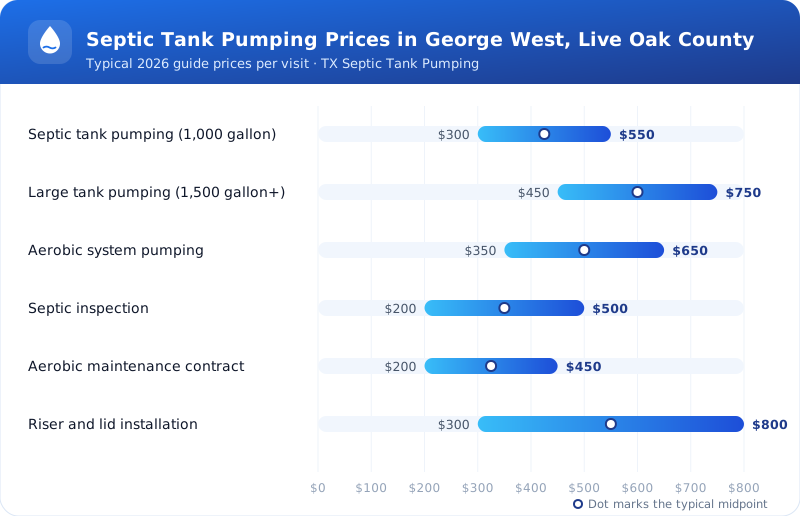
If your home has an aerobic system, the yearly maintenance contract matters as much as the pump-out. Aerobic units depend on air and mechanical parts, and a neglected unit can fail in ways a standard tank does not. The comparison below shows the main differences for a George West homeowner.
| Feature | Standard Septic Tank | Aerobic Treatment Unit |
|---|---|---|
| Main upkeep | Pump-out when sludge builds up | Pump-out plus regular maintenance visits |
| Yearly contract | Not required by the system itself | Commonly needed, guide $200 to $450 per year |
| Pumping guide price | $300 to $550 for 1,000 gallon | $350 to $650 |
| Moving parts | Few or none | Air pumps, controls, and possibly effluent pumps |
| Example repair guide | Drain field repair, $2,000 to $10,000 | Effluent pump replacement, $800 to $1,800 |
Planning a Rural Pump-Out from Your George West Address
Rural addresses can be harder to find, so give the company your full street address and a note that names the nearest road or landmark. If your property has a gate, a long drive, or a buried lid under landscaping, mention it when you book. Clearing the path before the crew arrives keeps the visit short and reduces the chance of an unexpected charge for extra time.
Before the truck arrives, prepare these items:
- Clear access to the lid and the tank area
- Mark or describe the tank location for the crew
- Keep pets and children away from open lids
- Note any recent drain or toilet problems to share with the crew
- Ask in advance whether a weekend or emergency visit adds a charge, since the guide range is $100 to $300 extra
- Have your payment method ready