Septic tank pumping companies · Lee County
Listings last refreshed October 16, 2026
Best Septic Tank Pumping in Giddings [Reviewed & Ranked]
1 septic tank pumping company in Giddings, ranked by Pump Score using Google reviews and profile data.
✓ How we rankFree directory, no pay-to-rank
Searching for septic tank pumping giddings tx usually means one of two things. Either the tank is due for service, or the system has started acting up and you want to know who can come out. Giddings is in Lee County, and this directory currently lists one local company for ZIP code 78942. This page explains what a pumping visit involves, what the work typically costs, how often most households should pump, and when it makes sense to look beyond town.
Top Rated Septic Tank Pumping Companies in Giddings Compared
Compare the top picks side by side. Full write-ups follow below.
| # | Septic Company | Best for | Score | Rating | Verified |
|---|---|---|---|---|---|
| #1 | J & P Service, Inc. - Service Center | A local septic company you can call direct | 3.5 | 6 reviews | — |
Giddings Septic Tank Pumping Reviews and Ratings
1. J & P Service, Inc. - Service Center
Best for: A local septic company you can call direct
1011 PR 77036 reviews
Score breakdown and details
- Location
- Giddings · 1011 PR 7703, Giddings, TX 78942
- Track record
- New or lightly reviewed
- Rating
- 6 Google reviews
- Profile
- Unclaimed listing (Google data)
- Today
- Hours not published
Strengths
- Direct phone number published, no lead form in the way
- Has its own website with more detail on services
Watch Out For
Only 6 reviews so far, so the rating could still move. Worth asking about experience.
Our take: Our top pick in this area. A Pump Score of 3.5/10 reflects the best combination of rating, review depth and profile completeness here.
Hiring Local Septic Tank Pumping in Giddings
A septic tank holds solids and scum while liquids flow out to the drain field. Over time, sludge builds up in the bottom of the tank and scum forms on top. If the buildup gets high enough, solids can move toward the drain field and damage it. Pumping removes the sludge and scum before that happens. Most households pump every three to five years, but the right schedule depends on tank size, how many people live in the home, and what goes down the drain.
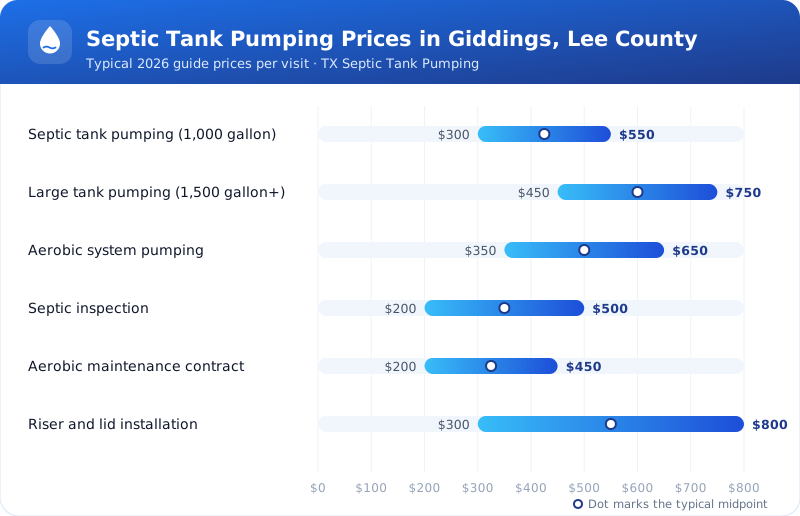
Everything here is a practical guide, not a quote. The prices are guide ranges, and the only way to get a firm number for your property is to ask a company for an estimate.
Who Pumps Septic Tanks in Giddings, TX Right Now
The directory lists one septic company based in Giddings, J & P Service, Inc., at 1011 PR 7703 in ZIP code 78942. The listing shows a phone number, (979) 542-0500, six Google reviews, and a company website. It is the only Giddings entry on this page, so it is the first place to start for local service.
A single local listing means you cannot compare several Giddings quotes here. Read the company entry below, call to confirm it serves your address, and keep the nearby towns in mind as a backup if you need a different schedule or a second opinion.
What Happens During a Septic Tank Pumping Visit
A standard pumping visit is short for most homes, but a few steps matter. Knowing them helps you ask the right questions when you book.
- Locate the tank lidThe technician finds the access lids. If they are buried, uncovering them is a separate line item that the guide list puts at $50 to $200.
- Open the lids and check the levelThe crew opens the tank and checks how much sludge and scum has built up. This tells them whether pumping is needed now.
- Pump out the tankThe truck removes the liquid, sludge, and scum. Solids should come out of the tank rather than being left to build up again.
- Inspect the tank and outletA good visit includes a look at the tank condition, the baffles, and the outlet so problems can be caught early.
- Close up and talk through the resultsThe lids go back on. Ask the technician what they found and how long they expect before the next pumping.
How Often Giddings Homes Should Pump Their Tanks
Three to five years is the common general guideline for pumping a conventional septic tank. The right interval for your home is usually shorter or longer depending on a few factors.
- A smaller tank fills faster, so it may need pumping more often than a larger one.
- More people in the house means more wastewater and more solids entering the tank.
- A garbage disposal adds food solids that build sludge faster.
- Heavy laundry use and frequent guests can shorten the interval.
- An aerobic system follows its maintenance schedule and manufacturer guidance, which is separate from the standard pumping interval.
- If you have never had the tank pumped or the age of the system is unknown, have it inspected before deciding on a schedule.
What Is the Pump in My Septic Tank?
Many homeowners ask this, and the answer depends on the system. Most conventional tanks have no pump at all. Gravity moves liquid from the tank to the drain field. Some systems use a pump chamber with an effluent pump that moves treated wastewater to the drain field. Aerobic systems use an aerator and other parts that need regular service.
Pumping out the tank is different from replacing or servicing an effluent pump. The tank pump-out is the sludge and scum removal described above. An effluent pump replacement is a repair, and the guide range for that work is $800 to $1,800. If you are not sure which type you have, ask the technician to identify the parts during the visit.
What Not to Flush or Pour Down the Drain
The fastest way to shorten the time between pumpings is to send the wrong materials into the system. Most of the common problems come from a short list of items.
- Wipes, including those labeled flushable, which do not break down like toilet paper
- Feminine hygiene products, diapers, and paper towels
- Cooking grease, oil, and fat poured down the sink
- Coffee grounds and large amounts of food scraps
- Paint, solvents, motor oil, and other chemicals
- Medications, which can harm the bacteria that help break down waste
- Strong drain cleaners and heavy bleach use in large amounts
- Heavy daily use of a garbage disposal
Warning Signs Between Pumpings and What a Full Tank Looks Like
When a septic tank is full, wastewater has nowhere to go. The most common result is slow drains, gurgling pipes, and toilets that back up or drain slowly. Sewage odors inside or outside the home can also point to a problem. A tank that is full can push solids toward the drain field, which is costly to repair.
The table below lists common signs and a sensible next step. None of them confirms a specific cause on its own, so treat them as reasons to call for an inspection rather than a diagnosis.
| What you notice | What it may point to | What to do next |
|---|---|---|
| Toilets drain slowly or gurgle | The tank may be full or the outlet is blocked | Stop heavy water use and schedule a pumping and inspection |
| Several drains back up at once | Wastewater is not leaving the tank | Call for service soon and avoid running large loads |
| Sewage smell in the yard or house | A tank, lid, or line problem | Call a company and keep people and pets away from the area |
| Wet or unusually green ground over the drain field | Effluent may be surfacing | Have the system inspected before it worsens |
| Standing water over the drain field | Drain field saturation or failure | Stop water use and get a professional inspection |
Texas Rules for Septic Systems and Where to Check
The Texas Commission on Environmental Quality, known as TCEQ, regulates on-site sewage facilities across the state, which includes most septic systems on private property. TCEQ rules set the framework for how systems are designed, installed, and maintained.
Local requirements, permits, and inspection steps can vary from one area to another, and this page does not list permit fees or county-specific ordinances. Before you install, repair, or change a system, check with TCEQ and the appropriate local authority for Lee County to confirm what applies to your property.
Questions to Ask Before Booking J & P Service in Giddings
A short phone call makes the first visit smoother. Use these questions to confirm the details that matter for your home.
- Do you serve my address in Giddings and the surrounding area?
- Is locating and uncovering the lid included, or is it an added charge?
- Will the visit include an inspection of the tank and outlet, or only pumping?
- If I have an aerobic system, do you offer a maintenance contract?
- Do you charge extra for weekend or emergency callouts?
- What is the estimate for my tank size, and what could change the final price?