Septic tank pumping companies · Kaufman County
Listings last refreshed October 16, 2026
Best Septic Tank Pumping in Crandall: Local Pros Compared
1 septic tank pumping company in Crandall, ranked by Pump Score using Google reviews and profile data.
✓ How we rankFree directory, no pay-to-rank
Septic tank pumping in Crandall, TX is a job most homeowners need every few years, and choosing a provider here is simpler than in a big city. Our directory lists one pumping company based in town, A Plus Environmental LLC, with 49 Google reviews. That does not make the decision automatic. You still need to know what to ask, what a fair price looks like, and how to tell when the tank is due.
Top Rated Septic Tank Pumping Companies in Crandall Compared
Compare the top picks side by side. Full write-ups follow below.
| # | Septic Company | Best for | Score | Rating | Verified |
|---|---|---|---|---|---|
| #1 | A Plus Environmental LLC | Saturday appointments | 6.6 | 49 reviews | — |
Crandall Septic Tank Pumping Reviews and Ratings
1. A Plus Environmental LLC
Best for: Saturday appointments
13305 County Rd 412449 reviews
Score breakdown and details
- Location
- Crandall · 13305 County Rd 4124, Crandall, TX 75114
- Track record
- Growing review base
- Rating
- 49 Google reviews
- Profile
- Unclaimed listing (Google data)
- Today
- See hours on profile
Strengths
- 49 Google reviews, a well established track record
- Direct phone number published, no lead form in the way
- Has its own website with more detail on services
- Opening hours published
Watch Out For
The Google profile is not owner verified. Double check the address and phone when you call.
Our take: Our top pick in this area. A Pump Score of 6.6/10 reflects the best combination of rating, review depth and profile completeness here.
Hiring Local Septic Tank Pumping in Crandall
Crandall sits in Kaufman County, and many homes in the area rely on an on-site system instead of a city sewer line. The tank holds solids while bacteria break down what is left. Over time the solids build up, and if nobody pumps them out, they can move toward the drain field and damage it. The Texas Commission on Environmental Quality, or TCEQ, regulates on-site sewage facilities across the state, but the everyday care of the tank falls to the homeowner.
This page covers how to find and vet a pumper, when to schedule service, what the guide prices look like, and what to do when a backup has already started. Use it as a planning guide, then call the company listed below or any other provider you find and compare the answers.
Finding a Septic Pumper in Crandall, TX
Our directory currently lists one company for Crandall, A Plus Environmental LLC. The listing shows 49 Google reviews, a company website, and a phone line at (972) 426-8461. Open days run Monday through Saturday, so a non-urgent pumping visit is best scheduled on a weekday or on Saturday. If your tank needs attention on a Sunday, expect to find out early whether the company offers emergency service.
With one company in town, you cannot compare several bids side by side inside Crandall. You can still compare by asking the same questions on the phone and writing down the answers. Ask about tank size, whether the system is conventional or aerobic, what the quote includes, and whether a trip or weekend charge applies. If you live near the edge of town, ask whether the company covers your address, since providers in nearby towns such as Seagoville, Forney and Terrell may serve homes around Crandall too.
Questions to Ask Before Booking Crandall Septic Service
A short phone call can save a second trip. Write these questions down before you dial, and note the answers next to the date of the call. A clear, specific answer is a good sign. A vague one is a reason to ask again or call someone else.
- What is the tank size in gallons, and does the price match that size?
- Is the system a conventional tank or an aerobic unit?
- Does the quote include locating and uncovering the lid, or is that extra?
- Will a riser and lid be needed if the access point is buried?
- Does a trip charge, weekend callout or emergency fee apply?
- Will the technician check sludge and scum levels and record them for you?
- Will the technician inspect the baffles and any effluent filter?
- Is there a written invoice that lists each service performed?
Warning Signs Your Crandall Tank Needs Pumping
A tank rarely fails all at once. The signs usually build over weeks or months, and they often show up in the house before they show up in the yard. None of these signs proves a failure by itself, but two or more together mean the tank should be checked soon.
Watch for these patterns in the house and around the property. The drain field is worth a walk-around after a wet spell, since surface problems show up there first.
- Slow drains in several fixtures at the same time, not just one sink.
- Gurgling sounds in pipes when water runs, or when a toilet is flushed.
- Sewage odor near the tank lid, around the drain field, or inside the house.
- Soggy ground or unusually lush, green grass over the drain field, especially in dry weather.
- Backups in the lowest fixtures, such as a floor drain or a shower on the ground level.
Pumping Intervals by Household and Tank Use
Most household septic tanks are pumped every 3 to 5 years. That range is a starting point, not a rule. The actual schedule depends on how many people live in the home, how much water they use, and whether a garbage disposal sends extra solids into the tank. Ask your pumper to measure sludge and scum levels at each visit, then adjust the schedule based on what they find.
The table below shows how common household situations usually change the timing. Use it to decide whether to keep the standard schedule or move the next visit up.
| Household situation | Suggested approach |
|---|---|
| Standard household with normal water use | Pump every 3 to 5 years, then confirm with a level check |
| Garbage disposal in regular use | Plan on the shorter end of the range |
| Several people or frequent heavy laundry days | Check sooner than the standard schedule |
| Small tank for the number of bedrooms | Ask the pumper whether an earlier visit makes sense |
| Aerobic system | Follow the maintenance contract and the provider's schedule |
Conventional Tanks Versus Aerobic Units
Knowing which type of system you have changes what you should ask for and what you should expect. The two main types differ in how they treat waste, how they are maintained, and what the routine service costs.
| Feature | Conventional tank | Aerobic unit |
|---|---|---|
| How waste is handled | Solids settle and bacteria break them down slowly | Air is added to speed treatment before the effluent leaves the unit |
| Routine care | Periodic pumping and inspection | Regular maintenance contract plus periodic pumping |
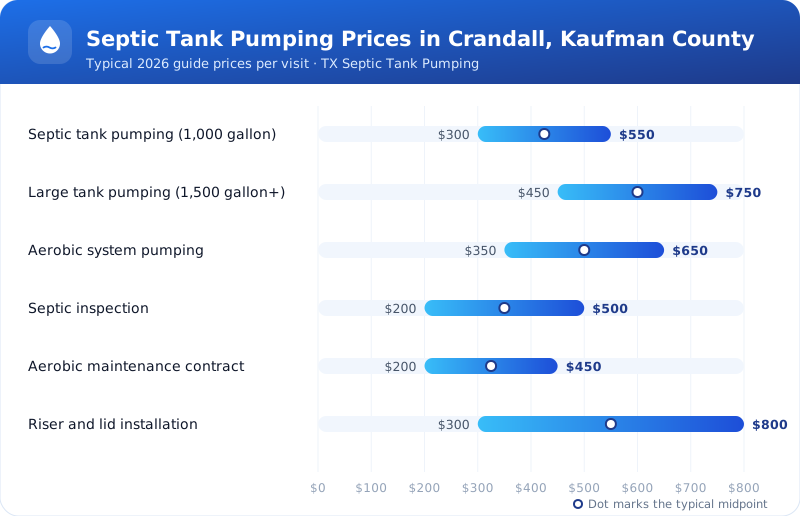
| Guide pumping cost | $300 to $550 for 1,000 gallons | $350 to $650 for pumping |
| Guide yearly service cost | Not usually a contract item | $200 to $450 for a maintenance contract |
| Warning sign to watch | Slow drains and sewage odor | Alarm lights, unusual sounds or wet spots over the unit |
Backups Are a Stop Water and Call Today Situation
If sewage is backing up into sinks, tubs or floor drains, stop running water right away. Avoid flushing, and keep showers and laundry on hold until a pumper has looked at the system. Waste that has nowhere to go will keep coming back into the house, so waiting usually makes the cleanup worse.
Emergency and weekend callouts carry extra fees. On the guide, an emergency or weekend callout adds $100 to $300 on top of the regular job. Tell the provider exactly what you are seeing, including where the water is showing up, so the technician can plan the visit.
What Happens on a Septic Pumping Visit
A standard pumping visit follows a predictable order. Knowing the steps helps you judge whether the work was done properly and whether the invoice matches the service.
- Locate and open the access lidThe technician finds the tank and uncovers the lid. If the access point is buried, this step can add cost, so confirm it up front.
- Measure sludge and scumLevels are checked to see how full the tank is. This is the best guide for setting the next pumping date.
- Pump out the contentsThe solids and liquids are removed from the tank and carried off for proper disposal.
- Check the baffles and tank conditionBaffles that keep solids from leaving the tank should be intact. Cracks or damage should be reported to you in writing.
- Inspect the effluent filter if one is presentA dirty filter can let solids reach the drain field, so the technician should clean it or tell you it needs attention.
- Review the findings and the next dateAsk for a plain summary of what was found, and set a reminder for the next visit based on the level check.
What Not to Flush or Pour Into a Septic Tank
A septic tank depends on bacteria and on solids settling out of the wastewater. Anything that disrupts that balance or fills the tank faster shortens the time between pumping visits. A simple rule helps: flush only human waste and toilet paper, and send everything else to the trash.
- Wipes, including those marketed as flushable, which often do not break down in the tank.
- Feminine hygiene products, diapers and paper towels.
- Grease, cooking oil and fats poured down the sink.
- Chemical drain cleaners and large amounts of bleach or other harsh cleaners.
- Coffee grounds, egg shells and other solids from the kitchen sink.
- Paint, solvents, motor oil and pesticide containers.