Septic tank pumping companies · Hunt County
Listings last refreshed October 16, 2026
Best Septic Tank Pumping in Greenville [2026 Update]
1 septic tank pumping company in Greenville, ranked by Pump Score using Google reviews and profile data.
✓ How we rankFree directory, no pay-to-rank
Septic tank pumping in Greenville, TX is a service most homeowners only search for after a drain backs up or the yard starts to smell wrong. Planning ahead costs less. A tank pumped on schedule keeps solids from moving into the drain field, where repairs run far higher than a routine visit.
Top Rated Septic Tank Pumping Companies in Greenville Compared
Compare the top picks side by side. Full write-ups follow below.
| # | Septic Company | Best for | Score | Rating | Verified |
|---|---|---|---|---|---|
| #1 | Collin County Septic Design & Evaluation | Checking services and hours online before you call | 4.6 | 8 reviews | — |
Greenville Septic Tank Pumping Reviews and Ratings
1. Collin County Septic Design & Evaluation
Best for: Checking services and hours online before you call
3417 Cornelia St8 reviews
Score breakdown and details
- Location
- Greenville · 3417 Cornelia St, Greenville, TX 75401
- Track record
- New or lightly reviewed
- Rating
- 8 Google reviews
- Profile
- Unclaimed listing (Google data)
- Today
- See hours on profile
Strengths
- Direct phone number published, no lead form in the way
- Has its own website with more detail on services
- Opening hours published
Watch Out For
Only 8 reviews so far, so the rating could still move. Worth asking about experience.
Our take: Our top pick in this area. A Pump Score of 4.6/10 reflects the best combination of rating, review depth and profile completeness here.
Hiring Local Septic Tank Pumping in Greenville
This page covers the septic company listed in Greenville, what pumping typically costs in Texas, how often different systems need service, and what to ask before you book. Greenville sits in Hunt County, and our directory currently lists one septic company in town with eight Google reviews. That is a thin local field, so the questions below matter more than they would in a larger city.
Use the guide prices and intervals as starting points, then confirm details by phone. Ask what the company pumps, whether it services aerobic systems, and how it charges for after-hours or weekend work. The sections below walk through each step in order.
The One Septic Company Listed in Greenville Right Now
Collin County Septic Design & Evaluation is the only company in our Greenville listing. It is located at 3417 Cornelia St in ZIP code 75401, and the phone number is (903) 203-8250. The listing shows a website and weekday hours from Monday through Friday. It has eight Google reviews.
The company name points toward design and evaluation work rather than routine tank pumping, so do not assume the service is included. Call first and ask directly whether the company pumps residential tanks, what tank sizes it handles, and whether it works on aerobic systems. Our directory describes only what the listing shows, and that is the reason this page asks you to confirm each service by phone.
If the company you call does not pump tanks, ask for a referral. A reputable septic business will usually know who serves nearby towns and can point you to a firm that does the work.
Questions to Ask Before You Book a Pump-Out in Greenville
Bring these questions to your first call. The answers will tell you whether the company fits your system and how the bill will look once the crew arrives.
- Do you pump standard 1,000 gallon residential tanks, and do you handle larger tanks?
- Do you service aerobic systems, and do you offer a yearly maintenance contract?
- Is locating and uncovering the lid included, or is it billed separately?
- What is the charge for a weekend or after-hours callout?
- Will the crew check the baffles and the effluent filter while the tank is open?
- Do you travel to nearby towns such as Caddo Mills, Farmersville or Nevada, and is there a travel fee?
- Will you give a written receipt that lists the tank size, the pumping date and the next recommended service?
What Happens During a Typical Greenville Pumping Visit
A standard visit follows the same general sequence no matter which company does the work. Knowing the steps helps you ask better questions and spot a rushed job.
- Confirm access and the tank locationPoint the crew to the tank and the access lid. If you do not know where the tank is, the company may need to locate it, which can add a separate fee.
- Uncover the lid and risersAccess lids sit at or just below grade. If the lid is buried, the crew may need to dig it out, and a riser installation can make future service faster and cheaper.
- Pump out the solids and scumThe crew removes the liquid and sludge from the tank. Ask whether they pump the entire contents or only part of it, because a partial pump does not clear the tank fully.
- Inspect the baffles and effluent filterWhile the tank is open, the technician should check the inlet and outlet baffles and clean or inspect the effluent filter if your system has one. Damaged baffles can let scum reach the drain field.
- Record the service and set the next dateKeep the receipt with the date and tank size. Mark the next pumping on your calendar, usually based on household use and the last visit.
Pumping, Inspection, and Maintenance Contracts Compared
Homeowners often mix up three services. They do different jobs, and the right choice depends on what you need to learn or fix.
Pumping removes the solids and liquid from the tank. It is the service that actually clears the tank. Inspection checks the condition of the tank, baffles, lid and drain field, and it can tell you the sludge level before you commit to a pump-out. A maintenance contract is a yearly agreement that schedules service and checks on the system, and it is most common for aerobic systems, which need regular attention under Texas rules and manufacturer guidance.
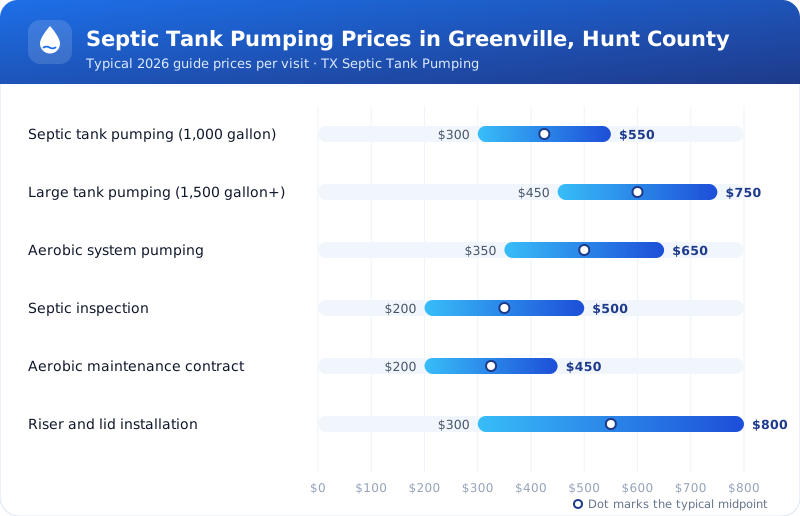
A practical rule: if you have never pumped the tank or do not know when it was last cleaned, pump first and inspect while the tank is open. If the system is an aerobic unit, a maintenance contract is usually the easier route. A guide price for each service appears in the pricing section below.
Warning Signs That Mean Call a Septic Company Now
Some problems give a clear signal long before a full backup. Treat any of the following as a reason to schedule a pump-out and inspection rather than waiting for the next routine date.
Call soon if you notice slow drains throughout the house, gurgling pipes, sewage odors near the tank or drain field, soggy or unusually green ground over the drain field, or toilets that back up when you run water elsewhere. Several of these signs together usually mean the tank is full or the drain field is struggling.
- Slow drains in several fixtures at once
- Gurgling in plumbing after water is used
- Sewage odor around the tank or drain field
- Wet spots or lush grass over the drain field
- Backups when water is running elsewhere in the home
What Should Never Go Into a Greenville Septic Tank
Many failures start with items that should never enter the system. These materials can clog the tank outlet, damage the drain field or upset the bacteria that break down waste.
- Grease, cooking oil and fat poured down the sink
- Wipes, even those labeled flushable
- Feminine hygiene products, diapers and paper towels
- Chemical drain cleaners and solvents, including paint and motor oil
- Coffee grounds, egg shells and other food scraps beyond what the disposal can handle
- Heavy water use all at once, such as several loads of laundry on the same day
Acreage, Permits, and the 10 Acre Question in Hunt County
Buyers and builders in and around Greenville often ask about lot size before they plan a septic system. Texas regulates on-site sewage facilities through the Texas Commission on Environmental Quality, and local permitting authorities can add requirements. The rules depend on the property, the soil and the permitting agency.
This page cannot confirm a Hunt County minimum acreage or a specific 10 acre rule, so do not treat any number here as final. Before you buy land or plan an installation, contact TCEQ and the local permitting office. A site evaluation by a licensed professional will show whether the soil and lot can support the system you want.
What to Bring to the Permitting Office
Bring the lot address, a plat or survey if you have one, the planned home size and the water use you expect. Ask the office which forms apply and whether a site evaluation is required before a permit is issued.
Why Soil Matters More Than Lot Size Alone
Clay soils common across North Texas drain slowly and can swell when wet. A drain field that looks fine on a large lot may still fail if the soil cannot absorb effluent well. Ask for the soil evaluation results in writing.