Septic tank pumping companies · Hopkins County
Listings last refreshed October 16, 2026
Best Septic Tank Pumping in Como [2026 Update]
1 septic tank pumping company in Como, ranked by Pump Score using Google reviews and profile data.
✓ How we rankFree directory, no pay-to-rank
If you are searching for septic tank pumping como tx, you are probably looking at a tank that has not been emptied in a while, or you want to get ahead of a problem before it turns into a backup. Como sits in Hopkins County in Northeast Texas, and the local choice is short. This page explains how to tell your tank is due, what a pumping visit involves, what the main cost ranges look like, and how to book the one provider we currently list in town.
Top Rated Septic Tank Pumping Companies in Como Compared
Compare the top picks side by side. Full write-ups follow below.
| # | Septic Company | Best for | Score | Rating | Verified |
|---|---|---|---|---|---|
| #1 | J&K Wastewater LLC | A local septic company you can call direct | 3.4 | 5 reviews | — |
Como Septic Tank Pumping Reviews and Ratings
1. J&K Wastewater LLC
Best for: A local septic company you can call direct
334 Co Rd 14815 reviews
Score breakdown and details
- Location
- Como · 334 Co Rd 1481, Como, TX 75431
- Track record
- New or lightly reviewed
- Rating
- 5 Google reviews
- Profile
- Unclaimed listing (Google data)
- Today
- See hours on profile
Strengths
- Direct phone number published, no lead form in the way
- Opening hours published
Watch Out For
Only 5 reviews so far, so the rating could still move. Worth asking about experience.
Our take: Our top pick in this area. A Pump Score of 3.4/10 reflects the best combination of rating, review depth and profile completeness here.
Hiring Local Septic Tank Pumping in Como
Septic systems in Texas are regulated by the Texas Commission on Environmental Quality as on-site sewage facilities. Many homes run a conventional tank that sends liquid to a drain field, while others have an aerobic treatment unit that needs more regular attention. Pumping removes the sludge and scum that collect in the tank. Those solids can flow toward the drain field if they are left too long, and that is the expensive failure. Most households pump every three to five years, though the right interval depends on tank size, household size, and how much water the home uses each day.
How Our Como Listing Is Built
We rank septic companies by Pump Score, and the Como results appear in that order between this introduction and the rest of the guide. Right now there is one company in the town, so the ranked list has a single entry. That entry shows five Google reviews and a 5 star rating based on those reviews. A count that small means one or two customers can move the average a great deal, so treat the rating as a starting point rather than a verdict.
Use the listing to make the first call, then ask your own questions. Find out how the company handles tanks that are buried deeply, what they charge to locate a lid, and whether they can give you a written note of the pump date and the next recommended interval. A short, direct conversation tells you more than any single review count.
Warning Signs Your Como Septic Tank Is Due
Any one of these signs can have other causes, but several together usually mean solids have built up enough to need pumping. Check the list against what you see in the house and yard.
- Drains run slowly throughout the house, not just at one fixture
- Sewage smells near the tank, over the drain field, or inside the home
- Gurgling pipes, or toilets that bubble when water runs somewhere else
- Soggy ground or unusually green grass over the drain field
- Wastewater backing up into tubs, showers, or floor drains
- The tank has not been pumped in three to five years, or nobody remembers when it was last done
What a Pumping Visit Involves
A standard visit follows a fairly predictable sequence. The steps below describe the general process for a conventional tank, so you know what to expect and what to ask about before the truck arrives.
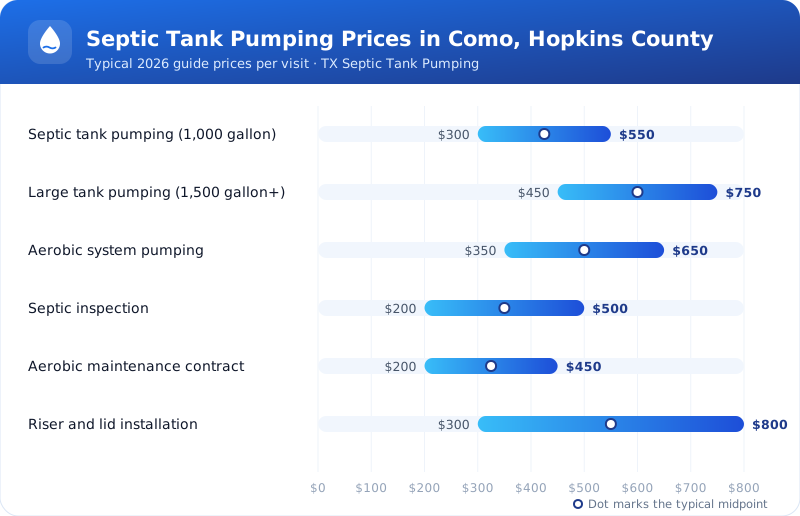
- Locate and uncover the lidSeptic tanks are buried, and the lid may be covered by soil or landscaping. Locating and uncovering the lid is often a separate charge, with a guide range of $50 to $200.
- Measure the layersThe technician checks how deep the sludge sits at the bottom and how thick the scum is at the top. These measurements show whether the tank is near capacity.
- Pump the contentsThe truck removes the solids and liquid from the tank. The crew should also confirm that the tank is emptied fully rather than partly.
- Check the baffles, outlet, and filterInspect the inlet and outlet baffles for damage, and look at the effluent filter if the system has one. A cracked baffle or clogged outlet can send solids into the drain field.
- Record the service and set the next dateAsk for a written record of the pump date and the next recommended interval. Keep that paper with your home records, since it helps when you sell the property or call a provider later.
Aerobic Systems and Maintenance Contracts Around Como
Not every home in the area has the same kind of system, and the difference matters for both cost and routine care. The two common types are covered below.
Conventional Tanks
A conventional tank separates solids from liquid and sends the liquid to the drain field. Pumping is the main routine task, and most homeowners schedule it every few years. Outside of that, the system needs little daily attention, though you should still avoid flushing products that do not break down.
Aerobic Treatment Units
An aerobic unit adds air to treat wastewater more thoroughly, and it relies on pumps, electrical parts, and sometimes alarms that need checking. Aerobic systems generally need a yearly maintenance contract, with a guide range of $200 to $450 per year. Pumping an aerobic unit is priced separately, at a guide range of $350 to $650.
Ridex and Other Septic Additives
Many homeowners ask whether Ridex or a similar additive can replace pumping. Septic additives are sold as a way to help break down solids, but they do not remove sludge that has already built up in the tank. A tank full of solids still needs to be emptied. Read the product label, and ask your provider or the installer before adding anything, since some products may disturb the bacterial balance in an aerobic unit or conflict with how a system was designed.
Can a Septic Tank Go Twenty Years Without Pumping?
Some tanks do run for long stretches without visible trouble, but going twenty years without pumping is a real gamble. Solids build up slowly, and once they reach the outlet they can travel into the drain field and clog the soil. The three to five year interval is a general guide, not a rule that fits every home.
A small household with a large tank may stretch longer between visits. A large family, heavy laundry use, or a garbage disposal adds more solids and may call for pumping sooner. The only reliable way to decide is an inspection, which carries a guide range of $200 to $500. The inspection measures the sludge and scum layers and tells you whether pumping is due now or can wait.
Cheapest Septic System to Install and What Drives the Price
The cheapest system to install is usually the one your lot, soil, and local requirements allow. Our guide ranges do not include a price for a conventional system, so we will not guess at one. A new aerobic system installed falls in the $8,000 to $18,000 guide range. Repairs can cost far more than routine care, with drain field repair at $2,000 to $10,000 and an effluent or septic pump replacement at $800 to $1,800.
Several factors push the price of a new system up or down, and these are worth raising with any installer before you accept a bid.
- Soil type, since East Texas clay drains slowly and may need a larger or different drain field
- Tank size and whether the design calls for a larger unit
- Site access for equipment, including trees, fences, and slopes
- Permit requirements, which you should confirm with TCEQ or the relevant local office before work begins
- Whether the system is conventional or aerobic, and the maintenance that comes with each
Questions to Ask Before You Book a Pump Out
A short list of questions can save time and prevent surprises on the day of service. Ask these before you schedule, and write down the answers.
- What is the tank size, and what is the guide price for that size?
- Is locating and uncovering the lid included, or billed separately?
- Will the crew inspect the baffles and outlet during the visit?
- Is there an extra fee for weekend or emergency service?
- Can you provide a written record of the pump date and next interval?
- If the system is aerobic, is a maintenance contract available, and what does it cover?