Septic tank pumping companies · Harris County
Listings last refreshed October 16, 2026
Best Septic Tank Pumping in Channelview: Top Rated & Trusted
1 septic tank pumping company in Channelview, ranked by Pump Score using Google reviews and profile data.
✓ How we rankFree directory, no pay-to-rank
Septic tank pumping in Channelview, TX is a job most homeowners only think about when a drain starts gurgling or a toilet slows down. The best time to plan is before that happens. Our directory currently lists one company for septic tank pumping in Channelview, TX: TAS tank wash, located at 127 Bayou Dr in ZIP code 77530, with four Google reviews. That short list changes how you should shop, so this page is built to help you compare on the things that matter.
Top Rated Septic Tank Pumping Companies in Channelview Compared
Compare the top picks side by side. Full write-ups follow below.
| # | Septic Company | Best for | Score | Rating | Verified |
|---|---|---|---|---|---|
| #1 | TAS tank wash | A local septic company you can call direct | 1.6 | 4 reviews | — |
Channelview Septic Tank Pumping Reviews and Ratings
1. TAS Tank Wash
Best for: A local septic company you can call direct
127 Bayou Dr4 reviews
Score breakdown and details
- Location
- Channelview · 127 Bayou Dr, Channelview, TX 77530
- Track record
- New or lightly reviewed
- Rating
- 4 Google reviews
- Profile
- Unclaimed listing (Google data)
- Today
- Hours not published
Watch Out For
Only 4 reviews so far, so the rating could still move. Worth asking about experience.
Our take: Our top pick in this area. A Pump Score of 1.6/10 reflects the best combination of rating, review depth and profile completeness here.
Hiring Local Septic Tank Pumping in Channelview
This guide covers what a pumping visit involves, how to spot a tank that is due, what guide prices look like across Texas, and which state rules govern on-site sewage systems. It also explains how to handle a thin local listing, including where to look when the closest option is not a good fit. Most households pump every three to five years, but that range is only a starting point. Household size, tank size, garbage disposal use and the type of system you have all change the real schedule.
How Pumping Works for a Channelview Home
A standard septic system in the Channelview area usually starts with a tank buried in the yard. Wastewater from the house flows in, solids settle to the bottom, and grease and lighter material float to the top. The liquid in the middle moves out to a drain field, where the soil treats it. Over time the solids layer grows. When it gets thick enough, it can carry solids toward the drain field and clog the soil, which is the expensive failure most owners want to avoid.
Pumping removes the accumulated sludge and scum so the tank has room to work again. The pumper locates the tank, uncovers the access lid, empties the contents with a vacuum truck and inspects the baffles and outlet. The waste is hauled away for proper disposal. A good pumping visit is also a useful checkup, because the condition of the tank and its parts often shows up while the lid is open.
Signs a Channelview Tank Is Due for Pumping
Clear signs are useful, but none of them is a formal test. Use this list to decide whether to call a pumper, not to diagnose the whole system. Waiting until a backup happens usually costs more, because a stressed drain field is harder and more expensive to fix than a tank that was pumped on time.
- Drains run slowly, especially when several fixtures are used at once
- Gurgling sounds from plumbing after flushing or running water
- Sewage odor near the tank, the drain field or inside the house
- Wet, soft or unusually green ground over the drain field
- Wastewater backing up into tubs, showers or floor drains
- Toilets that drain slowly or need several flushes
- Solids visible in the tank or the outlet when the lid is opened
What Happens During a Pumping Visit
A typical visit follows the same basic order whether the tank is near the surface or buried deep. Knowing the steps helps you ask better questions when you call, and it helps you spot a rushed job.
- Confirm access and locationTell the pumper where the tank sits and whether you know the lid location. If the lid is buried, ask about locating and uncovering it, which is a separate line item in most price guides.
- Expose the lidThe crew digs or clears soil so the access lid can be opened safely. Risers, which are extensions that bring the lid to the surface, make future visits faster and cheaper.
- Pump the tankA vacuum truck removes the liquid and sludge. The pumper checks how much solid material came out, which gives a rough sense of how overdue the tank was.
- Inspect the partsThe pumper looks at the baffles, the outlet and any effluent filter. Damaged baffles or a clogged filter can send solids into the drain field, so these parts deserve a close look.
- Close up and keep recordsThe lid is replaced and the area is backfilled. Ask for a written record of the visit, including the date and any issues found, and keep it with your home papers.
Gravity Tanks Versus Aerobic Systems Near Channelview
Pumping is only part of the picture. Many homes have a basic gravity tank, but some have an aerobic treatment system that adds air to the wastewater and needs regular service. The two cost different amounts to maintain, so check your system type before you call anyone. Your installation paperwork or your permit file should show which one you have.
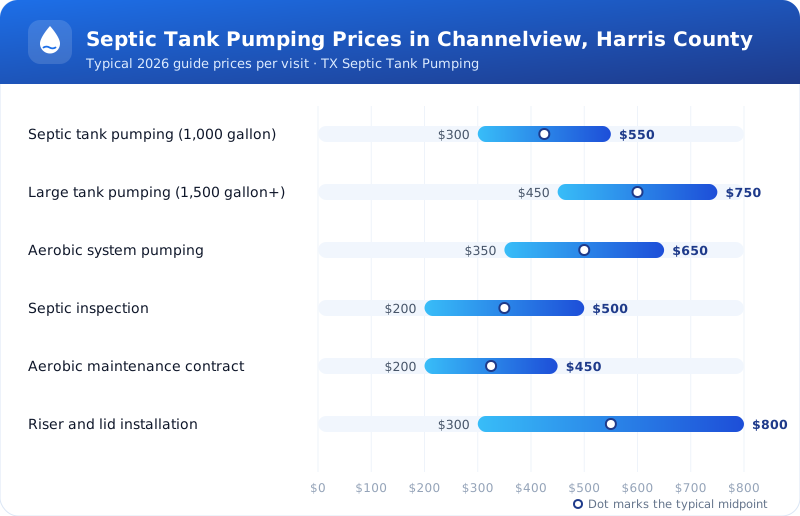
| System type | How it works | Upkeep | Guide price |
|---|---|---|---|
| Standard gravity tank, 1,000 gallon | Settles solids and sends liquid to the drain field | Pump every 3 to 5 years | $300 to $550 |
| Larger gravity tank, 1,500 gallon or more | Same process with more capacity | Pump on schedule, often with more gallons to remove | $450 to $750 |
| Aerobic treatment system | Adds air to treat wastewater, often with a pump and a dispersal method | Pumping plus a yearly maintenance contract | $350 to $650 pumping, $200 to $450 contract |
What an Aerobic Contract Covers
Aerobic systems have moving parts and electrical components, so they usually come with a maintenance agreement. A contract typically covers inspections and service visits, but the exact terms vary by provider. Read what is included, what costs extra and how emergency calls are handled before you sign anything.
What Not to Flush or Pour Into a Septic Tank
Most septic trouble starts with what goes down the drain. The items below either fail to break down or harm the bacteria that treat wastewater in the tank. Post this list near the laundry room or kitchen sink if the household includes guests or children.
- Wipes, including products labeled flushable, which usually do not break down
- Grease, cooking oil and fat poured down the sink
- Paint, solvents, motor oil, pesticides and other chemicals
- Feminine hygiene products, diapers and cotton balls
- Coffee grounds and large amounts of food scraps
- Large amounts of bleach or harsh drain cleaners
- Unused medications
Texas Rules That Apply to Your Septic System
The Texas Commission on Environmental Quality, usually called TCEQ, regulates on-site sewage facilities in Texas, which includes most septic tanks and their drain fields. That state oversight sets the baseline for how systems are designed, installed and operated.
Local permitting and inspection requirements can also apply to your property. This directory does not list county fees, ordinances or inspection schedules, because those details change and depend on the exact address. For Channelview, check with the permitting authority that covers your property before a new installation or a major repair. Ask any contractor how the permit paperwork will be handled so nothing is missed.
Laundry, Water Use and Daily Habits
Water use is one of the easiest factors for a household to control. Large volumes of water enter the tank in a short window when several loads of laundry run back to back, and that gives solids less time to settle. Spreading loads across the week is a common recommendation for septic households, and it protects the drain field from heavy surges.
Fix leaks as soon as you notice them. A running toilet or a dripping faucet adds water to the system every day, even when nobody is home. Shorter showers and full loads of dishes also help, because they keep the volume flowing into the tank steady rather than bursty.
Choosing a Pumper When the Local List Is Short
With one company listed in Channelview, the choice may feel limited. Start with TAS tank wash, then ask whether it services your exact address and how quickly it can schedule a visit. Get the price in writing, confirm whether locating and uncovering the lid are included, and ask for a copy of the service record after the job.
If the local option does not fit, the nearest towns in the directory are La Porte at about 9 miles, Pasadena and Baytown at about 10 miles each, Crosby at about 10, Humble at 15 and Houston at 16. Related searches also point to larger regional names such as T.E.R. Septic, which describes service across the Greater Houston area. Confirm service coverage for your address before you book with any distant provider, since travel distance can affect scheduling and emergency response.