Septic tank pumping companies · Gregg County
Listings last refreshed October 16, 2026
2 Best Septic Tank Pumping Companies in Gladewater
2 septic tank pumping companies in Gladewater, ranked by Pump Score using Google reviews and profile data.
✓ How we rankFree directory, no pay-to-rank
Septic tank pumping in Gladewater TX is a small, local market. The directory currently lists two septic companies serving the city, both in ZIP code 75647 and both with Gladewater listings. A short list makes comparison easier, but it also means you should call early, especially if your toilets are already draining slowly or a smell is showing up near the yard.
Top Rated Septic Tank Pumping Companies in Gladewater Compared
Compare the top picks side by side. Full write-ups follow below.
| # | Septic Company | Best for | Score | Rating | Verified |
|---|---|---|---|---|---|
| #1 | Liberty City Septic | Checking services and hours online before you call | 5.3 | 17 reviews | — |
| #2 | Kilgore Septic Tank Service Inc | Weekend bookings, open Saturday and Sunday | 3.8 | 8 reviews | — |
Gladewater Septic Tank Pumping Reviews and Ratings
1. Liberty City Septic
Best for: Checking services and hours online before you call
6565 TX-13517 reviews
Score breakdown and details
- Location
- Gladewater · 6565 TX-135, Gladewater, TX 75647
- Track record
- Growing review base
- Rating
- 17 Google reviews
- Profile
- Unclaimed listing (Google data)
- Today
- See hours on profile
Strengths
- Direct phone number published, no lead form in the way
- Has its own website with more detail on services
- Opening hours published
Watch Out For
The Google profile is not owner verified. Double check the address and phone when you call.
Our take: Our top pick in this area. A Pump Score of 5.3/10 reflects the best combination of rating, review depth and profile completeness here.
2. Kilgore Septic Tank Service Inc
Best for: Weekend bookings, open Saturday and Sunday
237 Willow Creek Ranch Rd8 reviews
Score breakdown and details
- Location
- Gladewater · 237 Willow Creek Ranch Rd, Gladewater, TX 75647
- Track record
- New or lightly reviewed
- Rating
- 8 Google reviews
- Profile
- Unclaimed listing (Google data)
- Today
- See hours on profile
Strengths
- Direct phone number published, no lead form in the way
- Opening hours published
- Open on Saturdays
Watch Out For
Only 8 reviews so far, so the rating could still move. Worth asking about experience.
Our take: A strong shortlist option with a Pump Score of 3.8/10. Compare availability and price against the septic companies above.
Hiring Local Septic Tank Pumping in Gladewater
Most household septic tanks need pumping every three to five years. The right interval depends on tank size, how many people live in the home, whether the house has a garbage disposal, and how much water the household uses in a typical week. The sections below cover what to ask before you book, how to tell when a tank is full, what a pumping visit involves, and what the guide prices look like. The companies serving the city are listed further down the page in Pump Score order.
If you are not sure which kind of system you have, look for a lid or access point in the yard and check your paperwork from the home sale or original installation. Knowing whether you have a conventional tank or an aerobic system will change what the pumper needs to do and how much the visit costs.
Five Questions to Ask Before You Book in Gladewater
Both companies serving Gladewater can be reached by phone, and both list a local street address. Before you schedule, have answers ready to the questions below so you can compare the two on the same terms. A quick phone call usually settles most of them.
- Do you know the size of my tank, and does the price change for a 1,500 gallon or larger unit?
- Is my system a conventional tank with a drain field, or an aerobic system that needs its own servicing?
- Will you locate and uncover the lid, or is that a separate charge?
- Is there an added fee for a weekend or after hours visit?
- Can you give me a written estimate before any work starts?
How Often a Gladewater Home Tank Needs Pumping
The common guideline for a household septic tank is pumping every three to five years. That range is a starting point, not a rule that fits every property. A small household with one bathroom and light water use can often go longer between visits than a family of six with two laundry loads a day and a garbage disposal in the kitchen sink.
A 1,000 gallon tank is the most common size for a single family home, and it generally fills faster than a larger tank serving the same household. Solids settle to the bottom of the tank and build up over time, and the scum layer floats on top. When that buildup reaches the outlet baffle, solids can move toward the drain field, where they can clog the soil and shorten the life of the system.
Keep a simple record of each pumping date, the company used, and any notes the pumper made about the tank condition. That record helps you schedule the next visit and gives a future buyer or inspector a clear history.
Warning Signs That a Tank Is Full
A full tank rarely fails all at once. The first signs tend to show up inside the house, which is why many homeowners only notice the problem after it has been developing for months. The most common warning signs are listed below.
When a septic tank is full, wastewater has nowhere to go, so it backs up into the house pipes. Toilets can gurgle, flush slowly, or overflow, and drains in sinks and showers may run sluggish or bubble. If you see these signs, call a pumper promptly, because a backup can damage floors and fixtures and create a health hazard.
- Toilets that flush slowly or gurgle when another fixture is used
- Drains in sinks, tubs, or showers that empty more slowly than usual
- Sewage odor near the tank, the drain field, or inside the home
- Wet, soggy, or unusually green ground over the drain field, even in dry weather
- Water or sewage backing up into a tub or shower drain
- Gurgling sounds coming from the plumbing after a load of laundry
What Happens During a Septic Pumping Visit
A standard pumping visit is short, but the steps matter. A good pumper will check the system rather than only emptying the tank. The order below is typical for a conventional tank, though the exact process can vary from one company to the next.
- Locate the tank lidThe pumper finds the access lid, which may be buried under soil or sod. Locating and uncovering the lid can be a separate charge if the lid is hard to find.
- Open the access and inspect the tankLids are removed so the crew can see inside. They check the liquid level, the scum layer, and the sludge layer before pumping starts.
- Pump out the liquids and solidsThe truck removes the contents of the tank, including the sludge on the bottom and the scum on top, so the tank can be properly emptied and cleaned.
- Check the baffles and filterThe pumper looks at the inlet and outlet baffles and checks any effluent filter. Damaged baffles or a clogged filter can send solids to the drain field.
- Review the findings with youAsk the crew to note tank condition, any cracks or leaks, and when the next pumping is likely due. Keep that note with your records.
Conventional Tanks Versus Aerobic Systems in Gladewater
Many homes in the area have a conventional septic tank with a drain field, but some properties use an aerobic treatment unit. The two systems work differently, and the upkeep is not the same. Knowing which one you have will help you compare service quotes and budget for the year.
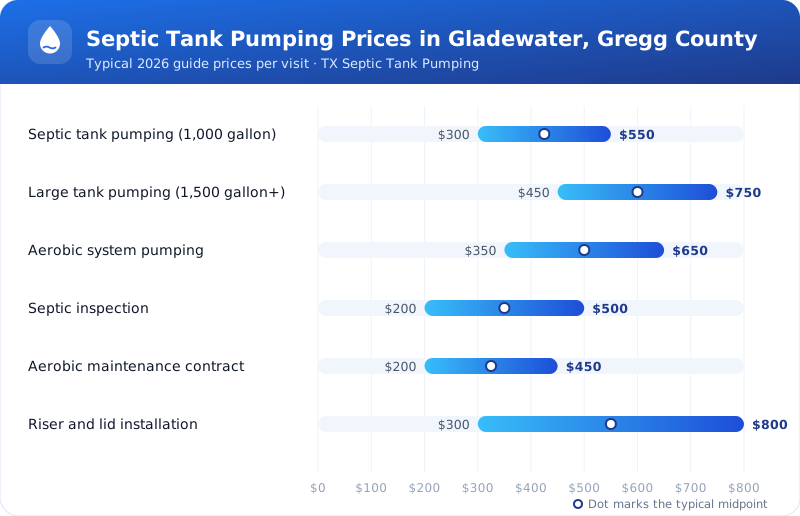
Aerobic systems add air to the wastewater to speed up treatment, and they usually need a maintenance contract with regular inspections. Pumping costs for aerobic systems are often higher than for a conventional tank of similar size.
| Feature | Conventional tank | Aerobic system |
|---|---|---|
| How it treats wastewater | Settles solids and sends liquid to a drain field | Adds air to speed treatment before water leaves the unit |
| Typical pumping need | Every three to five years for a household | Pumping plus regular servicing as the manufacturer and local rules require |
| Maintenance contract | Usually not required | Common, often around 200 to 450 dollars a year |
| Guide pumping price | 300 to 550 dollars for a 1,000 gallon tank | 350 to 650 dollars for an aerobic unit |
Does Ridex or Another Septic Additive Replace Pumping?
Homeowners often ask whether a septic additive such as Ridex can take the place of a pumping visit. Additives are sold with a range of claims, but the general view among septic professionals is that they do not remove the solid sludge that builds up in a tank. A product that breaks down some material in the tank still leaves the bulk of the solids in place.
Additives also do not repair a damaged drain field, a cracked tank, or a failed baffle. If your tank is full or your system is showing warning signs, the reliable fix is still a pumping visit and an inspection. Read the label, follow the instructions, and ask your pumper whether an additive makes sense for your specific system before you buy one.
Choosing Between Liberty City Septic and Kilgore Septic Tank Service Inc
Gladewater has two companies in the directory, and they suit different schedules. Liberty City Septic lists 17 Google reviews and is open Monday through Friday. Its address is 6565 TX-135 in ZIP code 75647, and the phone number is (903) 984-5849. If your tank needs attention during the working week, this company is a practical place to start.
Kilgore Septic Tank Service Inc lists 8 Google reviews and is open seven days a week. Its address is 237 Willow Creek Ranch Rd, also in ZIP code 75647, and it can be reached at (903) 984-2220. For homeowners who need service on a Saturday or Sunday, the open schedule is the main reason to call it first.
Both companies should be asked the same questions. Compare the written estimates, ask about the lid and any riser work, and confirm whether your system is conventional or aerobic before you pick a date.