Septic tank pumping companies · Gillespie County
Listings last refreshed October 16, 2026
Best Septic Tank Pumping in Harper: Trusted Local Experts
1 septic tank pumping company in Harper, ranked by Pump Score using Google reviews and profile data.
✓ How we rankFree directory, no pay-to-rank
If you are searching for septic tank pumping Harper TX, the first thing to know is that most tanks need attention on a schedule, not just when something smells wrong. Harper sits in Gillespie County in the Texas Hill Country, and the tank under your yard works the same way it does anywhere else. Solids settle to the bottom, grease and scum float to the top, and the liquid in the middle flows out to the drain field. Over time the solid layers grow until they start to carry over into the field, and that is when repairs get expensive.
Top Rated Septic Tank Pumping Companies in Harper Compared
Compare the top picks side by side. Full write-ups follow below.
| # | Septic Company | Best for | Score | Rating | Verified |
|---|---|---|---|---|---|
| #1 | Harper Pump Services | Trying a newer local septic company | 0.8 | — | — |
Harper Septic Tank Pumping Reviews and Ratings
1. Harper Pump Services
Best for: Trying a newer local septic company
898 Mosel RdNo reviews yet
Score breakdown and details
- Location
- Harper · 898 Mosel Rd, Harper, TX 78631
- Track record
- New or lightly reviewed
- Rating
- No Google reviews yet
- Profile
- Unclaimed listing (Google data)
- Today
- Hours not published
Strengths
- Direct phone number published, no lead form in the way
Watch Out For
No Google reviews yet. Ask for references or recent customers you can speak to.
Our take: Our top pick in this area. A Pump Score of 0.8/10 reflects the best combination of rating, review depth and profile completeness here.
Hiring Local Septic Tank Pumping in Harper
Pumping removes the sludge and scum so the tank can keep doing its job. For most households with a standard tank, pumping every three to five years is a common range, though the right interval depends on tank size, how many people live in the home, what goes down the drains, and whether a garbage disposal is in use. Homes with aerobic systems have a different routine, because those systems also need regular service visits and a maintenance contract on top of any pumping.
This page covers how often Harper homeowners should pump, what warning signs to watch for, how aerobic systems and the pumps inside them differ from a standard tank, and what guide prices look like in Texas. It also lists the pumper our directory currently shows for Harper, so you can compare it with options in nearby towns.
What to Ask Before You Book a Septic Pumper in Harper
Before you call anyone, gather a few details about your system. Most pumpers will ask the same questions, and having the answers ready shortens the call and helps you compare quotes that are actually comparable.
- Tank size in gallons, if you know it. A 1,000 gallon tank and a 1,500 gallon tank are priced differently.
- Whether the system is a standard septic tank or an aerobic treatment unit with a spray or drip field.
- Where the access lids are and whether you know the location of the tank.
- Whether the tank has a riser and lid that reach the surface, or whether the lids are buried under soil or gravel.
- How many people live in the home and whether you use a garbage disposal.
- The date of your last pumping, and whether an inspection was done at that time.
- Whether the company charges extra for weekend or emergency visits, and what the callout fee is.
How Often a Harper Septic Tank Needs Pumping
Pumping intervals are a starting point, not a fixed rule. A small household with a large tank may go longer between visits, while a busy home with a small tank may need pumping sooner. The table below gives general guidance for common setups. Your own inspection report, if you have one, should carry more weight than any general chart.
| System type | Typical pumping interval | What shortens the interval |
|---|---|---|
| Standard septic tank, 1,000 gallons | About every 3 to 5 years | Large household, garbage disposal, heavy water use |
| Standard septic tank, 1,500 gallons or more | Often longer than a 1,000 gallon tank, checked by inspection | Same factors, but bigger volume buys time |
| Aerobic treatment unit | Pumping and service on a schedule set by the maintenance provider | Heavy use, sludge buildup, or a failed component |
| Tank with a grease trap or separate grease unit | Grease removed more often than solids in many homes | Commercial kitchens or heavy cooking waste |
Signs That a Harper Septic Tank Is Overdue
Some warning signs point to a tank that is full or a drain field that is already stressed. Slow drains can come from many causes, so look at the pattern. If several fixtures slow down at once, or if sewage backs up into the lowest drain in the house, call a pumper and a licensed inspector without waiting.
- Drains and toilets run slowly across the whole house, not just in one fixture.
- Gurgling sounds in plumbing when water is running.
- Sewage odor near the tank, the drain field, or inside the house.
- Soggy or unusually green patches over the drain field, especially after dry weather.
- Sewage backing up into a shower, tub, or the lowest drain in the home.
- Effluent alarm sounding on an aerobic system.
The Pump in Your Septic Tank Is Not Always a Tank Pump
Many homeowners ask what the pump in their septic tank is for, and the answer depends on the system. A conventional septic tank works by gravity. Wastewater flows in, solids settle, and the clearer liquid leaves through an outlet to the drain field. In that setup there is usually no pump inside the tank itself, so the question often comes from a different component nearby.
Systems that need a pump usually have a separate chamber, a pump vault, or an aerobic unit. A pump moves treated effluent to the drain field or a spray area when gravity alone will not do the job, for example when the field sits higher than the tank or when the system is designed to dose the field on a timer. Aerobic systems use a pump or blower to add air, and they also rely on electrical controls, alarms, and sometimes a separate effluent pump.
If you are not sure what your pump does, look for a control panel near the tank or near the house, check the owner's manual, and ask your pumper to label each part during service. Replacing an effluent pump is a separate repair from pumping out the tank, and the cost is handled differently.
Effluent Pumps and Aerobic Systems
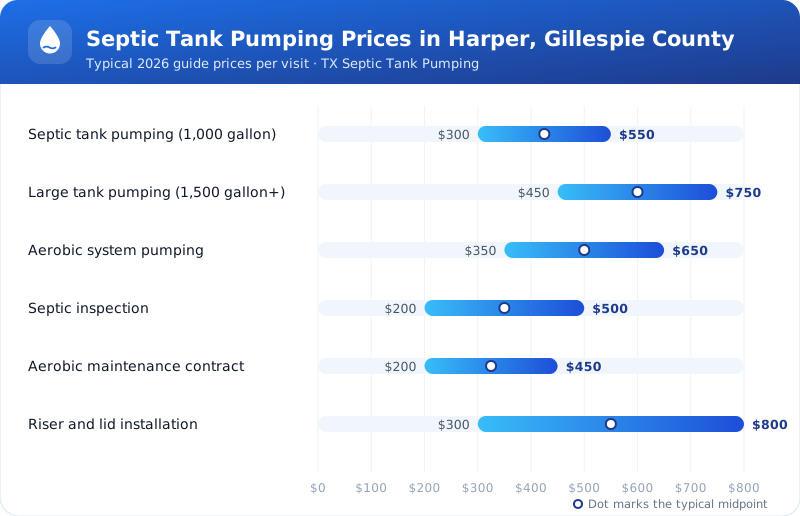
An effluent pump moves liquid out of the treatment area. When it fails, the system may stop discharging, and an alarm will often sound. Guide prices for replacing a septic or effluent pump in Texas run about $800 to $1,800, depending on the unit and the access. Aerobic systems usually need a maintenance contract, which in Texas guide terms runs about $200 to $450 per year, so ask whether a pump inspection is part of the contract.
Aerobic Systems Need Service Beyond Pumping
Aerobic treatment units are more mechanical than standard tanks, and they need routine attention even when the tank is not full. Pumping is only one part of the job. A regular service visit usually checks the air supply, the discharge, the alarm, and the spray or drip components, along with the level of solids in the chamber.
- Keep a written log of service dates, pumping dates, and any alarms.
- Do not pour bleach, drain cleaners, paint thinner, or grease down the drain, since these can upset the biology inside the unit.
- Keep the air and discharge components accessible, and do not drive over the spray area.
- Ask whether the maintenance contract includes pumping, parts, and after-hours calls.
- Replace the effluent filter on the schedule the manufacturer or service provider recommends.
Rules, Permits, and the 10 Acre Question in Gillespie County
On-site sewage facilities in Texas are regulated by the Texas Commission on Environmental Quality, known as TCEQ. Permitting, design, installation, and some repair work can fall under state rules, and local offices may also have a role. Our directory does not list county-specific permit fees or local ordinances for Gillespie County, so check those details with TCEQ or the county before you plan a project.
Homeowners often ask about the 10 acre rule. Whether it applies to a particular lot depends on how the land was divided, what the permit says, and which agency is involved, so it is not something to assume from memory or from a neighbor's experience. Ask your pumper what paperwork they need from you, and ask the permitting authority to confirm the requirements for your property before you dig, add a bedroom, or change the system.
Reaching Harper Pump Services
Harper Pump Services is the business our directory currently lists for Harper in ZIP 78631. The listing shows the following contact details, and you should confirm the current hours, service area, and pricing directly with the company before scheduling. Our directory does not rate or review the business, so use the details below as a starting point for your own questions.
Business name: Harper Pump Services. Address: 898 Mosel Rd, Harper, TX 78631. Phone: (830) 864-4877. Keep the list from the earlier checklist handy when you call so you can compare the answers you get against other options in nearby towns.
Steps to Take Before a Pumper Arrives in Harper
A little preparation keeps the visit efficient and lowers the chance of a surprise charge. These steps work for most rural properties in the Hill Country, where access to the tank may take longer than in town.
- Find the tank and the lidsWalk the yard and locate the lids. If they are buried, note the rough distance from the house or a fixed landmark so the crew can find them faster.
- Clear the accessMove vehicles, pets, and stored items away from the lids. Trim brush that blocks the route from the driveway.
- Limit water useAvoid running the washer, dishwasher, or long showers on the day of the visit, so the tank is not diluted or disturbed before the crew arrives.
- Ask about the lid searchIf you cannot find the lids, ask about a locating and uncovering charge. Guide prices for that work run about $50 to $200.
- Request a written summaryAfter pumping, ask for a note that states the date, the tank size, what was removed, and any issues found, and keep it with your records.