Septic tank pumping companies · Floyd County
Listings last refreshed October 16, 2026
Best Septic Tank Pumping in Floydada: Trusted Local Experts
1 septic tank pumping company in Floydada, ranked by Pump Score using Google reviews and profile data.
✓ How we rankFree directory, no pay-to-rank
If you are searching for septic tank pumping Floydada TX, you will find one company in our directory that serves the town: Saenz Pumping Service, at 124 W Hallie St in ZIP 79235. This page explains what pumping involves, how to tell a conventional tank from an aerobic unit, what Texas expects from on-site systems, and what to ask before you hire anyone.
Top Rated Septic Tank Pumping Companies in Floydada Compared
Compare the top picks side by side. Full write-ups follow below.
| # | Septic Company | Best for | Score | Rating | Verified |
|---|---|---|---|---|---|
| #1 | Saenz Pumping Service | A local septic company you can call direct | 1.9 | 2 reviews | — |
Floydada Septic Tank Pumping Reviews and Ratings
1. Saenz Pumping Service
Best for: A local septic company you can call direct
124 W Hallie St2 reviews
Score breakdown and details
- Location
- Floydada · 124 W Hallie St, Floydada, TX 79235
- Track record
- New or lightly reviewed
- Rating
- 2 Google reviews
- Profile
- Unclaimed listing (Google data)
- Today
- Hours not published
Strengths
- Direct phone number published, no lead form in the way
Watch Out For
Only 2 reviews so far, so the rating could still move. Worth asking about experience.
Our take: Our top pick in this area. A Pump Score of 1.9/10 reflects the best combination of rating, review depth and profile completeness here.
Hiring Local Septic Tank Pumping in Floydada
Most homeowners only call for septic service after a drain backs up or the yard starts to smell. A tank that is pumped on a regular schedule rarely gets that far. Outside a municipal sewer connection, the septic tank is the first and most important stage of treatment for the whole house, and the drain field downstream depends on solids staying in the tank where they belong. Treating pumping as a planned maintenance item is cheaper than repairing a field that has already been damaged.
Read the sections below before you pick up the phone. They cover the pumping visit itself, the cost ranges you should expect, what can and cannot go down the drain, and the warning signs that mean you should not wait for the next scheduled visit.
How Septic Pumping Works in Floydada Homes
A septic tank holds wastewater long enough for solids to settle to the bottom and for grease to float to the top. Bacteria break down some of the material, but they cannot break down everything, so sludge builds up over the years. Pumping removes the sludge and scum layers so that only clarified liquid moves out to the drain field.
The usual guidance for a conventional tank is to pump every three to five years. Household size, daily water use, and tank size all change that timing. A household running laundry every day will fill a tank faster than a couple who are home very little. If the system has never been opened, the first visit is a good time to have the tank checked and to ask the technician what the sludge layer looked like.
Conventional Tank or Aerobic System: How to Tell Which You Have
The two system types look different above ground and need different care. Check your installation papers first. If you cannot find them, the equipment on site usually answers the question. An aerobic unit often has a control panel or alarm near the house, and it may have a pump chamber and spray or drip parts in the yard.
| Feature | Conventional tank | Aerobic treatment unit |
|---|---|---|
| How it treats waste | Settles solids and relies on bacteria in the tank and drain field | Adds air so bacteria treat wastewater more actively before disposal |
| Typical visible parts | Buried tank, access lid, drain field | Tank with pump chamber, air source, control panel, spray or drip area |
| Routine upkeep | Pumping about every three to five years | Pumping plus regular service and a yearly maintenance contract |
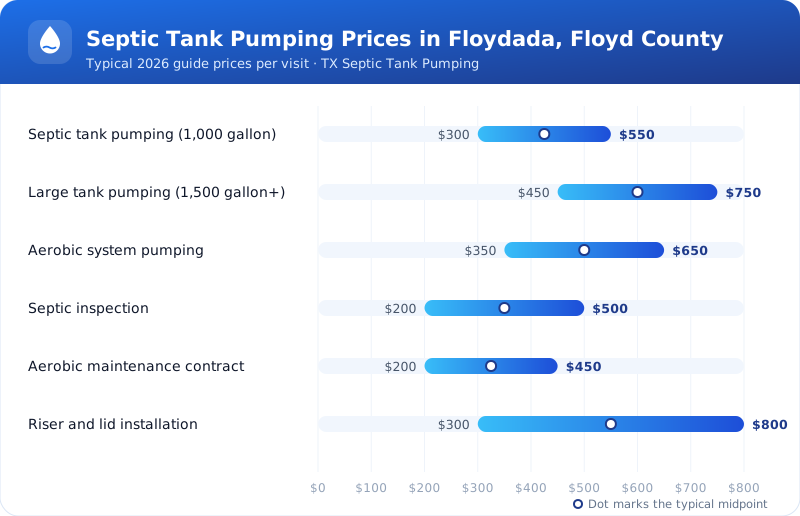
| Guide price for pumping | $300 to $550 for a 1,000 gallon tank | $350 to $650 for aerobic system pumping |
| Common repair | Drain field repair, $2,000 to $10,000 | Septic or effluent pump replacement, $800 to $1,800 |
What Happens During a Pumping Visit
A standard pumping visit follows the same basic sequence whether the tank is in town or out on a rural lot. Knowing the steps helps you judge whether the work was done properly.
- Locate and uncover the lidThe technician finds the access point and clears soil from it. If the lid is buried or the tank has no riser, uncovering the lid can add to the bill.
- Open and inspectThe tank is opened and the technician checks the liquid level, the scum layer, and the sludge depth before pumping starts.
- Pump out solids and scumThe sludge and scum are removed from the tank. Liquid is pumped only as needed to clear the solids safely.
- Check the baffles and outletA good visit includes a look at the inlet and outlet baffles and the tee, since damaged baffles let solids escape toward the drain field.
- Record the visitAsk for a written note of the date, the sludge condition, and the next recommended pumping interval so the record stays with the property.
Questions to Ask Saenz Pumping Service Before You Book
Saenz Pumping Service is the only company listed for Floydada in our directory. Because the public review record is small, a short phone call is the most useful step you can take. Ask these questions before you agree to a visit.
- Do you service the type of system I have, whether that is a conventional tank or an aerobic unit?
- Does the price include locating and uncovering the lid, or is that billed separately?
- Is there an extra charge for emergency or weekend callouts, and how much is it?
- Will you check the baffles and outlet during the visit, and will I get written notes?
- Where does the pumped waste go, and can you tell me the disposal site?
- If the drain field or pump needs work, will you give me a written estimate before starting?
What Belongs Down the Drain and What Does Not
Toilet paper is the most common question about aerobic systems. Use paper that breaks down quickly and flush it in ordinary amounts. Aerobic systems need more care than conventional tanks because their pumps and spray or drip parts clog more easily when fed the wrong material.
- Keep wipes out of the toilet, including products labeled flushable, because they do not break down the way toilet paper does.
- Do not pour cooking grease or oil down the sink or drains.
- Avoid coffee grounds, diapers, feminine products, and paper towels.
- Skip chemical drain cleaners, paint, solvents, and motor oil, which can harm the bacteria that treat wastewater.
- Do not use garbage disposals heavily, since they add solids that fill the tank faster.
- Spread laundry loads through the week rather than running several in one day.
Texas Rules for Septic Systems: What to Check Before Work Starts
The Texas Commission on Environmental Quality regulates on-site sewage facilities across the state, including septic tanks and aerobic systems. Local permit requirements and inspection steps can differ from one county to another, and this directory does not list permit fees or local ordinances for Floyd County. Check with the local authority that handles on-site sewage permits and ask your provider how they document each job so the records stay with your property.
Warning Signs Your Floydada Septic System Needs Service Now
Some symptoms mean the tank is full or the drain field is struggling. Do not wait for the next scheduled visit if you notice any of these.
- Slow drains or toilets that gurgle across several fixtures at once.
- Sewage odors in the house or around the tank and drain field.
- Soggy, unusually green, or spongy ground over the drain field.
- Sewage backing up into tubs, showers, or floor drains.
- An alarm or warning light on an aerobic unit control panel.
- Standing water near the tank lid, especially after a rain.