Septic tank pumping companies · Ector County
Listings last refreshed October 16, 2026
Best Septic Tank Pumping in Gardendale: Local Pros Compared
1 septic tank pumping company in Gardendale, ranked by Pump Score using Google reviews and profile data.
✓ How we rankFree directory, no pay-to-rank
Septic tank pumping in Gardendale, TX is a job most homeowners only think about after a warning sign shows up, like a slow sink, a soggy patch in the yard, or a smell near the drain field. That timing matters. Waiting until the system is failing can turn a routine pump-out into a much larger repair.
Top Rated Septic Tank Pumping Companies in Gardendale Compared
Compare the top picks side by side. Full write-ups follow below.
| # | Septic Company | Best for | Score | Rating | Verified |
|---|---|---|---|---|---|
| #1 | Septic Force Systems LLC | A local septic company you can call direct | 2.6 | 5 reviews | — |
Gardendale Septic Tank Pumping Reviews and Ratings
1. Septic Force Systems LLC
Best for: A local septic company you can call direct
10778 E Emerson St5 reviews
Score breakdown and details
- Location
- Gardendale · 10778 E Emerson St, Gardendale, TX 79758
- Track record
- New or lightly reviewed
- Rating
- 5 Google reviews
- Profile
- Unclaimed listing (Google data)
- Today
- Hours not published
Strengths
- Direct phone number published, no lead form in the way
Watch Out For
Only 5 reviews so far, so the rating could still move. Worth asking about experience.
Our take: Our top pick in this area. A Pump Score of 2.6/10 reflects the best combination of rating, review depth and profile completeness here.
Hiring Local Septic Tank Pumping in Gardendale
A septic system is simple in concept. Wastewater from the house flows into a buried tank, solids settle to the bottom, grease and scum float to the top, and the liquid moves out to a drain field where the soil does the final filtering. Solids build up over time, so most tanks need pumping every three to five years. How often yours needs it depends on tank size, how many people live in the home, and how much water and waste goes down the drain. The Texas Commission on Environmental Quality regulates on-site sewage facilities across the state, so the basic framework is statewide.
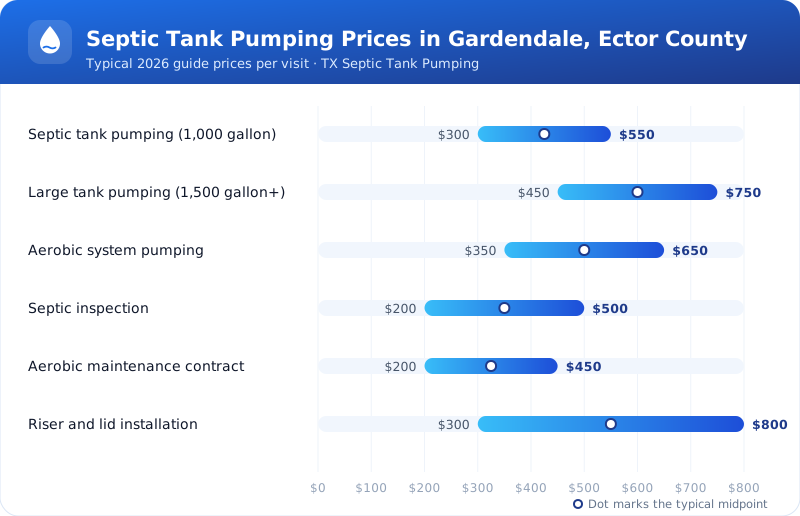
This page covers what to know before you call, how often a tank typically needs service, what the guide prices look like, and the one company our Gardendale data currently includes. Use the guidance here to judge any quote you receive.
Septic Force Systems LLC Is the Gardendale Company on This List
Our Gardendale data currently includes one ranked company. Septic Force Systems LLC is listed at 10778 E Emerson St in Gardendale, ZIP code 79758, with the phone number (432) 703-8027. It has 5 Google reviews. The ranked listing appears below this section in the order set by its Pump Score.
Our entry does not include a list of services, so this page does not claim what the company does or does not offer. Call before you book and ask directly about the work you need, whether that is a standard pump-out, a lid uncovering, an inspection, or service on an aerobic unit.
A single company is a limited comparison. Gardendale is small, and nearby cities such as Odessa and Midland may have providers that serve your address. Check each company's service area yourself rather than assuming a crew will travel to your lot.
How Often Your Gardendale Septic Tank Needs Pumping
The three to five year guideline is a starting point, not a fixed rule. Several factors push a tank toward more frequent service, and a few let it go longer between visits. Check your situation against this list before you decide when to book.
For most homes with a standard tank, a written service log is the simplest tool. Record the date, the tank size, and what the crew found each time. Over a few cycles, you will see how quickly your tank fills.
- Tank size: a 1,000 gallon tank fills faster than a 1,500 gallon tank serving the same household.
- Household size: more people means more wastewater and more solids entering the tank each day.
- Garbage disposal use: ground food scraps add solids that settle in the tank and need to be removed.
- Water use: long showers, frequent laundry, and leaking fixtures all push more water through the system.
- Service history: a tank with no known pumping record may need service sooner than the usual interval.
- Warning signs: slow drains or sewage odors mean the tank may already be near capacity, regardless of the calendar.
Warning Signs That a Septic Tank in Gardendale Is Full
When a tank fills beyond its useful level, wastewater has nowhere to go but back toward the house or out onto the yard. Watch for these signs, especially if more than one appears at the same time.
A single slow drain can be a clog in a pipe, but slow drains in several fixtures at once point more strongly to the tank or the drain field. Act quickly when you notice more than one sign.
What a Full Tank Does to Your Toilet
When the tank is full, a toilet may flush slowly, the bowl may fill higher than normal, or water may rise in the bowl after you run a sink or shower. Some homeowners notice the toilet gurgling when they run the washing machine. All of these point to the same problem: the tank cannot accept more liquid.
Stop using large amounts of water right away. Skip laundry, long showers, and dishwasher runs until the system is checked. Continued use can push sewage back into the house drains or onto the ground above the tank and drain field, which creates a health risk and a much more expensive repair.
- Slow drains in several sinks, tubs, or showers at the same time.
- Gurgling sounds from toilets or drains, especially after running water elsewhere in the house.
- Sewage odor inside the home or near the tank lid and drain field.
- Wet, spongy, or unusually green grass over the drain field, even during dry weather.
- Water backing up into a shower or tub when a toilet flushes.
What Texas Rules Mean for a Gardendale Septic System
The Texas Commission on Environmental Quality regulates on-site sewage facilities, which covers the septic systems used across the state. Statewide rules set the baseline for how systems are designed, installed, and maintained, so the core expectations are consistent whether you live in a town or on a rural lot.
Our data does not include Ector County or Gardendale ordinance details, so this page does not list local permit fees, inspection rules, or filing deadlines. Before you install, repair, or modify a system, contact the local permitting authority for your address and confirm what applies to your property. Local rules can differ from the state baseline, and a quick call can prevent a costly correction later.
Laundry and Daily Water Habits That Protect a Septic Tank
Many homeowners ask how many loads of laundry a day a septic system can handle. There is no single number that fits every home. A tank does best when water arrives in steady, moderate amounts rather than in large bursts. Running several full loads back to back can push a large volume of water into the tank in a short time, which can stir up settled solids and send them toward the drain field.
A simple habit helps. Spread laundry across the week instead of stacking it into one day, and use the machine's lower water settings for smaller loads when your model offers them. Keep showers reasonable and run the dishwasher when it is full.
Leaks matter as much as laundry. A running toilet or a dripping faucet can add a steady stream of water to the tank every day, often without anyone noticing. Check toilet flappers and fixture seals, and repair leaks as soon as you find them. A tank that receives less unnecessary water has more room to separate solids and liquid.
What Never Goes Into a Septic Tank in Gardendale
Most septic problems start with something that should never have gone down the drain. Grease and wipes cause the most trouble for many tanks, and harsh chemicals can harm the bacteria that help break down waste. The safest rule is simple: only toilet paper and human waste belong in the toilet, and only water and soap belong in the sink, tub, and shower.
Keep these items out of the system entirely.
- Grease, cooking oil, fats, and fatty food scraps poured down the sink.
- Coffee grounds, eggshells, and large amounts of food waste.
- Wipes, including those labeled flushable, along with paper towels and cotton swabs.
- Diapers, feminine hygiene products, and condoms.
- Cat litter and pet waste, which can carry germs and do not break down well.
- Paint, solvents, motor oil, pesticides, and large amounts of bleach or harsh drain cleaners.
- Medications, plastics, dental floss, and hair in quantity.