Septic tank pumping companies · Eastland County
Listings last refreshed October 16, 2026
Best Septic Tank Pumping in Cisco: Top Rated & Trusted
1 septic tank pumping company in Cisco, ranked by Pump Score using Google reviews and profile data.
✓ How we rankFree directory, no pay-to-rank
Septic tank pumping Cisco TX is a routine job for any home that runs its own sewage system, and in Cisco that usually means a conventional septic tank buried on a residential lot. The pumping itself is a short visit, but the decisions around it are where most homeowners get stuck. How often should the tank be emptied, what should the job cost, what warning signs matter, and whom should you call? This page answers those questions for Cisco and the surrounding part of Eastland County.
Top Rated Septic Tank Pumping Companies in Cisco Compared
Compare the top picks side by side. Full write-ups follow below.
| # | Septic Company | Best for | Score | Rating | Verified |
|---|---|---|---|---|---|
| #1 | Flying A Pumping | A local septic company you can call direct | 1.4 | 3 reviews | — |
Cisco Septic Tank Pumping Reviews and Ratings
1. Flying A Pumping
Best for: A local septic company you can call direct
Cisco3 reviews
Score breakdown and details
- Location
- Cisco · Cisco, TX 76437
- Track record
- New or lightly reviewed
- Rating
- 3 Google reviews
- Profile
- Unclaimed listing (Google data)
- Today
- Hours not published
Watch Out For
Only 3 reviews so far, so the rating could still move. Worth asking about experience.
Our take: Our top pick in this area. A Pump Score of 1.4/10 reflects the best combination of rating, review depth and profile completeness here.
Hiring Local Septic Tank Pumping in Cisco
Our directory currently lists one company with a Cisco address and ZIP 76437 for this search. That keeps the local picture simple, but it also means you should check every result carefully. Several listings for this keyword point to businesses that use the Cisco name in other parts of Texas, so the address and service area matter more than the name. The sections below cover the pumping schedule, warning signs, guide prices, and the questions people ask most often before they book.
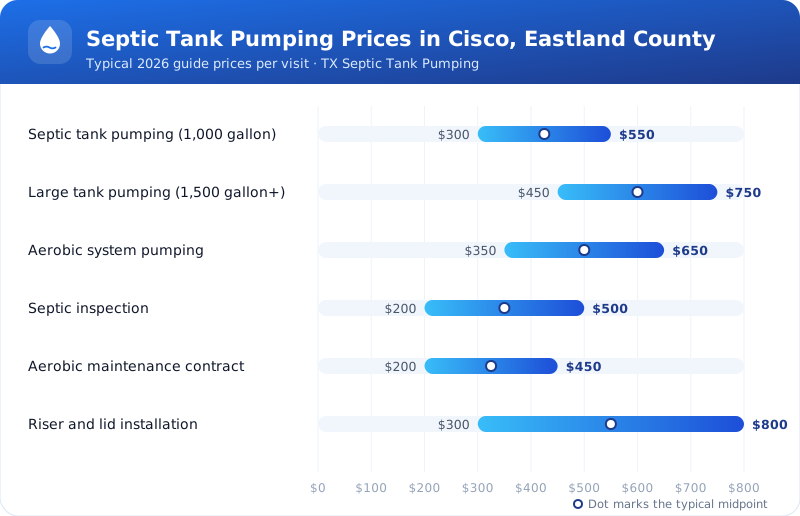
Nothing on this page is a quote. Prices are guide ranges, and the right interval for your tank depends on its size, the number of people in the house, and how much water and solid waste goes down the drain each week.
Who Handles Septic Pumping in Cisco Right Now
The companies below are the ones our directory ranks for Cisco, sorted by Pump Score. At the time of writing, that list has one entry: Flying A Pumping, listed with a Cisco address and ZIP 76437. Its Google profile shows 3 reviews and a rating of 4.3. Three reviews is a thin record, so treat the rating as a starting point for your own research rather than proof of how the work will go.
Read the entry against what you actually need. A single listing means you have fewer options to compare on price or availability, so the questions you ask on the phone matter more. Ask what the pumping price includes, whether a buried lid has to be located or uncovered, how far ahead the next opening is, and whether the visit includes a look at the tank's condition. Those answers will tell you more than the review count does.
How Often a Cisco Septic Tank Needs Pumping
Most conventional septic tanks need pumping every 3 to 5 years. That range is a general guide, not a schedule written for your property. A 1,000 gallon tank serving two adults may go longer than the same tank serving a family of five with a dishwasher, a garbage disposal, and laundry running most days.
Several factors push the interval shorter or longer:
- Tank size: smaller tanks fill faster, so they reach their limit sooner.
- Household size: more people means more water and solids entering the tank each week.
- Garbage disposal use: ground food adds solids that settle to the bottom and build up.
- Water use: long showers, heavy laundry days, and running toilets all push water through the system faster.
- Records: if the last pumping date is unknown, schedule an inspection before waiting any longer.
Signs Your Tank Is Overdue
A full tank rarely fails all at once. It usually sends signals through the house and the yard first. Watch for these warning signs, and treat several of them together as a reason to call.
One sign alone does not prove the tank is full, since a clogged fixture can cause slow drainage too. Several signs together, especially slow drains plus soggy ground over the field, call for a prompt visit. Waiting too long can turn a routine pumping bill into a drain field repair, which costs far more.
- Drains run slowly across several fixtures at the same time
- Gurgling sounds in the plumbing after flushing
- Sewage odor near the tank lid or over the drain field
- Wet or unusually lush green patches over the drain field
- Toilets that back up, especially after heavy water use
- Solids or scum reaching the outlet, which an inspection can confirm
What the Pumping Visit Involves, Step by Step
A standard visit follows the same general sequence no matter who performs it. Knowing the steps helps you ask better questions and spot anything that looks wrong.
Keep the yard clear and the tank lid accessible before the crew arrives. Pumping is much faster when nobody has to dig for the lid.
- Confirm access and the appointmentClear a path to the tank and point out the lid. If the lid is buried, expect a separate charge for locating and uncovering it.
- Open the tankThe crew finds the access lid, removes soil if needed, and opens the tank so the contents can be reached safely.
- Pump out the contentsA vacuum truck removes the sludge, scum, and liquid from the tank, then hauls the waste away for disposal.
- Inspect what is visibleWhile the tank is open, the crew can check the baffles, the outlet, and the tank walls for cracks or damage that pumping alone will not fix.
- Keep the paperworkAsk for a receipt that shows the date, the work performed, and any findings. File it with your home records so the next pumping date is easy to plan.
Ridex, Twenty-Year Gaps, and Other Septic Myths
Septic advice spreads quickly online, and some of it is wrong. The table below compares common claims with what general septic knowledge supports.
| Common claim | What holds up |
|---|---|
| Additives like Ridex mean I never need to pump | General septic guidance holds that additives do not replace pumping. Solids still build up and must be removed on schedule. Ask your pumper before adding any product. |
| A tank can safely go 20 years without pumping | Solids keep accumulating, and a tank left that long risks sending solids into the drain field. Pump on schedule and inspect the system regularly. |
| Pumping alone fixes slow drains | Pumping removes sludge, but slow drains can also come from clogged plumbing or a struggling drain field. If drains stay slow after pumping, ask for an inspection. |
| Flushable wipes are safe for septic tanks | Labels do not guarantee the material breaks down in a septic tank. Keep wipes out of the toilet. |
Why Cisco Septic Searches Can Lead to the Wrong Business
Searches for Cisco septic service return a mix of results, and not all of them serve Cisco. Some listings use the Cisco name for a business based in other places. Search results for this keyword include a Cisco Septic business described for San Antonio and another listing tied to Adkins, Texas. A matching name does not mean a company serves Eastland County.
Before you call, confirm the business address on the listing, the service area stated on its website, and the phone number on the page you clicked. A ZIP code of 76437 is a much stronger local signal than a name alone, and it is worth asking the company to confirm it covers your address.
The 10 Acre Question on Rural Cisco Property
Many people searching for Cisco septic help also ask about the 10 acre rule. The question comes up because lot size affects how on-site sewage systems are reviewed and permitted for rural property in Texas. The Texas Commission on Environmental Quality, or TCEQ, regulates on-site sewage facilities across the state, and local requirements can add to the state framework.
Do not rely on a rule of thumb from a neighbor or a forum post. If you are buying land, building a home, or replacing a system, confirm the current requirements with TCEQ and your county before you commit. Routine pumping of a tank you already have is a separate question from permitting a new system, so keep those two decisions apart when you plan.