Septic tank pumping companies · Denton County
Listings last refreshed October 16, 2026
Best Septic Tank Pumping in Lewisville [2026 Update]
1 septic tank pumping company in Lewisville, ranked by Pump Score using Google reviews and profile data.
✓ How we rankFree directory, no pay-to-rank
If you need septic tank pumping in Lewisville TX, the first thing to know is that this directory currently lists only one provider for the town. That changes how you should search and what you should check before you book. This page covers who is listed, how often a home septic tank usually needs pumping, the warning signs that mean you should call sooner, and what typical work costs in Texas during 2026.
Top Rated Septic Tank Pumping Companies in Lewisville Compared
Compare the top picks side by side. Full write-ups follow below.
| # | Septic Company | Best for | Score | Rating | Verified |
|---|---|---|---|---|---|
| #1 | Lewisville Wastewater Plant | Weekend bookings, open Saturday and Sunday | 4.2 | 5 reviews | — |
Lewisville Septic Tank Pumping Reviews and Ratings
1. Lewisville Wastewater Plant
Best for: Weekend bookings, open Saturday and Sunday
897 Sewage Treatment Plant Rd5 reviews
Score breakdown and details
- Location
- Lewisville · 897 Sewage Treatment Plant Rd, Lewisville, TX 75057
- Track record
- New or lightly reviewed
- Rating
- 5 Google reviews
- Profile
- Unclaimed listing (Google data)
- Today
- See hours on profile
Strengths
- Direct phone number published, no lead form in the way
- Has its own website with more detail on services
- Opening hours published
- Open on Saturdays
Watch Out For
Only 5 reviews so far, so the rating could still move. Worth asking about experience.
Our take: Our top pick in this area. A Pump Score of 4.2/10 reflects the best combination of rating, review depth and profile completeness here.
Hiring Local Septic Tank Pumping in Lewisville
A septic tank is a buried watertight container that holds household wastewater long enough for solids to settle and grease to float. Bacteria break down some of what remains, and the liquid moves out to the drain field. Solids build up over time. When the sludge layer gets too thick, it can carry into the drain field and clog the soil, and that repair costs far more than pumping. Regular pumping is the cheapest protection most owners have.
Who Is Listed for Lewisville Right Now
The directory has one listing with a Lewisville address: Lewisville Wastewater Plant, at 897 Sewage Treatment Plant Rd in ZIP 75057. It has five Google reviews, a website, and is listed as open every day of the week, around the clock. Those details are useful, but the listing name alone does not tell you whether the business pumps private residential septic tanks. Before you schedule anything, call the number on the listing, (972) 219-3545, and ask directly whether they service home septic tanks, how they handle aerobic units, and what they charge for a standard 1,000 gallon pumping.
Because the local field is so short, it helps to look at the wider Denton County area too. Highland Village sits about 4 miles away, with Grapevine and Argyle around 10 miles out. If nothing in Lewisville fits your system or your questions, you can widen the search to these neighboring towns. Ask any provider the same set of questions so you can compare answers on equal terms.
How Often a Lewisville Septic Tank Needs Pumping
Most septic tanks need pumping every 3 to 5 years. That range is a starting point, not a rule. The right interval depends on tank size, how many people live in the house, and how much water and waste goes down the drains. A household of four with a 1,000 gallon tank will usually need pumping sooner than a single occupant in the same tank, because more waste means more solids entering the tank each week.
Use these points to set your own schedule:
- Start with a pumping every 3 to 5 years as a baseline.
- Pump sooner if the household is large or runs a garbage disposal often.
- Pump sooner if the tank is small for the size of the home.
- Keep a written log with each pumping date and the tank size.
- Ask the provider to check the baffles and tank condition during each visit, then adjust the schedule based on what they find.
Warning Signs That Mean Call a Pumping Service Now
Some signs build up slowly, and others appear all at once. Treat any of the following as a reason to call a provider instead of waiting for the next scheduled visit. Several signs together usually point to a tank that is full or a drain field that is struggling.
- Drains and toilets run slowly across the whole house.
- Sewage odor near the tank, the drain field, or inside the home.
- Gurgling pipes, or toilets that bubble when water runs somewhere else.
- Wet, spongy, or unusually green grass over the drain field.
- Sewage backing up into a shower or floor drain.
- Standing water in the yard near the tank area.
What to Do If Sewage Backs Up Into the House
A backup into the house is urgent. Stop using water, keep people and pets out of the affected area, and call a provider right away. Most providers charge extra for emergency or weekend callouts, so ask about that when you call, but do not delay the call to avoid the extra fee.
How a Lewisville Pumping Visit Usually Goes
A standard visit is short, but a good provider does more than pump and leave. Knowing the steps helps you judge whether you received a complete service.
- Locate the tankThe crew finds the lid, which may be buried under soil or sod. Uncovering it can add a separate charge, so ask before the visit whether a riser would make future visits easier.
- Pump the contentsA truck removes the scum layer, the liquid, and the sludge. The sludge depth helps show how fast the tank is filling compared with its size.
- Inspect the tankAsk the provider to check the inlet and outlet baffles, the tees, and any effluent filter if one is installed. Damaged baffles can let solids leave the tank and reach the drain field.
- Review the findingsA good provider explains what they saw, records the pumping date, and tells you if repairs are needed. Request written notes for your records.
- Set the next visitUse the findings to choose a realistic interval for the next pumping. Ask for a reminder if the provider offers one.
Laundry, Drains and What Not to Flush at Home
Pumping only works as well as what happens between visits. Daily habits decide how fast solids build up and how hard the drain field has to work.
Spreading Out Laundry Loads
Spread laundry across the week rather than running several large loads in one day. A full day of washing can send more water into the tank than the soil can take in at once. Fix leaking faucets and running toilets quickly, because small leaks add up to a steady extra load.
Kitchen and Bathroom Habits
Scrape plates before washing, and use a garbage disposal sparingly, especially on a small or older tank. Wipes labeled flushable still do not break down the way toilet paper does, so keep them out of the toilet.
- Grease, cooking oil, and fat poured down the drain
- Wipes, paper towels, and cotton swabs
- Diapers and feminine hygiene products
- Coffee grounds and eggshells
- Paint, solvents, motor oil, and pesticides
- Harsh drain cleaners and chemicals that kill the bacteria the tank depends on
Aerobic Systems and Maintenance Contracts
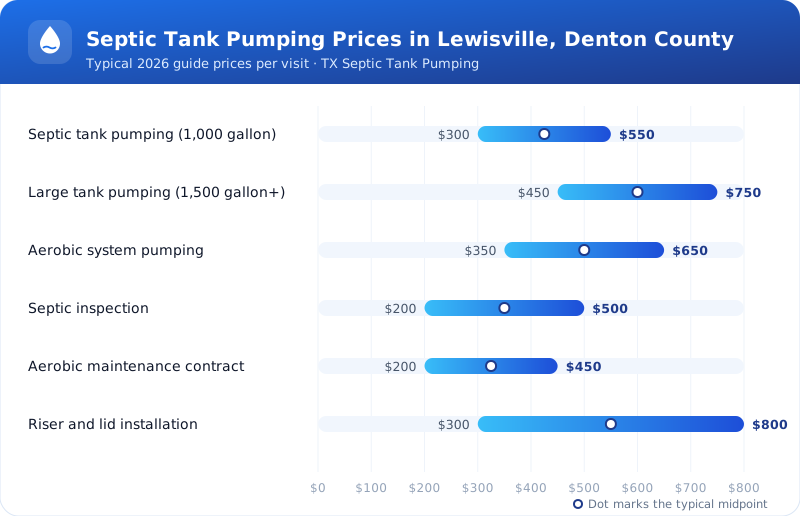
Some homes use an aerobic treatment unit instead of a standard tank. These systems add air to speed up the breakdown of waste, and they contain pumps, blowers, and controls that need regular service. Aerobic systems usually require a maintenance contract, and that upkeep is more involved than simple tank pumping. The guide price for pumping an aerobic unit runs from $350 to $650, and a yearly maintenance contract often runs $200 to $450. If you own one, ask whether the provider handles aerobic units specifically, not just standard septic pumping, and confirm how often the unit gets serviced.
Can You Install or Dig Your Own Septic System
Homeowners often ask this before a repair or a new build. In Texas, on-site sewage facilities are regulated by TCEQ, so a new system, a major repair, or a change to an existing system should go through the proper permitting process. Digging into a drain field, replacing components, or moving a system without the right approvals can cause legal and practical trouble when you sell the home or when a repair fails.
Before you start any installation or major digging, check with TCEQ and with the local permitting office for Lewisville or Denton County. Routine pumping of an existing tank is a different job, and it is the work most owners hire out. Keep the pumping records, inspection notes, and any permit paperwork together so you can show them to a buyer, a lender, or a future provider.