Septic tank pumping companies · Colorado County
Listings last refreshed October 16, 2026
Best Septic Tank Pumping in Eagle Lake: Top Rated & Trusted
1 septic tank pumping company in Eagle Lake, ranked by Pump Score using Google reviews and profile data.
✓ How we rankFree directory, no pay-to-rank
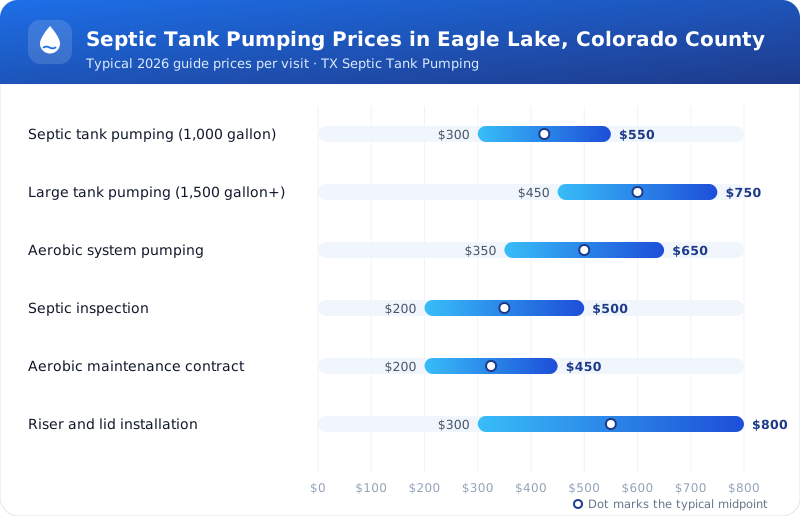
Septic tank pumping in Eagle Lake, TX, is one of those jobs most homeowners think about only after something goes wrong, such as a slow drain, a sewage smell near the yard, or a soggy patch over the drain field. Pumping removes the solids that build up in the tank and keeps them out of the soil, where they can cause expensive damage. This page explains what the service involves, how often a typical tank needs it, what it tends to cost in Texas, and how to contact the one septic company our directory currently lists for Eagle Lake.
Top Rated Septic Tank Pumping Companies in Eagle Lake Compared
Compare the top picks side by side. Full write-ups follow below.
| # | Septic Company | Best for | Score | Rating | Verified |
|---|---|---|---|---|---|
| #1 | Town & Country Septic Tank Service | Weekend bookings, open Saturday and Sunday | 3.5 | 6 reviews | — |
Eagle Lake Septic Tank Pumping Reviews and Ratings
1. Town & Country Septic Tank Service
Best for: Weekend bookings, open Saturday and Sunday
510 E State St6 reviews
Score breakdown and details
- Location
- Eagle Lake · 510 E State St, Eagle Lake, TX 77434
- Track record
- New or lightly reviewed
- Rating
- 6 Google reviews
- Profile
- Unclaimed listing (Google data)
- Today
- See hours on profile
Strengths
- Direct phone number published, no lead form in the way
- Opening hours published
- Open on Saturdays
Watch Out For
Only 6 reviews so far, so the rating could still move. Worth asking about experience.
Our take: Our top pick in this area. A Pump Score of 3.5/10 reflects the best combination of rating, review depth and profile completeness here.
Hiring Local Septic Tank Pumping in Eagle Lake
Eagle Lake sits in Colorado County on the flat, clay-heavy plains of the Texas Gulf Coast, where soils drain slowly and the water table can sit high after heavy rain. Those conditions make a full tank harder on a drain field, so a steady pumping schedule matters here. Below you will find the typical schedule, the signs that a tank is overdue, guide prices, and a short walkthrough for booking. Use the company details as a starting point, then confirm services and pricing directly with the business.
What a Septic Pump-Out Involves in Eagle Lake
A pump-out is straightforward in concept. The technician finds the tank, opens the access lid, and checks how deep the scum layer and the sludge layer sit. A vacuum truck then removes the contents. Solids that settle to the bottom and grease that floats to the top do not fully break down inside the tank, so they build up over the years until they start to carry toward the drain field.
Careful crews also look over the inlet and outlet tees, the baffles, and the effluent filter if your tank has one. Ask for a note on what they found, especially the sludge depth. That number helps you judge when the next visit should happen, and it gives you a record to keep with your home papers.
The visit usually takes less time than most people expect, but preparation helps. Clear a path to the lid, keep pets inside, and make sure the crew can reach the tank without moving heavy items. If the lid is buried under soil, grass or a patio, the cost of uncovering it is separate from the pump-out itself.
How Often a 1,000 Gallon Tank Needs Pumping
The common guidance is pumping every 3 to 5 years for a typical household. Several factors move that interval up or down, and the table below shows the ones that matter most.
| Factor | Effect on the pumping interval |
|---|---|
| Household size | More people means more wastewater and more solids, so pumping comes sooner. |
| Garbage disposal use | Food waste adds solids to the tank, which can shorten the schedule. |
| Heavy water use | Laundry and long showers push more liquid through the tank and leave less time for solids to settle. |
| Tank size | A larger tank holds more sludge, which can stretch the interval, while a 1,000 gallon tank fills faster. |
| Aerobic unit | Follows the service schedule and maintenance contract for that unit instead of the standard 3 to 5 year rule. |
Using a Measurement Instead of a Calendar
If you are unsure where your tank stands, a pump-out with a depth measurement settles the question better than a calendar guess. A tank that looks fine from the outside can still be close to full inside, and a measurement shows the real answer.
Warning Signs Your Eagle Lake Tank Is Full
Watch for these signs. Any one of them can have other causes, but several together point toward a full tank or a drain field that is already stressed.
- Drains run slowly, especially the kitchen sink and the tub
- Toilets gurgle or drain slowly after a flush
- A sewage smell near the tank, over the drain field, or inside the house
- Soggy ground or unusually lush green grass over the drain field
- Water backing up into a shower or toilet after heavy water use
Town & Country Septic Tank Service in Eagle Lake
This is the one septic company in our Eagle Lake listings, so it is the place to start. Its entry in our directory is brief, which means the details below come from the listing itself. Verify any service you need directly with the business before you book.
Address and Contact
Town & Country Septic Tank Service is listed at 510 E State St in Eagle Lake, ZIP code 77434. The phone number is (979) 732-9560. Call before your visit to confirm where the lid is located and whether the crew needs any access details, such as a gate code or a note about pets.
Hours and Reviews
The listing shows the business open every day of the week, which helps if your pumping date falls on a weekend. It has six Google reviews with a 5.0 rating. Six reviews is a small sample, so read them for specific details about timing, pricing and how the crew handled the lid, rather than relying on the score alone.
Ridex and Other Septic Additives
Ridex is one of several additives sold to break down solids in a septic tank. Most septic guidance says additives do not remove sludge that has already built up, and they do not replace pumping. A tank that is already full can still fail after treatment, so the product cannot solve the problem by itself.
Ask your service technician before adding any product, especially if you have an aerobic unit or recently had repairs. Keep the pump-out on your calendar either way, because the material already in the tank still has to come out.
Why Twenty Years Without Pumping Gets Expensive
Going twenty years or more without a pump-out is more common in homes that rarely think about the tank, but it raises the risk of costly damage. Sludge keeps thickening, and eventually solids can move past the outlet and clog the soil in the drain field. Repairing a drain field is a much larger job than pumping, with guide ranges from $2,000 to $10,000.
A tank that is pumped on a regular schedule keeps working as designed, and problems are easier to catch early. A slow drain or a damp spot is far cheaper to investigate in its early stage than after the drain field has been overloaded. Keeping a simple log of each pump-out date and sludge depth makes the next decision clearer.