Septic tank pumping companies · Collin County
Listings last refreshed October 16, 2026
Best Septic Tank Pumping in Westminster: Trusted & Reviewed
1 septic tank pumping company in Westminster, ranked by Pump Score using Google reviews and profile data.
✓ How we rankFree directory, no pay-to-rank
Septic tank pumping Westminster TX is a routine job that most homeowners think about only after a drain starts to gurgle. Westminster sits in Collin County in North Texas, a small community where residents often rely on one local provider or drive to a larger nearby town for service. This page explains what the work involves, what it usually costs, how often a tank needs attention, and how to choose a provider before the tank backs up.
Top Rated Septic Tank Pumping Companies in Westminster Compared
Compare the top picks side by side. Full write-ups follow below.
| # | Septic Company | Best for | Score | Rating | Verified |
|---|---|---|---|---|---|
| #1 | Arms Septic Services | A local septic company you can call direct | 3.9 | 9 reviews | — |
Westminster Septic Tank Pumping Reviews and Ratings
1. Arms Septic Services
Best for: A local septic company you can call direct
112 Houston St9 reviews
Score breakdown and details
- Location
- Westminster · 112 Houston St, Westminster, TX 75485
- Track record
- New or lightly reviewed
- Rating
- 9 Google reviews
- Profile
- Unclaimed listing (Google data)
- Today
- See hours on profile
Strengths
- Direct phone number published, no lead form in the way
- Opening hours published
Watch Out For
Only 9 reviews so far, so the rating could still move. Worth asking about experience.
Our take: Our top pick in this area. A Pump Score of 3.9/10 reflects the best combination of rating, review depth and profile completeness here.
Hiring Local Septic Tank Pumping in Westminster
The directory lists one septic company based in Westminster, Arms Septic Services, with 9 Google reviews. That small local footprint shapes how you should shop. For many households the decision is less about which company ranks higher and more about whether the provider is reachable on your schedule and can handle your tank, your lid access and any extra work. The ranked listing below shows the address, phone number and open days so you can check the details yourself before you call.
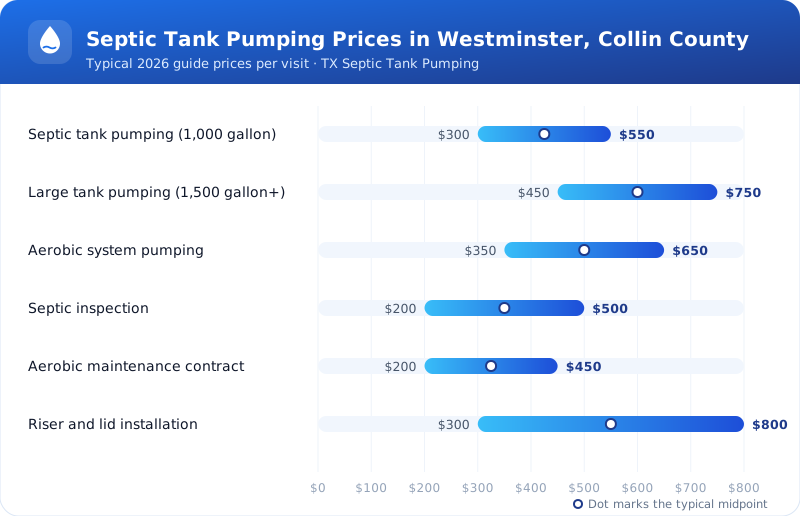
Every price on this page is a guide range, not a quote. A septic tank pumping visit depends on tank size, how easily the lid can be reached, the distance the truck travels and the condition of the system. Use the numbers to set expectations, then ask for a firm price on the phone or in writing before any work starts.
How Septic Tank Pumping in Westminster TX Works
A septic system has two main parts: the tank, where wastewater settles, and the drain field, where clarified liquid soaks into the soil. Solids sink to the bottom and form sludge. Lighter material such as grease and soap rises to form scum. Bacteria break down some of the waste, but they cannot break down everything, so material builds up over time.
Pumping removes the sludge and scum that have collected, leaving the tank with room for new wastewater to settle properly. A good visit also includes checking the baffles and outlet tee, which keep scum from leaving the tank and clogging the drain field. Pumping cleans out the tank. It does not repair the drain field, which is a separate part of the system.
Tank size matters for timing. A 1,000 gallon tank holds less liquid than a larger one, so it fills faster when a household uses a lot of water. Tanks also vary in age and build, and older tanks may have weaker walls or baffles that need closer attention at every visit.
A Pumping Visit From Arrival to Final Check
Most visits move quickly once the lid is open, though the length depends on how full the tank is and how easily the truck can reach it. The steps below describe what a careful crew does on a standard residential job.
- Locate and uncover the lidThe crew finds the access lid, which may be buried under soil or sod. Uncovering it can be a separate charge, with a guide range of $50 to $200 if the lid is hard to find.
- Pump the tankA hose connects to the tank and the crew removes the liquid and sludge. Scum is removed as well, and the tank is emptied as completely as the equipment allows.
- Check the baffles and outletThe technician looks at the inlet and outlet baffles and the tee for cracks, damage or blockage. Damaged baffles can let solids reach the drain field.
- Inspect the filter and tank wallsSome systems have an effluent filter that should be cleaned during pumping. Note any leaks, cracks or soft spots in the tank walls and lid.
- Review findings and set the next dateAsk for a written note of tank size, the condition of the baffles and the suggested date for the next visit so the schedule is recorded.
Rough Pumping Intervals by How Much a Household Uses the System
Most homes with a standard tank need pumping every 3 to 5 years. The actual interval depends on how much water goes into the tank and how much solid waste enters with it. The table gives a rough guide for a typical 1,000 gallon tank. Treat it as a starting point, and have a provider inspect the tank if you are unsure.
| Household use | Typical situation | Rough pumping interval |
|---|---|---|
| Light | One or two people, no garbage disposal | 3 to 5 years |
| Average | Three or four people, normal laundry and dishwashing | 3 to 4 years |
| Heavy | Large household, frequent guests, garbage disposal in use | 2 to 3 years |
Warning Signs That a Westminster Tank Is Overdue
Slow drains and odd smells are often the first clues. Catching them early usually means a pumping visit rather than a drain field repair, which can run from $2,000 to $10,000.
Some signs point to a problem beyond pumping, such as wet spots that stay soggy in dry weather. In that case the drain field may be failing, and a provider should inspect the system before any pumping decision is made. A septic inspection has a guide range of $200 to $500.
- Drains that run slowly in several fixtures at once, not just one sink
- Gurgling pipes or sewage odor near the tank, the drain field or indoors
- Toilets that drain slowly or back up after you flush
- Unusually green or lush grass over the drain field
- Water pooling or soggy soil around the tank lid
- Sewage backing up into a tub or shower drain
Questions to Ask Before You Book in Westminster
The directory lists a single local company, so use the phone call to confirm what matters for your property rather than assuming. Keep this checklist by the phone.
Compare the answers, not just the price. A low quote that skips the baffle check or the written record may cost more later if a problem goes unnoticed.
- Is the price for a 1,000 gallon tank, and will any lid location charge apply?
- Are weekend or after-hours callouts available, and what is the extra fee?
- Do you check the baffles and outlet tee, and will you note their condition?
- Will you give me a written record of tank size and the condition found?
- Does my system have an effluent filter or pump that needs service?
- Is my tank an aerobic system that needs a maintenance contract?
- Where does the pumped waste go after it leaves my property?
What Not to Flush or Pour Into a Septic System
The biggest threats to a tank are the things that do not break down. Many of these items clog the outlet, fill the tank with solids and shorten the time between pumpings.
Keep heavy vehicles and parked cars off the tank and drain field as well. Weight can crack the tank lid or the pipes underground, and those repairs are far more costly than a routine visit.
- Wet wipes, including those labeled flushable
- Grease, cooking oil and fat poured down the sink
- Feminine hygiene products, diapers and paper towels
- Paint, solvents, large amounts of bleach and harsh chemical cleaners
- Coffee grounds, eggshells and fibrous food scraps from a garbage disposal
- Medications poured down the drain
Access, Lids and Risers on Westminster Properties
Many older rural lots have tanks buried under yards, gardens or gravel, and the lid can be hard to find without a plan. Finding the lid before the truck arrives saves time and can help you avoid the locating charge.
If the tank sits under a patio, deck or driveway, tell the provider before the visit, since that work may need more access than a simple open yard.
Finding and Uncovering the Lid
Check any site plan you received when the house was built, or ask a previous owner where the tank sits. A metal probe or a slow sweep of the yard can help you locate the lid. Locating and uncovering the lid has a guide range of $50 to $200, depending on how deep it sits and how much soil must be removed.
Why a Riser Helps
A riser brings the lid up to ground level so it can be opened without digging each time. Riser and lid installation has a guide range of $300 to $800. Ask the provider whether a riser makes sense before the next visit, especially if the tank has been hard to reach in the past.