Septic tank pumping companies · Collin County
Listings last refreshed October 16, 2026
Best Septic Tank Pumping in Princeton [2026 Update]
1 septic tank pumping company in Princeton, ranked by Pump Score using Google reviews and profile data.
✓ How we rankFree directory, no pay-to-rank
Septic tank pumping Princeton TX is one of the most routine jobs for homes that sit outside city sewer lines, and it is also one of the easiest to put off. Most households with a conventional tank pump every three to five years, but the right timing depends on tank size, how many people live in the house, and how much water goes down the drain each day. This guide covers what happens during a visit, how to choose a provider, what the work usually costs, and which signs mean the tank is due.
Top Rated Septic Tank Pumping Companies in Princeton Compared
Compare the top picks side by side. Full write-ups follow below.
| # | Septic Company | Best for | Score | Rating | Verified |
|---|---|---|---|---|---|
| #1 | A-1 Septic Service | Weekend bookings, open Saturday and Sunday | 5.1 | 29 reviews | — |
Princeton Septic Tank Pumping Reviews and Ratings
1. A-1 Septic Service
Best for: Weekend bookings, open Saturday and Sunday
2024 Co Rd 90629 reviews
Score breakdown and details
- Location
- Princeton · 2024 Co Rd 906, Princeton, TX 75407
- Track record
- Growing review base
- Rating
- 29 Google reviews
- Profile
- Unclaimed listing (Google data)
- Today
- See hours on profile
Strengths
- 29 Google reviews, a well established track record
- Direct phone number published, no lead form in the way
- Opening hours published
- Open on Saturdays
Watch Out For
No website listed, so confirm services, trade body membership and insurance by phone.
Our take: Our top pick in this area. A Pump Score of 5.1/10 reflects the best combination of rating, review depth and profile completeness here.
Hiring Local Septic Tank Pumping in Princeton
Princeton sits in Collin County in North Texas. The directory currently lists one local business in ZIP 75407, A-1 Septic Service, with 29 Google reviews and a Google rating of 4.4. A short list makes the choice simpler, but it also means you should confirm availability and ask questions before you book. Nearby towns such as McKinney, Farmersville and Nevada are close enough that crews may travel in from them, so ask where the truck is coming from and what area the company covers.
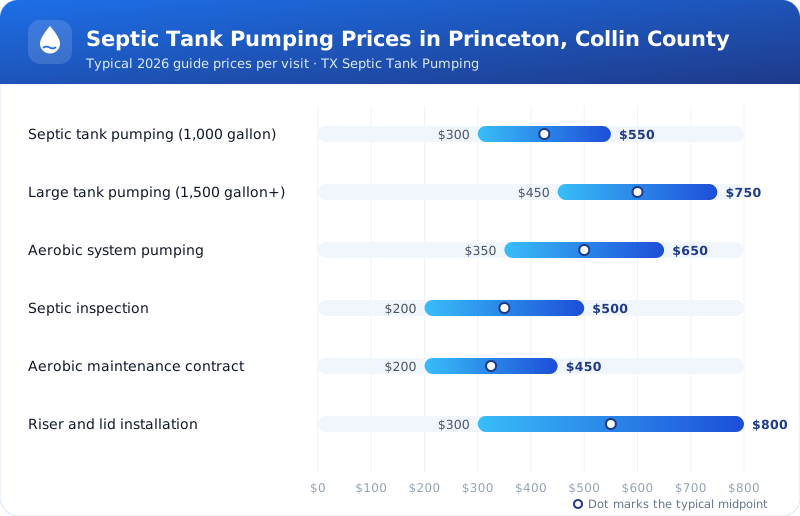
Read the sections in order if you are new to septic systems. Ranked listings appear partway down the page, and the prices you will see are guide ranges for planning, not quotes from any company.
Questions to Ask Before You Book in Princeton
A short list of providers means you should do a little homework before you schedule. A few direct questions will show whether a quote is complete and whether the company fits your system.
Ask these before the crew arrives:
- What is the tank size in gallons, and does the price assume a standard 1,000 gallon tank?
- Does the quote include locating and uncovering the lid, or is that a separate charge?
- Will the crew check and clean the effluent filter if the tank has one?
- Is there an extra fee for weekend or after hours service?
- Do you service aerobic systems, and do you offer a yearly maintenance contract?
- Will you note the condition of the baffles, tank walls and outlet in writing?
What Happens During a Pumping Visit
A standard visit is straightforward, but knowing the order of events helps you ask good questions and spot anything unusual. The steps below describe a typical job for a conventional tank.
- Find the tankThe crew locates the tank using plans, probing or a locator. If the lid is buried, expect extra time and possibly an extra charge.
- Uncover and open the access pointsWorkers dig down to the lid or riser and open it so they can reach the liquid and solids inside.
- Pump the contentsThe truck removes scum from the top and sludge from the bottom. A tank that has not been pumped for years often holds a thick layer of sludge.
- Check the componentsInspect the baffles, the outlet and any effluent filter. Clean or replace the filter if the system has one, since a clogged filter can send solids into the drain field.
- Review the findingsAsk the crew to explain what they saw, including cracks, root intrusion or signs of leaking, so you know what to watch between visits.
Pumping Intervals by System Type
Pumping schedules depend on the type of system you have. The table gives the general pattern, but your provider can adjust the timing based on what they find when they open the tank.
| System type | Typical pumping interval | What shifts the schedule |
|---|---|---|
| Conventional tank, about 1,000 gallons | Every 3 to 5 years for many homes | Household size, water use and solids buildup |
| Large tank, 1,500 gallons or more | Often on the same 3 to 5 year pattern, checked by inspection | Actual daily load and sludge depth |
| Aerobic treatment unit | Follow the service provider's schedule and any maintenance contract | Manufacturer guidance and routine service visits |
| Any tank with a clogged effluent filter | Sooner than the routine interval | Solids reaching the outlet |
Warning Signs Your Princeton Tank Is Overdue
Septic problems often start slowly. Watch for these signs, and call a pumper if you notice more than one at the same time.
- Drains that run slowly in several sinks, tubs or toilets at once
- Gurgling pipes or toilets that bubble when another fixture drains
- A sewage smell near the tank, the drain field or the house
- Soggy ground, unusually green grass or wet spots over the drain field
- Sewage backing up into tubs, showers or floor drains
- Water pooling near the access lid after rain
What Not to Flush or Pour Into Your Tank
A septic tank depends on bacteria to break down waste, and many everyday products can disrupt that process or clog the outlet. The items below are the most common causes of trouble.
Wipes, even those sold as flushable, do not break down the way toilet paper does and can build up in the tank and pump. Feminine hygiene products, diapers and paper towels do the same. Grease and cooking oil harden in the tank and block the outlet. Harsh chemical drain cleaners, paint, solvents, motor oil and pesticides can kill the bacteria that keep the system working. Coffee grounds and fibrous food scraps add solids faster than the tank can handle. A garbage disposal increases the load on the tank, so use it sparingly if you have a septic system.
Daily Habits That Protect a Princeton Septic System
Pumping is only part of the care plan. Everyday habits decide how quickly solids collect and how much water reaches the drain field at once.
Spreading Out Laundry Loads
People often ask how many loads of laundry a day a septic system can handle. No single number fits every home, because tank size and household size matter. A practical approach is to spread loads across the week instead of running several machines back to back, so the tank and drain field are not flooded with water in a short window.
Water Use and Leaks
A running toilet or a dripping faucet can send a steady stream of water into the tank. Fixing leaks lowers the load and makes the system more predictable. Low flow fixtures can also help a older system carry the same household load with less stress.
Trees, Vehicles and the Drain Field
Tree roots seek out moisture and can crack pipes or invade the drain field. Keep large trees and shrubs away from the system, and do not park vehicles or build structures over the drain field. Heavy weight can compact the soil and damage the lines underneath.
Conventional Tanks and Aerobic Systems Compared
Many homeowners in the area want to know whether a conventional tank or an aerobic system makes more sense. A conventional system uses a tank and a drain field, and it generally costs less to install than an aerobic unit. An aerobic system adds oxygen to the treatment process and needs more hands on maintenance, which is why most aerobic owners carry a yearly service contract. Guide ranges for a new aerobic system run from $8,000 to $18,000, while a basic conventional setup is often less, depending on the lot and soil.
The right choice depends on the site, the soil and local requirements. A pumper or an installer who works in Collin County can explain which options are practical for a specific lot. Get written estimates before you commit to either path.
Texas Rules and Local Paperwork for Septic Owners
The Texas Commission on Environmental Quality regulates on-site sewage facilities across the state, including the design, installation and operation rules that apply to septic systems. Local governments and counties may also require permits, inspections or registrations, and those requirements can differ from one property to the next. This page does not list local fees or ordinances, so check directly with the agency that handles wastewater in your area.
In Princeton, the city's Public Works department is listed as responsible for wastewater management among other services. Call them before you install a system, add a bedroom or sell a home with septic, so you know what paperwork or records may apply to your property.