Septic tank pumping companies · Cherokee County
Listings last refreshed October 16, 2026
Best Septic Tank Pumping in Jacksonville [Reviewed & Ranked]
1 septic tank pumping company in Jacksonville, ranked by Pump Score using Google reviews and profile data.
✓ How we rankFree directory, no pay-to-rank
Septic tank pumping Jacksonville TX homeowners usually think about only when something slows down, so it helps to know the warning signs, the steps and the typical costs before you pick up the phone.
Top Rated Septic Tank Pumping Companies in Jacksonville Compared
Compare the top picks side by side. Full write-ups follow below.
| # | Septic Company | Best for | Score | Rating | Verified |
|---|---|---|---|---|---|
| #1 | Randy's Septic Services | Saturday appointments | 6.2 | 37 reviews | — |
Jacksonville Septic Tank Pumping Reviews and Ratings
1. Randy's Septic Services
Best for: Saturday appointments
4121 Co Rd 170737 reviews
Score breakdown and details
- Location
- Jacksonville · 4121 Co Rd 1707, Jacksonville, TX 75766
- Track record
- Growing review base
- Rating
- 37 Google reviews
- Profile
- Unclaimed listing (Google data)
- Today
- See hours on profile
Strengths
- 37 Google reviews, a well established track record
- Direct phone number published, no lead form in the way
- Has its own website with more detail on services
- Opening hours published
Watch Out For
The Google profile is not owner verified. Double check the address and phone when you call.
Our take: Our top pick in this area. A Pump Score of 6.2/10 reflects the best combination of rating, review depth and profile completeness here.
Hiring Local Septic Tank Pumping in Jacksonville
Our directory currently lists one septic business in Jacksonville, Randy's Septic Services, with 37 Google reviews and a 4.8 rating. A single listing makes the local decision simpler, but it also means you should confirm details directly and know what a fair visit looks like. Many people searching for septic tank pumping near me in rural East Texas find that the nearest provider is farther away than they expected.
Most tanks need pumping every three to five years, depending on household size, tank size and how much water and solids go into the system. The sections below cover how to tell a tank is due, what happens during a visit, what to keep out of the drains and what guide prices look like across Texas. Use them to ask better questions on any call.
Who Handles Septic Tank Pumping in Jacksonville Today
Our directory lists one septic business based in Jacksonville, Randy's Septic Services, at 4121 Co Rd 1707 in ZIP 75766. The company has 37 Google reviews and a 4.8 rating from those reviews, and it has a website listed. The phone number on the listing is (903) 363-4384.
The listing shows the business open Monday through Saturday, so a weekday or Saturday request fits its posted schedule. Sunday does not appear in the hours, so if your tank needs attention before the weekend, make the call early in the week.
Because the listing is short, read the website and call ahead to confirm what your visit includes. Ask about the tank size, whether the lid is already exposed, and how the crew handles a lid buried under soil or landscaping. A clear conversation at the start prevents surprises when the truck arrives.
Warning Signs Your Cherokee County Tank Needs Pumping
Sludge and scum build up in a tank over time. When the layer gets thick enough, wastewater carries solids toward the drain field before they have had time to settle. These problems often appear in a sequence, so act on the first sign you notice rather than waiting for the last one.
- Drains that empty slowly across the house, not just at one sink
- Gurgling pipes or bubbling in a toilet when another fixture runs
- A sewage smell near the tank, over the drain field or inside the home
- Soggy, unusually green or lush ground over the drain field
- Water backing up into the lowest drain, such as a shower or floor drain
How a Typical Septic Pumping Visit Works
A standard visit is straightforward, but knowing the order of events helps you check the work. Most of the time goes into finding and opening the tank, then removing its contents and inspecting the parts that keep solids in place.
- Locate the tank lidThe technician finds the tank, often with a probe or by following the pipe from the house. Risers make this faster and keep the lid near the surface, which saves digging.
- Open and check the tankThe lid comes off so the technician can see the liquid level and the layers of scum and sludge. This is also a good moment to look for cracks or a damaged lid.
- Pump out the contentsA vacuum truck removes the liquid, scum and sludge from the tank. Ask the crew to tell you what they removed and how full the tank was.
- Inspect the baffles and outletBaffles and the outlet tee keep solids in the tank and out of the drain field. If either is broken or missing, the tank will push solids into the field sooner than it should.
- Confirm the next visit dateNote the date on your calendar, and ask whether the system has an effluent filter that should be cleaned during the same visit.
Pumping Intervals by Household and System Type
Pumping every three to five years is the usual starting point for a standard tank. The right interval depends on tank size, how many people live in the home and what goes down the drains. Use the table as a guide, not a schedule carved in stone.
If you have not pumped in several years or you bought a home with an unknown history, ask for an inspection. An inspector can measure how thick the sludge layer has become, which tells you more than the calendar does.
| Situation | Typical Pumping Interval | Why It Matters |
|---|---|---|
| Standard tank, average household | Every 3 to 5 years | A common starting point for most homes |
| Large household or heavy water use | Sooner than 3 years | More water moves more solids into the tank |
| Garbage disposal in regular use | Sooner than average | Food waste adds solids that build up as sludge |
| Aerobic treatment system | Follow the maintenance contract and manufacturer | Pumping and regular service keep the system working |
What Not to Flush, Pour or Put Down the Drain
Most septic trouble starts with the wrong items going down the drain. Small habits make a real difference, because fewer solids means the tank fills more slowly and pumping visits are spaced further apart. Keep this list near the kitchen sink and the laundry room.
Wipes are the most common problem in many homes. Labels that say flushable do not mean the wipes break down in a septic tank the way toilet paper does.
- Wipes, including products labeled flushable
- Grease, oil and cooking fat poured down the sink
- Coffee grounds and fibrous food scraps
- Diapers, feminine products and paper towels
- Paint, solvents, motor oil and other chemicals
- Heavy bleach and harsh chemical drain cleaners
- Long laundry days that send large volumes of water into the system at once
Standard Tanks Compared With Aerobic Systems
Not every property in Cherokee County has the same type of system. Some homes have a standard tank with a drain field, while others have an aerobic treatment unit. The two need different kinds of care, and that affects what you should ask a pumper before booking.
Aerobic systems have moving parts and electrical components, so they need regular service in addition to pumping. Ask whether the business handles both pumping and the upkeep your system requires before you choose.
| Feature | Standard Tank | Aerobic System |
|---|---|---|
| How it works | Settles solids and sends liquid to a drain field | Adds air to break down waste before it reaches the drain field |
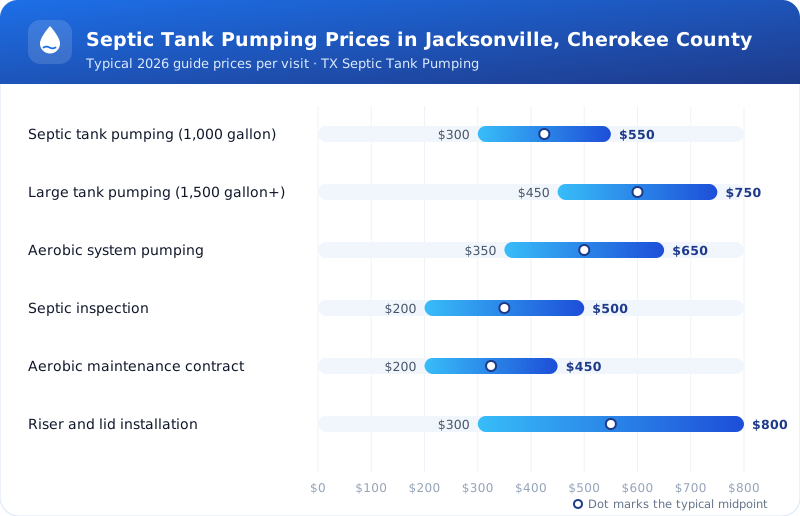
| Pumping guide price | $300 to $550 for a 1,000 gallon tank | $350 to $650 for pumping |
| Ongoing care | Pumping and inspection on a schedule | Yearly maintenance contract, guide price $200 to $450 |
| What to ask | When was the last pump, and is the lid accessible? | Is there an active maintenance contract on the unit? |
Using Less Water Until the Tank Is Pumped
If drains are slow or the tank seems close to its limit, you can ease pressure on the system while you wait for a visit. Space laundry across the week instead of washing everything in one day. Run the dishwasher only when it is full, and fix any toilet that keeps running.
Short showers help too, since every gallon adds to a tank that is already full. If water begins to back up into the house, stop using water and call for service right away rather than waiting for the next scheduled visit.